
Why you should never drive with an underinflated tyre
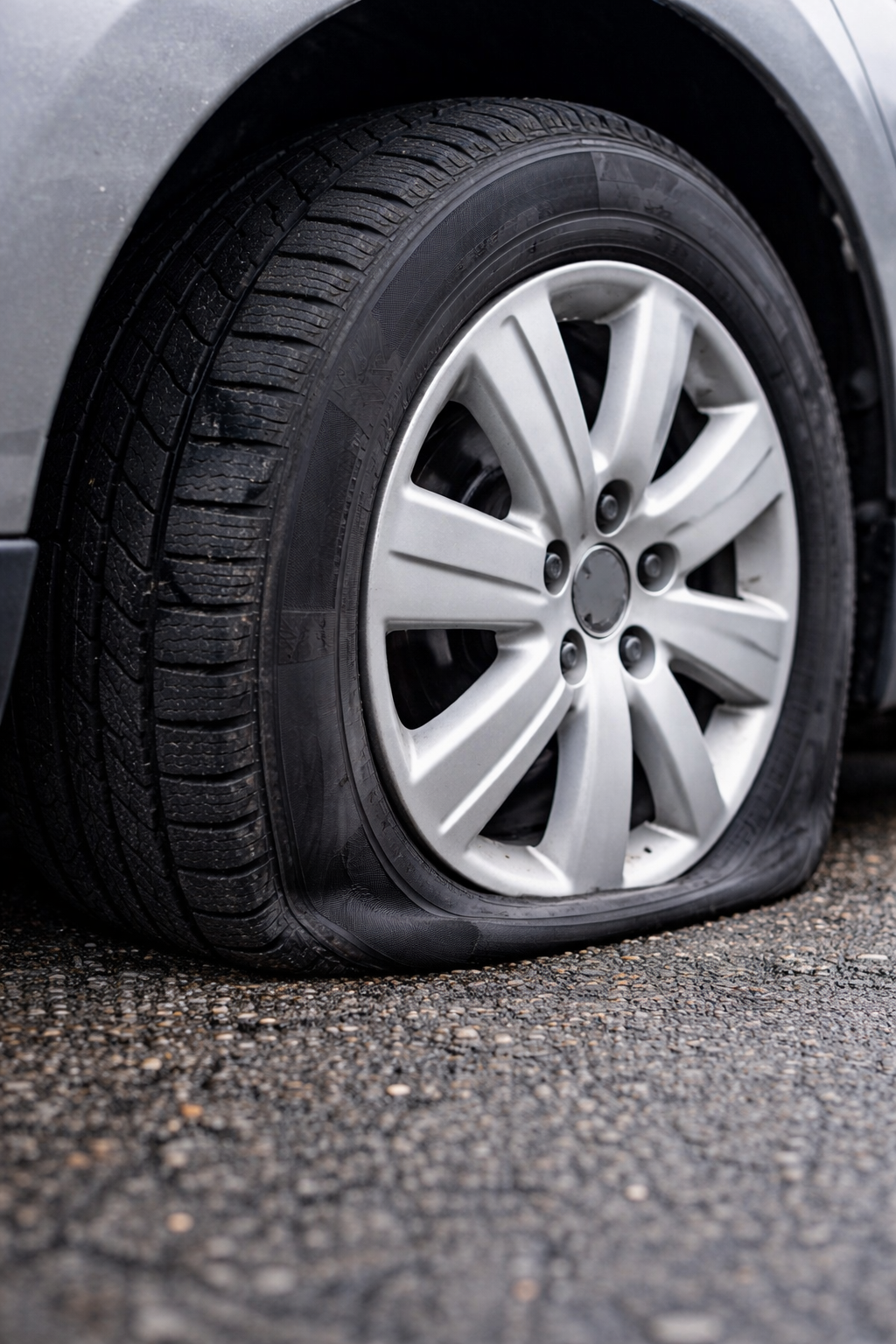
Driving with an under-inflated tyre might seem trivial, but the consequences are swift: reduced safety, accelerated wear, increased fuel consumption, and the risk of breakdown (or even a blowout). In this article, we explain Why An underinflated tyre is dangerous., comment to spot it, and What to do To drive with complete peace of mind.
Under-inflated tyre: definition and causes
One Under-inflated tyre is a tyre with pressure lower than the manufacturer's recommendation. Even a moderate drop (for example -0.2 to -0.4 barcan already impact the vehicle's behaviour, especially at high speed, when cornering or in the rain.
Why is the pressure dropping?
- Natural loss A tyre gradually loses air over time.
- Temperature The cold causes the pressure to drop (seasonal variation).
- Micro-leak valve, rim, bead, or small puncture.
- Charge/usage Motorway journeys, loaded vehicle, trailer.
Safety: braking distances and road holding degraded
caractéristique générale du véhicule. contact surface with the road and the tyre's rigidity. When a tyre is underinflated, it sinks more, deforms, and responds less precisely to demands.
Consequences for driving
- Less effective braking The chassis deforms, adhesion becomes less stable, especially under heavy braking.
- Deteriorated road holding : softer steering, less precise cornering lines.
- Increased risk in the rain fewer chewing movements, less constant water evacuation, more unpredictable behaviour.
To keep in mind A tyre with the correct pressure improves stability, driving precision and safety margins in emergency situations.
2) Overheating: the risk of failure increases
La principale danger d'un pneu sous-gonflé, c'est la Overheating. When driving, the tyre deforms with each rotation. If it lacks pressure, it deforms much more, which generates more heat.
Pourquoi le réchauffement est-il un problème ?
- The heat weaken the internal structure of the tyre (carcass, plies, sidewalls).
- The risk of delamination or deformation increases over long distances.
- At high speeds (motorway), the temperature can rise quickly and become critical.
In plain English: the more underinflated the tyre is, the hotter it gets, and the more the risk of breakdown (or failure) increases.
3) Wear and tear: tyres to replace much sooner
An under-inflated tyre wears out faster, often unevenly. The tyre leans more on the Shoulders (tyre shoulders), which accelerates wear on the sides.
Typical signs of under-inflation wear
- Smoother shoulders the centre of the tyre.
- Aspect “eaten” on the edges, especially on the front.
- Deformation of the side or a “soft tyre” sensation.
Result: you are replacing your tyres earlier, sometimes well before reaching uniform wear.
4) Fuel consumption: you pay more at the pump
Un pneu sous-gonflé augmente la consommation de carburant. rolling resistance. The engine has to work harder to maintain speed, which results in a Fuel overconsumption (or a decrease in range on an electric/hybrid vehicle).
Why does rolling resistance increase?
- The tyre crushes and deforms further.
- The ground contact area changes, with more mechanical “losses”.
- Heat and internal friction increase.
Good reflex: A simple monthly tyre pressure check can help reduce fuel consumption and extend the life of your tyres.
How to recognise an under-inflated tyre
Certain signs are visible or felt, but the ideal remains to measure the pressure with a pressure gauge.
- TPMS indicator light (if your car is equipped with it): low tyre pressure warning.
- Less precise direction or a feeling of light-headedness.
- Vehicle which “pulls” slightly to one side.
- Bearing noise unusual or vibration.
- Tyre visually lower that another (notable difference).
Attention: A tyre can be under-inflated without looking “flat”. Only a measurement can confirm.
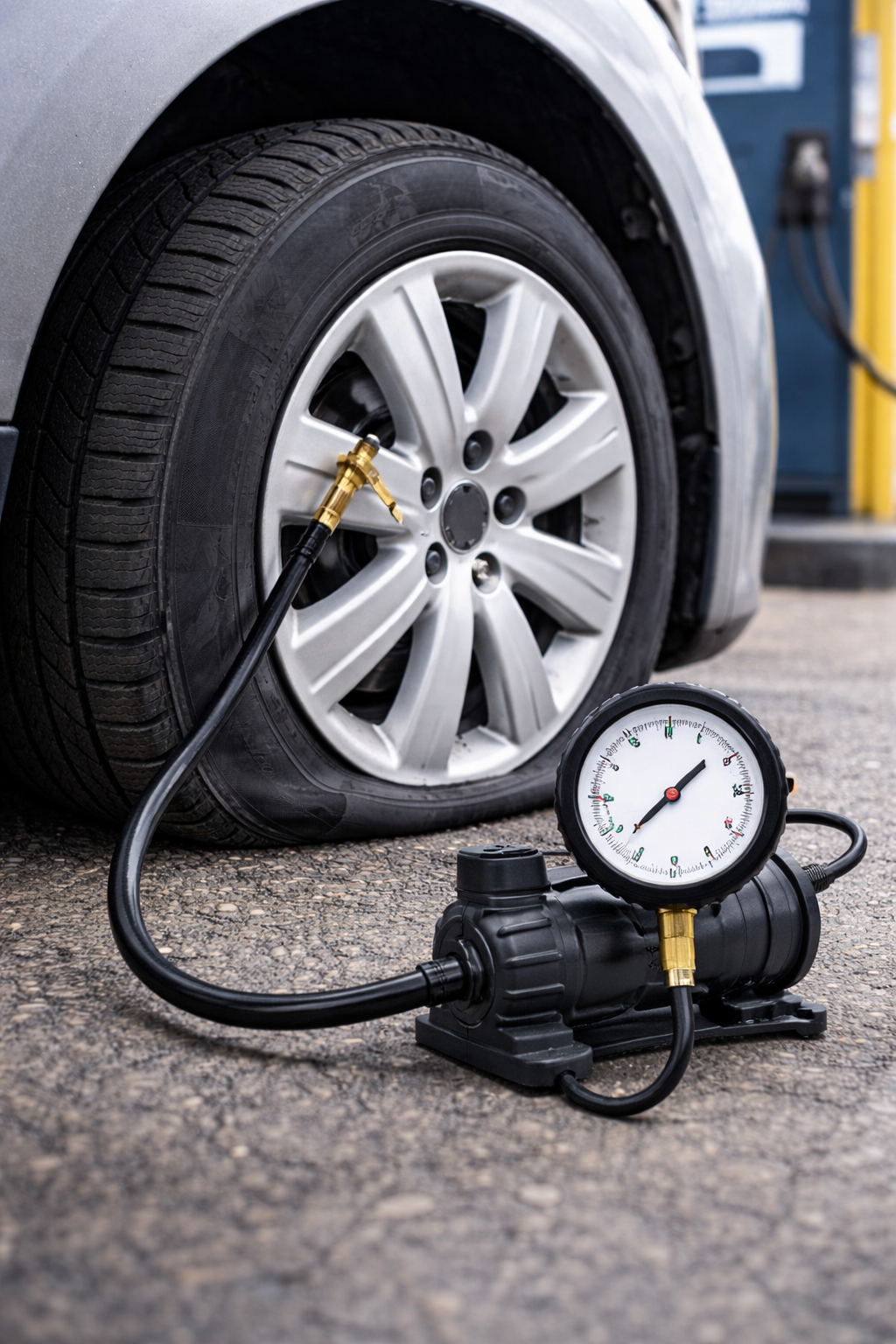
What pressure to put in your tyres
The Recommended pressure depends on the vehicle, the tyre size and the use (loaded, motorway, etc.). You will generally find it:
- on the label in the’door frame driver,
- in the Fuel trap (depending on models),
- in the manual of the vehicle.
Practical advice: check the pressure cold (before riding, or after a few kilometres at low speed). A warm tyre will show a higher pressure and can distort the adjustment.
Good practice: check and re-inflate correctly
How often should I check the pressure?
- Once a month Minimum.
- Before a long journey (motorway, holiday).
- When the temperature changes strongly (winter/spring).
- After a shock : potholes, pavements.
Simple steps for inflating
- Identify the target pressure (front/rear, and “loaded” version if needed).
- Measure when cold, then adjust using a compressor.
- Control also the Spare wheel if you have one.
- After re-inflating, check for leaks if the pressure drops quickly.
Tip: a steady drop in pressure on a single tyre can indicate a micro-perforation or a problem with the valve. Have it checked as soon as possible.
FAQ: Under-inflated tyres
Can you drive “a little” on an under-inflated tyre?
In practice, it's risky: even slight under-inflation degrades handling and increases wear. If a warning light comes on or if you suspect a drop, reduce speed, avoid motorways, and re-inflate as soon as possible.
Les risques sur autoroute comprennent la perte de contrôle du véhicule, les collisions, les sorties de route, les dangers dus aux conditions météorologiques, les erreurs de conduite et les dangers liés aux travaux.
At high speeds, the tyre heats up more. With insufficient pressure, deformation increases significantly, which can accelerate internal tyre degradation and lead to failure. On the motorway, the margin for error is smaller.
Pourquoi la pression baisse quand il fait froid ?
Air contracts as the temperature drops, which causes the measured pressure to fall. This is a common cause of TPMS warnings in winter. It is recommended that you check your tyre pressure at the change of seasons.
Does TPMS replace manual checking?
No. The TPMS helps to detect a drop in tyre pressure, but it is no substitute for regular checks using a pressure gauge. Some systems are particularly sensitive to significant deviations or differences between tyres.
How to tell if you have a slow leak?
If you top up the tyre pressure and it drops again within a few days or weeks on the same tyre, this may be due to a slow puncture (a nail, screw, valve or rim). A check at a garage will help to locate and repair the problem.
Should I inflate differently if the car is loaded?
Yes, many manufacturers provide a “normal” pressure and a “loaded” pressure (passengers + luggage). Adhering to the appropriate value improves stability, reduces wear, and limits overheating.
You might be interested in these articles:
 Pneumatic Innovations 2025: The Future of the Smart, Sustainable, and Connected Tyre
 Chinese vs European tyres: what are the real differences in 2025?
 What tyres to drive on snow safely? The ultimate 2025 guide
 Continental ContiSportAttack 5: The new supersport motorcycle tyre that redefines performance