Best SUV tyres: comparison of the most reliable models in 2026
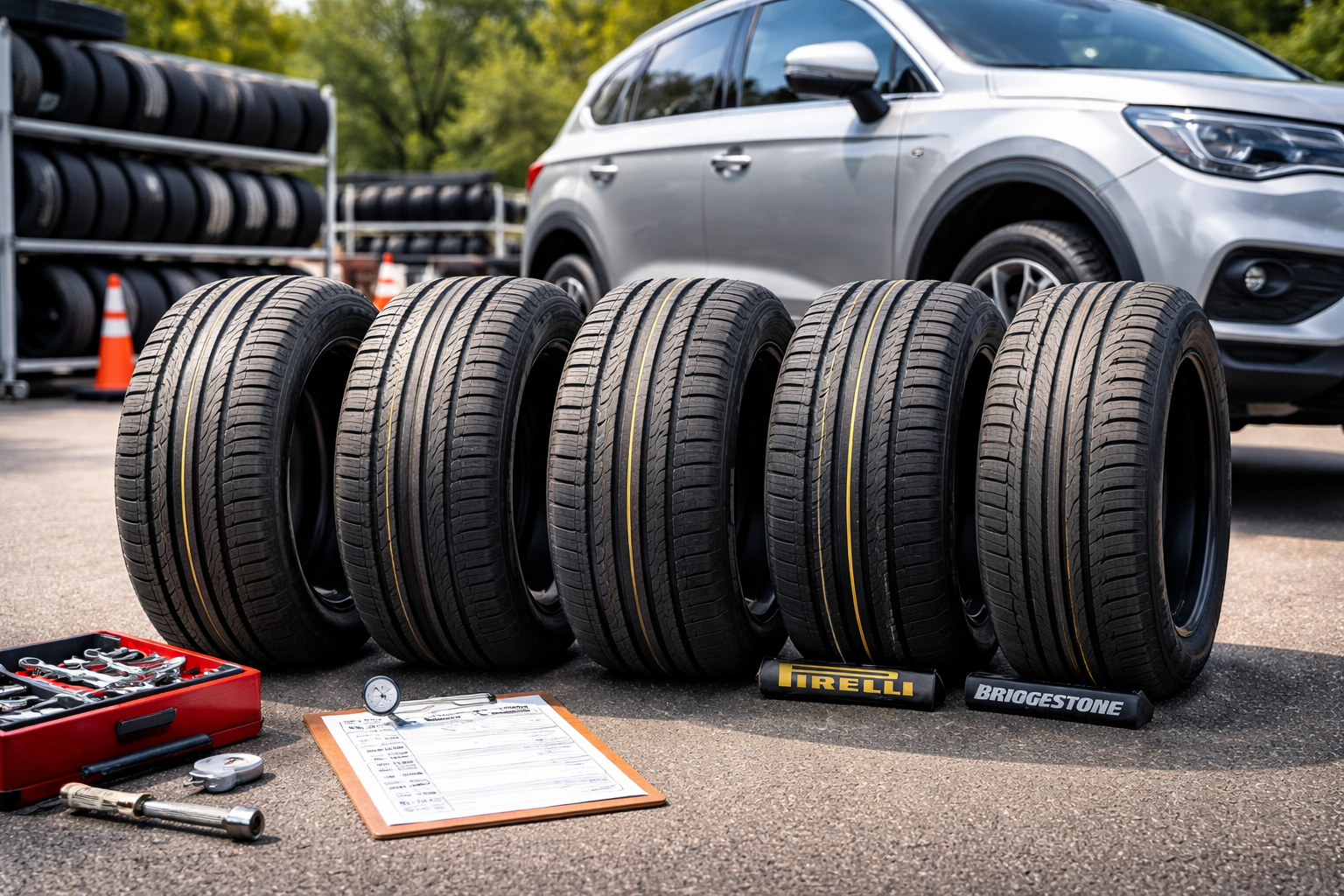
Choosing the best SUV tyres isn't just about comparing prices. In fact, the weight, height and power of this type of vehicle require tyres capable of offering good stability.
In 2026, the most reliable models must perform well on both dry and wet surfaces. Furthermore, they must maintain predictable behaviour as conditions deteriorate.
Longevity, comfort, and rolling resistance also play an important role. Therefore, the best choice depends primarily on your vehicle, your region, and your driving habits.
In this guide, discover our selection of the best SUV tyres in 2026. You will then be able to view the available models among the Tyres for cars offered by Pneus Online.
Summary
- What does «reliable SUV tyre» actually mean?
- Comparison of the best SUV tyres in 2026
- Quick comparison table
- How to choose SUV tyres based on your usage
- What elements to check before purchasing?
- SUV Tyre FAQ
- Our verdict 2026
What does «reliable SUV tyre» actually mean?
The reliability of an SUV tyre is not just about its lifespan. First and foremost, it must support the vehicle's higher weight without losing precision.
Next, a good SUV tyre must guarantee consistent grip. In particular, it must remain reassuring during braking and changes of direction.
Furthermore, aquaplaning resistance is an essential criterion. The large dimensions commonly fitted to SUVs can, in fact, make handling in the rain more demanding.
Finally, the tyre must match your actual usage. A model designed for motorways doesn't always meet the same needs as a tyre intended for the mountains or urban journeys.
In this selection, we have therefore prioritised balance, security and regularity of performance.
You can also consult the Pneus Online 4x4 tyre comparison to discover other driver reviews.
Comparison of the best SUV tyres in 2026
Michelin CrossClimate 2 SUV: The best all-season balance
The Michelin CrossClimate 2 SUV remains one of the most consistent references for drivers who want to drive all year round on the same tyres.
First of all, this model offers balanced performance on the main surfaces. It is also reassuring as temperatures decrease.
What's more, its low noise level helps with comfort on long journeys. Its rolling resistance is also an advantage for drivers concerned about their fuel consumption.
However, its purchase price may be higher than that of some competitors. Nevertheless, this additional cost can be justified for motorists who are primarily looking for versatility.
Ideal profile: Family SUV, varied journeys and year-round use.
2. Continental AllSeasonContact 2: very convincing in the rain
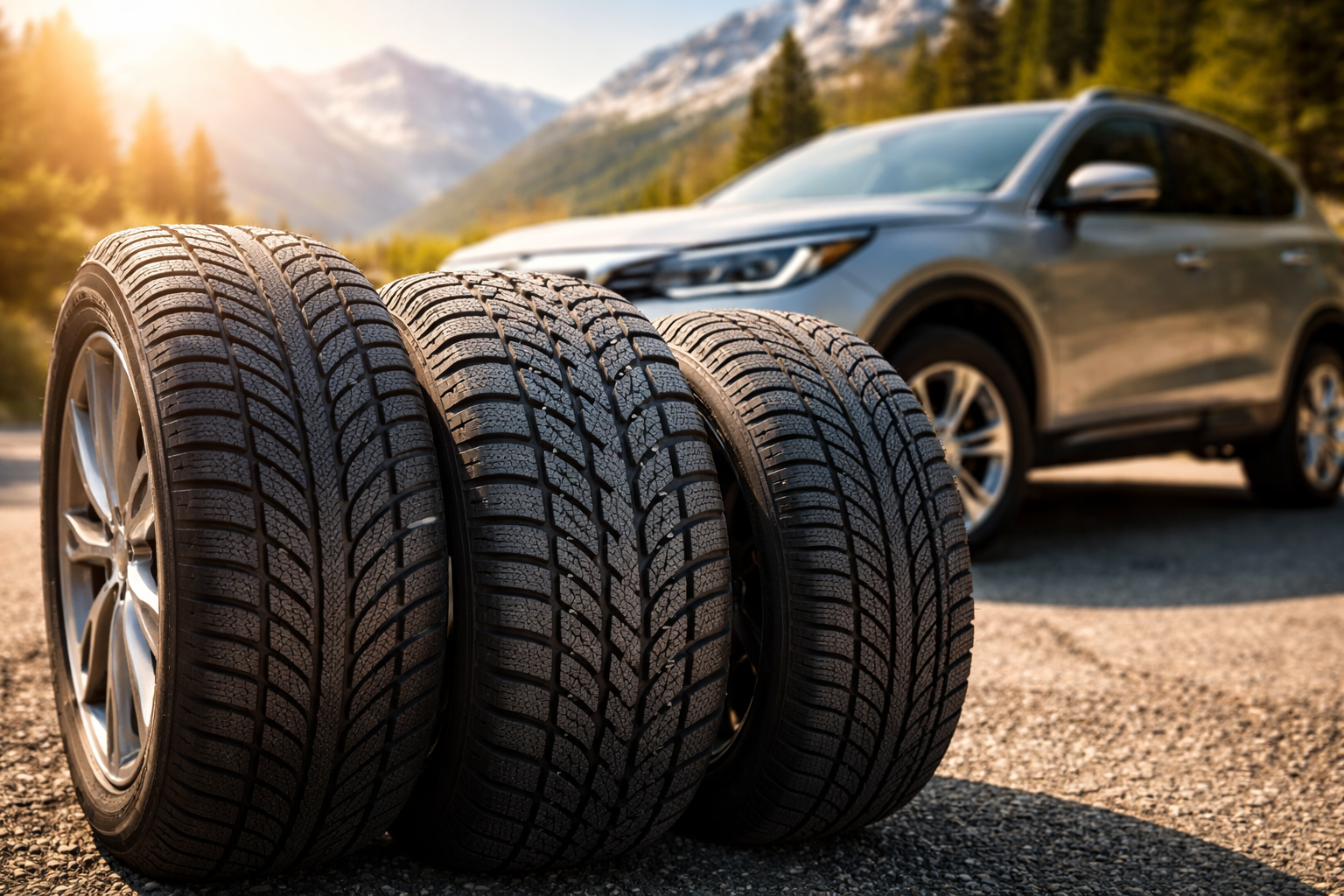
The Continental AllSeasonContact 2 represents an excellent option for drivers who regularly drive in the rain.
Indeed, this tyre stands out for its stable performance on wet roads. Its steering also remains progressive, which allows for better anticipation of the vehicle's reactions.
Furthermore, its profile aims to limit energy loss. It may therefore be of interest to owners of internal combustion, hybrid or electric SUVs.
On snow, the Michelin CrossClimate 2 SUV may nevertheless seem more versatile. Conversely, the Continental makes perfect sense in humid and temperate regions.
Ideal profile: Urban or road SUV, rainy climate and frequent journeys on wet roads.
3. Goodyear Vector 4Seasons Gen-3 SUV: a compromise suited to winter
The Goodyear Vector 4Seasons Gen-3 SUV This makes for an interesting choice for motorists who want to maintain good versatility during winter.
On the one hand, it offers good performance in the wet. On the other hand, its traction on snow allows it to remain reassuring when conditions become more challenging.
However, its behaviour on dry roads may seem less precise than that of the best summer benchmarks. It will therefore be more suited to smooth driving than to very dynamic use.
Despite this reservation, it remains coherent for a compact SUV used in town, on the road, and occasionally in the mountains.
Ideal profile: Compact SUV, four-wheel drive and regular winter travel.
4. Bridgestone Turanza All Season 6: effective on roads and motorways
The Bridgestone Turanza All Season 6 is primarily aimed at drivers who favour road trips.
On dry ground, it offers precise and stable handling. Furthermore, its braking performance on wet surfaces is one of its main strengths.
Faced with aquaplaning, this model also maintains serious performance. As such, it can be suitable for drivers who frequently use motorways in the rain.
By contrast, ride comfort and efficiency can vary depending on the size chosen. It remains, however, very convincing when road safety is the priority.
Ideal profile: Road SUV, long journeys and frequent motorway use.
5. Nokian Seasonproof 2: Recommended when snow is a real factor
The Nokian Seasonproof 2 deserves special attention in cold regions.
Thanks to its winter-focused profile, it maintains good traction on snow. Furthermore, its winter braking capabilities are among its strong points.
In parallel, it remains versatile enough for year-round use. However, it doesn't always reach the level of the best dry road tyres.
This compromise remains logical. Indeed, a tyre heavily oriented towards snow generally prioritises suppleness and winter traction.
Ideal profile: SUV for use in cold climates, mountains or on regularly snow-covered roads.
6. Pirelli Scorpion: a benchmark for summer use
Not all SUV drivers need all-season tyres. If you primarily drive between the spring and autumn, the Pirelli Scorpion constitutes a serious option.
First, it offers precise steering. Next, its stability allows for reassuring handling at sustained speed.
On dry roads, its grip is particularly suitable for powerful or dynamic SUVs. It remains effective on wet roads too.
However, its noise level may be slightly higher than that of some competitors. Despite this, it remains a very good choice for drivers who prioritise driving pleasure.
Ideal profile: Road SUV, summer driving and precision research.
7. Michelin, Goodyear and Bridgestone: three winter solutions
When snow, ice and low temperatures become frequent, a winter tyre often remains preferable.
The Michelin Pilot Alpin 5 SUV offers particularly good stability on powerful SUVs. On the other hand, the Goodyear UltraGrip Performance 3 offers an excellent balance between snow, rain and comfort.
Finally, the Bridgestone Blizzak 6 represents another compelling solution for cold and damp conditions.
Unlike all-season tyres, these models use a rubber compound designed for low temperatures. Therefore, they generally offer better grip during a harsh winter.
Ideal profile: SUV used in mountains, frequent winter journeys and difficult conditions.
The characteristics and uses associated with these models incorporate the main elements of the initial comparison.
Quick comparison table
| Model | Type | Main advantage | Limit to know | Recommended use |
|---|---|---|---|---|
| Michelin CrossClimate 2 SUV | All seasons | General equilibrium | Often high price | Annual multipurpose use |
| Continental AllSeasonContact 2 | All seasons | Behaviour in the rain | Less snow-oriented | Wetlands |
| Goodyear Vector 4Seasons Gen-3 SUV | All seasons | Good winter level | Less precise guidance on dry | Mixed use |
| Bridgestone Turanza All Season 6 | All seasons | Very good on the road | Variable comfort depending on size | Motorway and long journeys |
| Nokian Seasonproof 2 | All seasons | Snow handling | Less sporty on dry [ground] | Mountains and cold zones |
| Pirelli Scorpion | Summer | Driving precision | Not well-suited to winter | Summer use |
| Pilot Alpin 5 SUV, UltraGrip Performance 3 and Blizzak 6 | Winter | Cold Weather Safety | To replace in summer | Harsh winter |
How to choose SUV tyres based on your usage
For a family SUV used all year round
The Michelin CrossClimate 2 SUV and the Continental AllSeasonContact 2 are two sensible choices.
The former prioritises versatility. The latter proves particularly interesting in the rain.
So, these models are suitable for families who mix city, motorway and country roads.
For an SUV that often drives on the motorway
The Continental AllSeasonContact 2 and the Bridgestone Turanza All Season 6 both warrant particular attention.
Indeed, their stability suits long journeys well. Furthermore, their performance on wet roads is reassuring when conditions change rapidly.
For an SUV regularly exposed to snow
The Nokian Seasonproof 2 is a good all-season solution. However, a winter tyre remains preferable if you frequently encounter snow or experience consistently low temperatures.
In this case, favour the Michelin Pilot Alpin 5 SUV, the Goodyear UltraGrip Performance 3, or the Bridgestone Blizzak 6.
You can also consult the All-season tyre comparison before making your choice.
For an SUV used mostly in summer
The Pirelli Scorpion represents a credible option for primarily summer driving.
Thanks to its precise handling, it's suitable for both daily commutes and long journeys. However, it will need to be replaced with a dedicated tyre when winter conditions arrive.
For an electric SUV
An electric SUV places particular stresses on its tyres. Its weight and immediate torque, in particular, can accelerate wear.
Consequently, prioritise an appropriate size, a sufficient load index, and controlled rolling resistance. Also, remember to check the model's compatibility with electric vehicles.
What elements to check before purchasing?
Before ordering your SUV tyres, check several important pieces of information.
First, check the size marked on the sidewall of your current tyres. Then, check the load index and speed rating recommended by the manufacturer.
To better understand this data, consult the Pneus Online guide dedicated to load and speed indices.
Furthermore, don’t choose solely based on brand. A model might perform excellently in one dimension but behave slightly differently in another.
Furthermore, consider your annual mileage. A good all-season tyre may be relevant if you drive few miles in a temperate region.
Conversely, two sets of tyres are often preferable when temperature variations are significant. This solution provides greater specialisation for both summer and winter.
Finally, consider the overall cost. Lifespan, consumption, noise and comfort are just as important as the purchase price.
After your order, you can choose delivery from a Pneus Online fitting centre partner located near you. The purchasing advice in the original text already emphasised size, indices, climate and running costs.
SUV Tyre FAQ
What is the best SUV tyre in 2026?
For versatile year-round use, the Michelin CrossClimate 2 SUV is one of the most well-rounded choices.
However, the best tyre model depends on your climate. The Continental AllSeasonContact 2 is more suitable for rainy regions, while the Nokian Seasonproof 2 will appeal to drivers regularly facing snow.
Would all-season tyres be sufficient for an SUV?
Yes, a good all-season tyre can be sufficient in flat areas or regions with a moderate climate.
However, winter tyres remain more suitable when snow, ice and cold roads are frequent. Thus, the choice depends more on the encountered conditions than on the type of vehicle.
Quel pneu SUV choisir pour rouler sous la pluie ?
The Continental AllSeasonContact 2 and the Bridgestone Turanza All Season 6 are two serious contenders.
Thanks to their stable performance on wet roads, they are particularly suitable for road and motorway journeys.
Which SUV tyre to choose for going to the mountains?
The Nokian Seasonproof 2 offers a good all-season compromise when snow remains occasional.
However, for frequent mountain journeys, a dedicated winter tyre will be more relevant. It will offer greater grip and safety in the most difficult conditions.
Do premium SUV tyres last longer?
Not always. The lifespan also depends on the vehicle, the pressure, the driving style and the wheel alignment.
However, the best premium tyres often offer more consistent handling during use, meaning they can maintain a uniform level of safety for longer.
Should four identical tyres be fitted to an SUV?
Where possible, yes. Four identical tyres make it easier to maintain balanced handling.
This precaution is particularly important on an all-wheel drive SUV. In fact, significant differences in wear or tread pattern can disrupt the vehicle's operation.
Our verdict 2026
In 2026, there isn't one single best SUV tyre for every driver.
For all-round use, the Michelin CrossClimate 2 SUV remains one of the most reassuring benchmarks. On the other hand, the Continental AllSeasonContact 2 is particularly relevant in wet regions.
When snow is an important factor, the Nokian Seasonproof 2 is worthy of serious consideration. For a more demanding winter, however, it is better to choose a dedicated winter tyre.
Finally, the Pirelli Scorpion better meets the expectations of drivers who use their SUV during the warm season.
Before ordering, check four criteria: your climate, your mileage, your type of journey and the characteristics of your SUV. You can then Search for your tyres by size on Pneus Online and select the most suitable model.
This approach makes it possible to transform a simple tyre purchase into a genuine gain in safety, comfort and peace of mind. The verdict and FAQ answers remain consistent with the provided content.