Mistakes to avoid when fitting snow chains
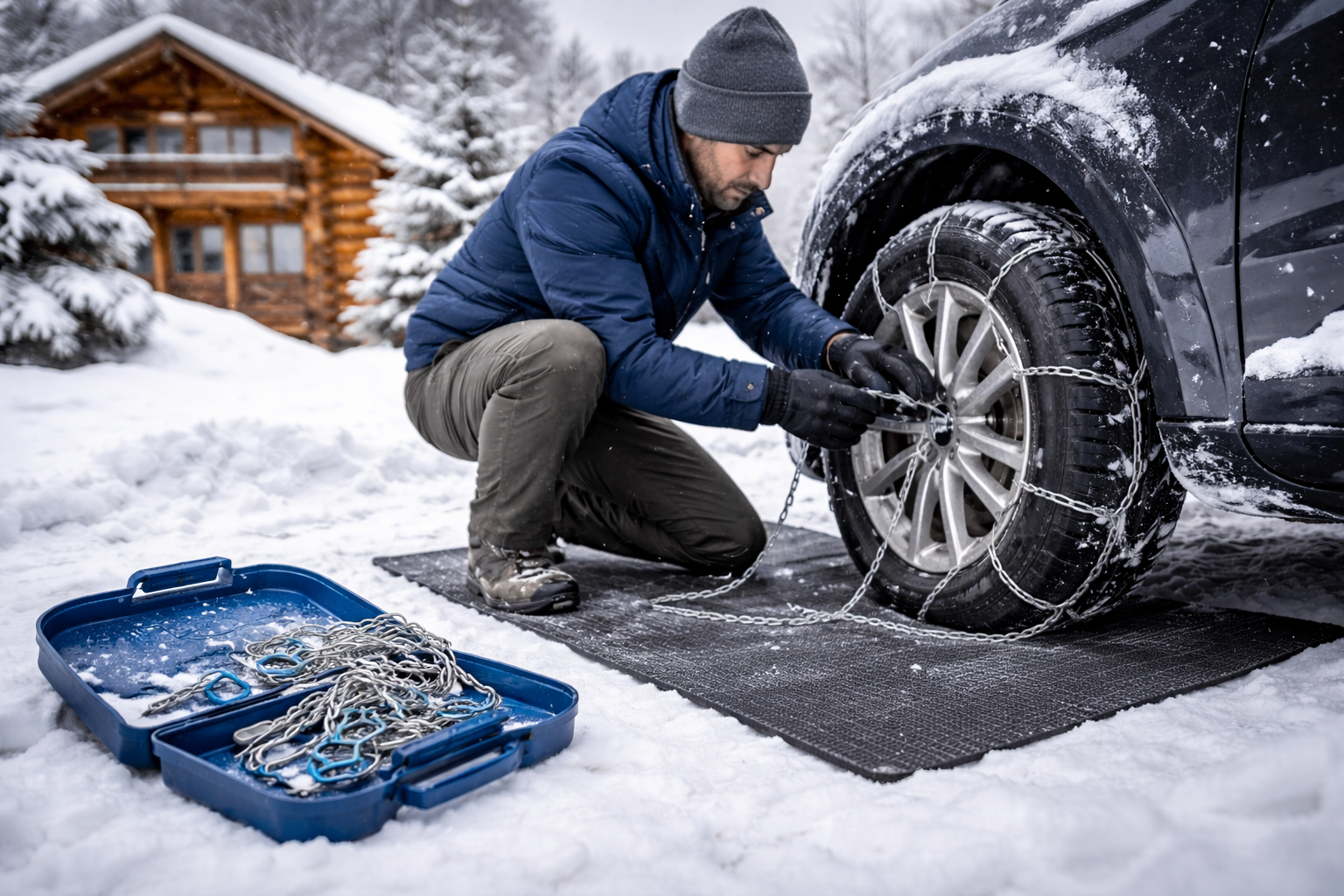
Fit snow chains is essential for safe driving on snowy or icy roads. However, many mistakes are still made, which can lead to poor grip, mechanical damage, or even penalties. In this article, discover the mistakes to absolutely avoid when fitting your snow chains, as well as best practices for riding safely in winter.
1. Choosing the wrong snow chains for your vehicle
One of the most common mistakes is to buy snow chains not compatible with tyre size or the vehicle type.
To be verified imperatively:
- The exact tyre size (e.g. 205/55 R16)
- Manufacturer restrictions (particularly for vehicles that can and cannot be fitted with snow chains)
- Compatibility with wheel arches (SUVs, sports cars, electric vehicles)
Unsuitable chains can damage the bodywork, suspension or braking system.
2. Fit snow chains at the last minute
Waiting until you are stuck on a snowy road to fit your snow chains is a classic mistake. Fitting snow chains in the cold, at night, or in the snow increases the risk of them being fitted incorrectly.
Advice: Anticipate and fit your chains as soon as conditions become difficult, before you get into trouble.
3. Selecting the wrong drive wheels
Chains must be fitted to the Drive wheels :
- Front-wheel drive vehicle
- Rear-wheel drive vehicle
- Four-wheel drive: consult the manufacturer's manual
An incorrect installation significantly reduces grip and can make the vehicle unstable.
4. Neglecting chain tension
Loose chains can:
- To detach while rolling
- Damage the vehicle
- Reduce efficiency on snow
After a few hundred metres, it is recommended to to stop and check and retighten the chains.
5. Driving too fast with snow chains
Snow chains are not designed for high speeds. In general, the The maximum speed allowed is 50 km/h..
Speeding leads to:
- Premature chain wear
- A risk of breakage
- A loss of control of the vehicle
6. Forgetting to train before setting off
Installing chains for the first time in a real-life situation is an avoidable mistake. Prior practice, dry-run and in a quiet place, allows for:
- Save time
- Avoid assembly errors
- Reduce stress
A prepared driver is a safer driver.
FAQ – All you need to know about fitting snow chains
When should snow chains be fitted?
Snow chains must be fitted as soon as the road is snow-covered or icy, or when indicated by signage, before losing grip.
Can you drive on dry roads with snow chains?
No. Driving on a dry road with snow chains will damage your tyres, the road surface, and the chains themselves.
Are snow chains compulsory in the mountains?
Yes, in certain areas and according to the Montagne law, approved snow chains or non-slip devices may be mandatory during the winter period.
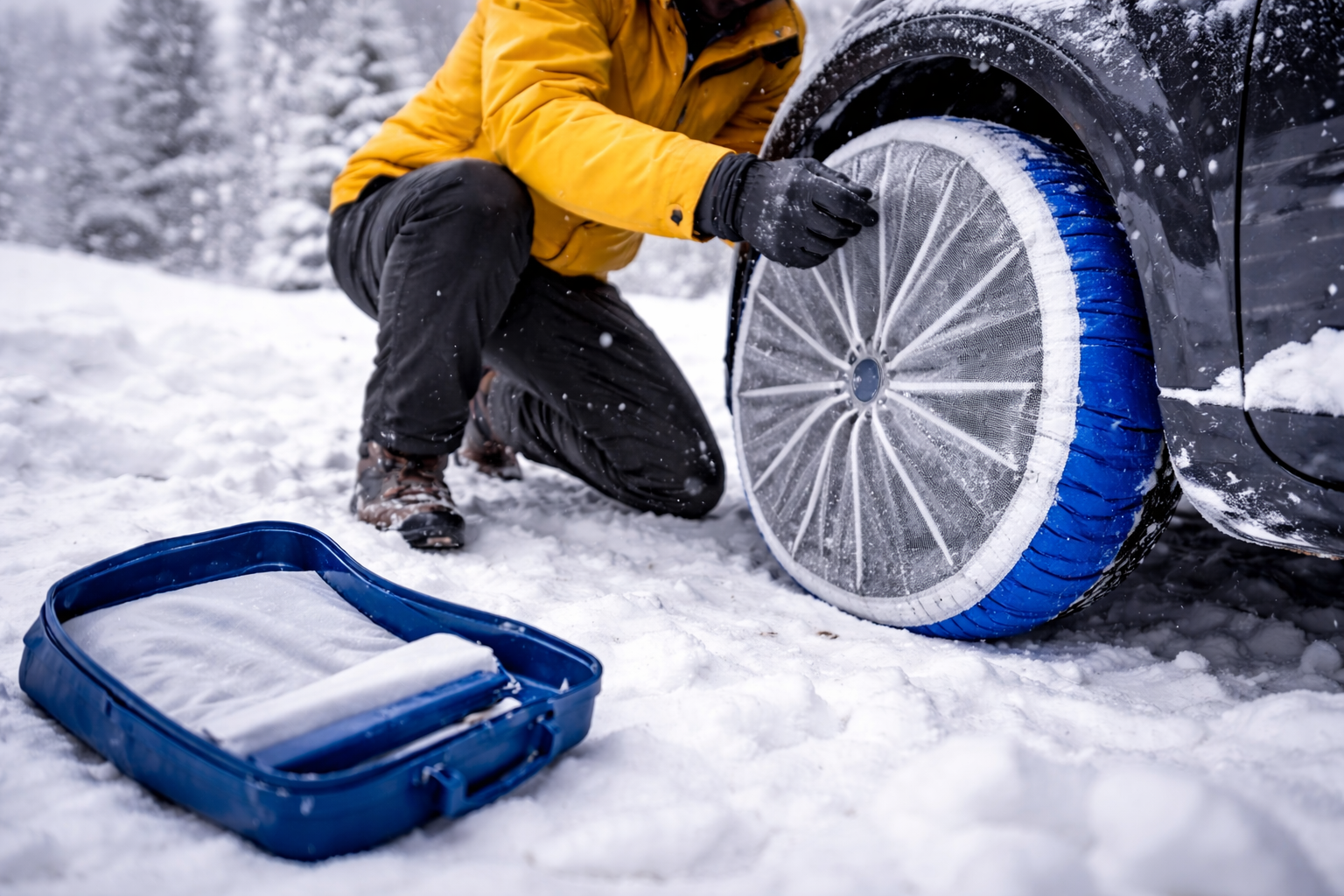
What is the difference between snow chains and snow socks?
Snow chains offer better traction on deep snow and ice, whereas snow socks are easier to install but less durable.
In summary: Choosing, fitting and properly installing your snow chains in advance is essential to guarantee your safety and that of other road users in winter conditions.
To choose your next snow sock or snow chain, consult the Pneus Online online catalogue: https://www.tyres-pneus-online.co.uk/snow-chain.html