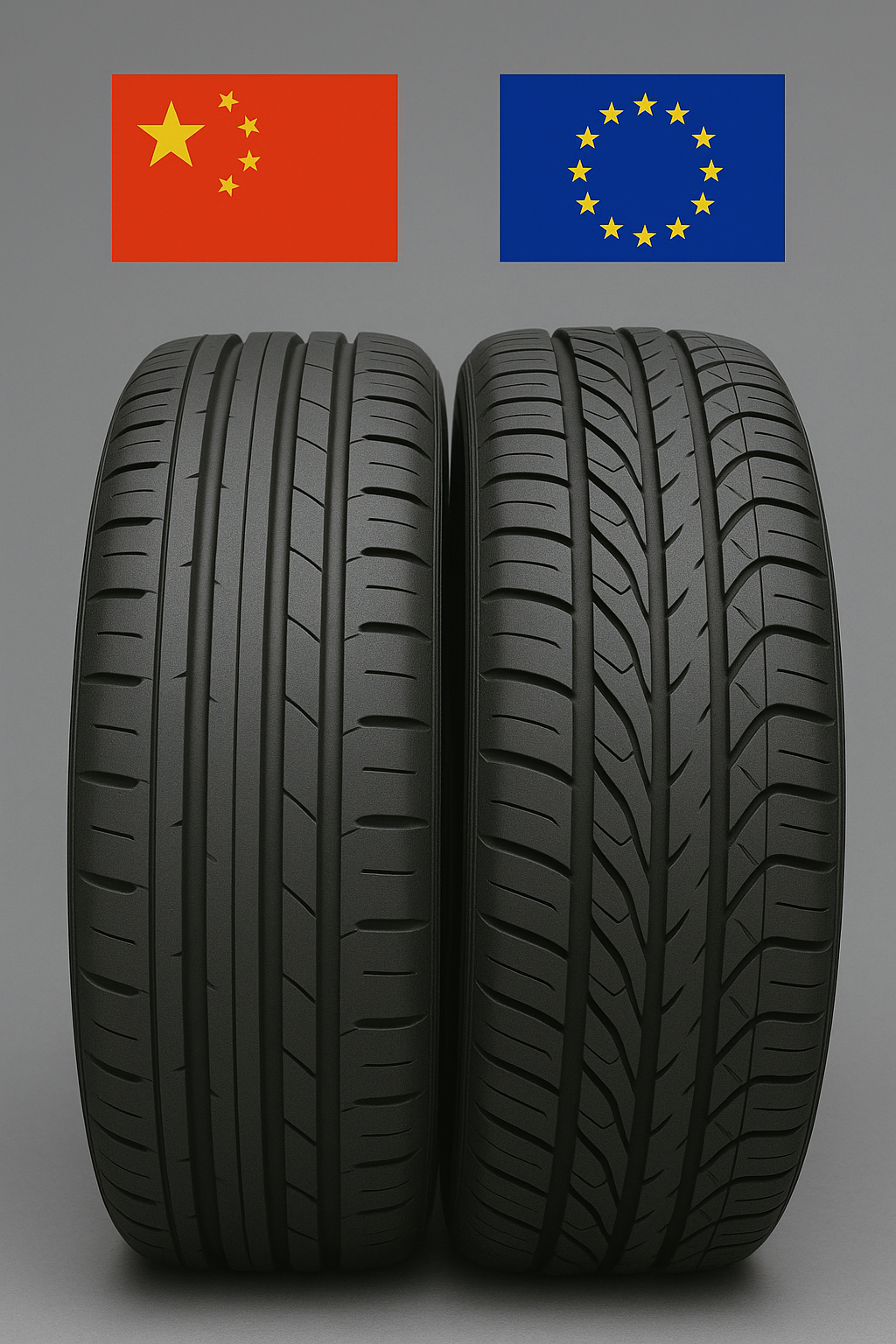
Chinese vs European tyres: what are the real differences in 2025?
Introduction
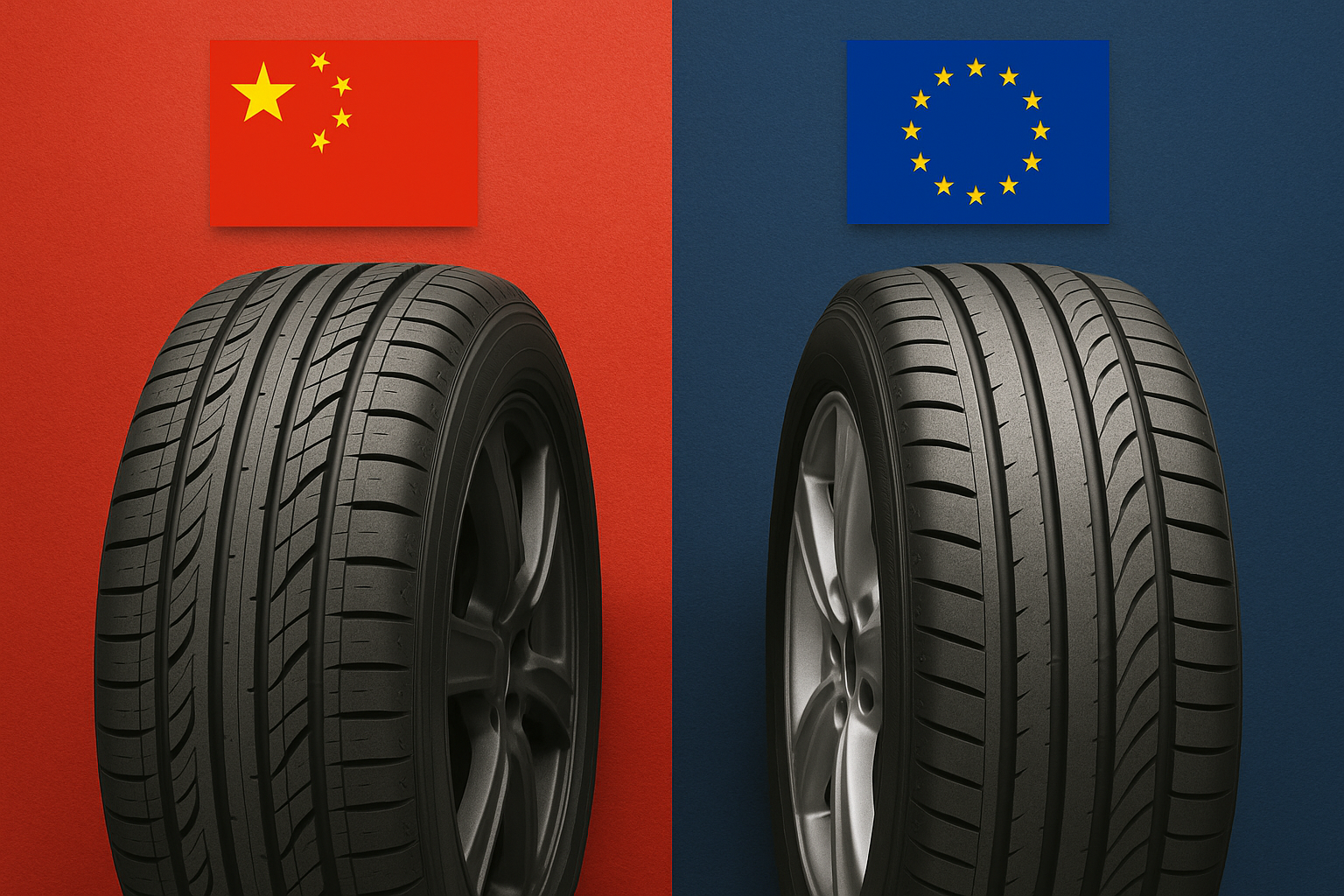
The tyre market is evolving rapidly with the rise of Chinese brands challenging European manufacturers. In 2025, this rivalry reaches its peak, driven by technological innovation, environmental challenges, and new motorist expectations.
This detailed comparison analyses the differences between Chinese and European tyres according to several criteria: Quality, durability, safety, price, performance, ecology, and customer perception.
1. History and Manufacturer Positioning
1.1 European brands: a tradition of excellence
European giants such as Michelin, Continental, Pirelli Or Nokian are distinguished by their rigour and continuous investment in R&D. They dominate the high-end market and are often chosen for new European vehicles.
1.2 The rise of Chinese brands
Brands like Linglong, Triangle, Sailun Or Doublestar gaining ground. Thanks to low production costs and better technological control, they are attracting customers in search of affordable yet high-performance tyres.
2. Quality of materials and manufacturing
2.1 Manufacturing processes
European tyres use high-quality compounds (silica, advanced polymers) ensuring a good balance between grip, fuel consumption and longevity. Chinese manufacturers are moving upmarket, even if basic models still lag behind.
2.2 Tests and certifications
European manufacturers undergo rigorous independent testing (TÜV, UTAC). CE-approved Chinese tyres do not always follow the same demanding protocols, although the trend is improving.
3. Comparative performances: what do the tests say?
3.1 Grip on dry and wet surfaces
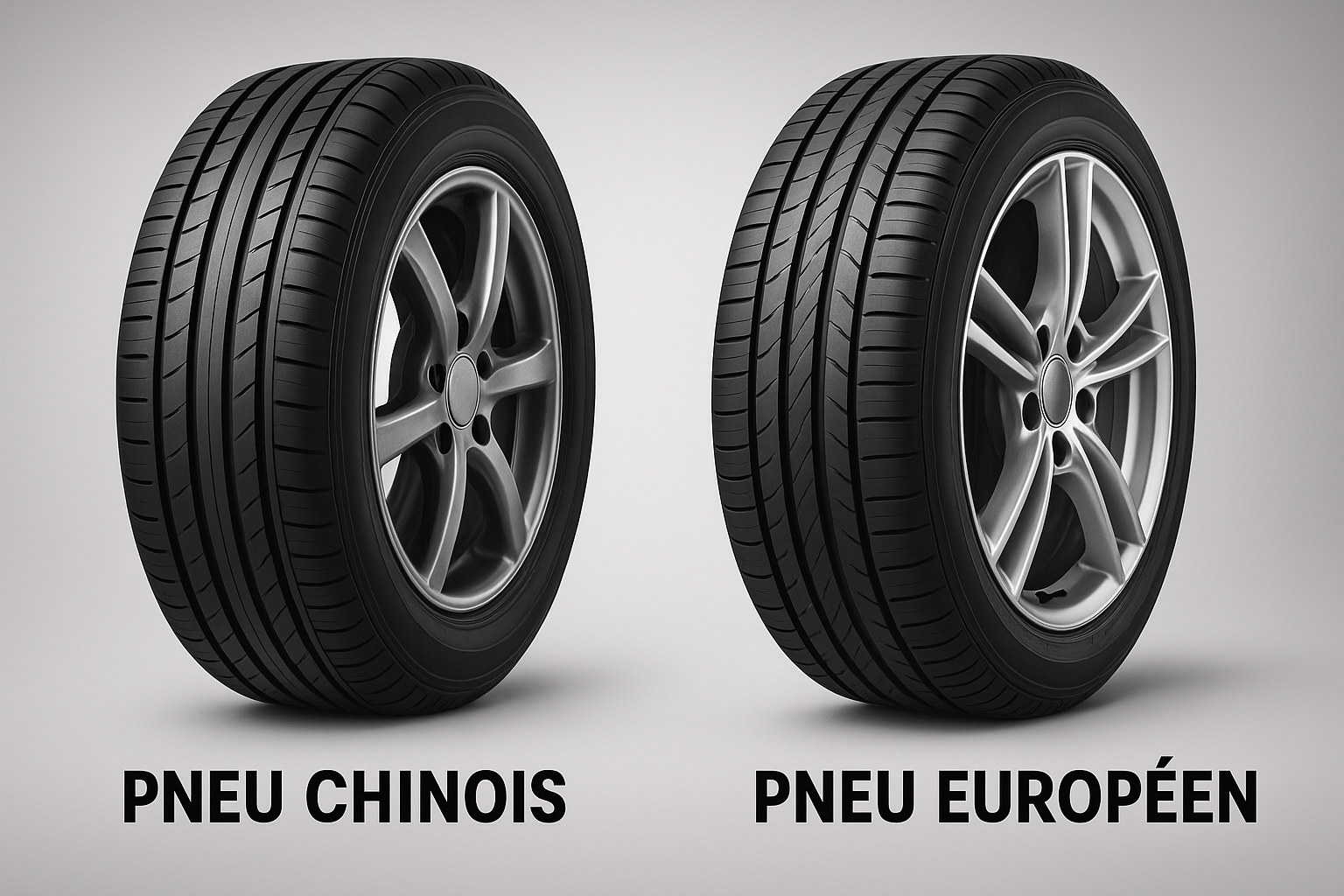
European tyres maintain their advantage, particularly in wet conditions. High-end Chinese tyres are closing the gap, but entry-level models remain less reliable in emergency braking.
3.2 Noise and comfort
European brands favour comfort and noise reduction. Chinese tyres are improving but remain noisier on some budget models.
3.3 Lifespan
A European tyre can travel between 40,000 and 70,000 km against 25,000 to 50,000 km For a Chinese tyre. In the long run, the European tyre often proves to be more cost-effective.
3.4 Fuel consumption
Thanks to low rolling resistance, European tyres can save up to 0.5 L/100 km. High-end Chinese models tend to bridge this gap.
4. Price: what difference?
A Chinese tyre costs 30 to 50 % less than an equivalent European tyre. However, the difference is less pronounced when durability and fuel consumption are taken into account.
5. Environmental impact
5.1 Production and carbon footprint
European factories are subject to strict environmental standards. In China, ecological quality varies depending on the manufacturer.
5.2 Recycling and end-of-life
European brands are investing in recycling and the circular economy, while China is gradually catching up.
6. Customer perception and reputation
European consumers still favour local brands, but the recognition of Chinese tyres is growing thanks to independent tests and online reviews.
7. High-end Chinese tyres in 2025
Brands like Sailun Or ZC Rubber now offer smart models equipped with IoT sensors. These tyres compete with some European leading brands, but their price has become comparable.
8. Which choice for which use?
- Urban usage: Premium Chinese tyres = good value for money.
- Intensive driving European tyres = safety and durability.
- Electric vehicle Specific European EV tyres recommended.
9. Regulatory developments in Europe
In 2025, the GSR2 regulation will impose stricter criteria on braking, noise, and energy efficiency, favouring the most innovative manufacturers.
10. Tyres and electric vehicles: a new era
Electric vehicles require tougher, quieter tyres. Europeans dominate this segment, but Chinese manufacturers are catching up.
11. Comparative test data 2024–2025
- Michelin Primacy 4+ Excellent grip, 65,000 km lifespan.
- Sailun Atrezzo Elite Good on dry ground, but 6m further braking on wet ground.
- Linglong Green-Max : noisier, 35,000 km lifespan.
12. Customer testimonials
- Professionals Viable Chinese tyres for urban journeys.
- Private individuals best European tyre confidence, especially in winter.
- Boats Chinese tyres = fast wear, back to European brands.
13. Perspectives and innovations
Chinese manufacturers are investing heavily in R&D and partnering with international players. The aim: to match European performance while remaining competitive.
14. The growing influence of AI
Manufacturers are using artificial intelligence to design, test, and predict tyre lifespan. The Chinese are accelerating their adoption to bridge the technological gap.
FAQ: Chinese vs. European Tyres in 2025
Are Chinese tyres less safe than European ones?
Not necessarily. Some high-end Chinese tyres perform well in tests. However, entry-level models can have lower performance, especially in wet conditions.
What is the average lifespan of a Chinese tyre?
Between 25,000 and 50,000 km depending on the model and usage conditions.
Does the lower price of Chinese tyres compensate for their reduced lifespan?
In some cases, yes. But for intensive driving, the European tyre often remains more cost-effective in the long run.
Can you pass a technical inspection with Chinese tyres?
Yes, provided they are CE approved and show acceptable wear and tear.
Are there eco-friendly Chinese tyres?
A few manufacturers are incorporating greener processes, but overall, European brands are more advanced on this topic.
Are Chinese tyres only made in China?
No. Several manufacturers now have factories in Europe or Southeast Asia to reduce logistics costs and adapt to local standards.
Do car insurance policies cover Chinese tyres?
Yes, insurers do not make a distinction on the origin of tyres as long as they comply with legal standards. However, in the event of an accident, poor quality tyres could be considered an aggravating factor if their performance is at fault.
Conclusion
In 2025, Chinese tyres have made significant progress in quality, safety, and technology, especially in the mid-range segments. However, the European brands maintain a notable lead in Performance, durability, and ecology.
The choice between Chinese and European tyres therefore depends on your Priorities: budget, safety, comfort, or longevity. For discerning or high-mileage drivers, a European tyre remains the benchmark. For occasional or urban use, some Chinese tyres now represent a credible option.