❄️ Which tyres to drive on snow safely? The ultimate 2025 guide
10. How to maintain your tyres in winter?
Even an excellent winter tyre will lose efficiency if it's under-inflated or too worn. Regular checks therefore remain essential.
Control the pressure
Check the tyre pressure when the tyres are cold. The recommended pressure can usually be found on the door frame, inside the fuel flap or in the vehicle's manual.
Adapt it to the load being carried as well. For the correct method, consult the tyre pressure guide.
Monitor the depth of the carvings
The French legal limit is 1.6mm. However, a winter tyre progressively loses its qualities on snow when the tread becomes shallow.
So, a vigilance threshold of around 4 mm allows for a better safety margin in winter conditions.
Inspect the flanks
Inspect for cuts, cracks, bulges and distortions. Also, remove any small stones lodged in the grooves where possible.
Finally, have the vehicle checked quickly if you feel vibrations or notice uneven wear.
11. How to drive on a snowy road?
Even with the best tyres, smooth driving remains indispensable.
First, reduce your speed before arriving at a slippery area. Then, significantly increase the distance from the vehicle in front of you. This will give you more time to react.
Accelerate gradually to avoid skidding. Similarly, brake gently and favour engine braking on descents.
Also avoid sudden steering. On snow, every sharp movement can destabilise the vehicle.
If the car starts to skid, look in the direction you want to go. Then, gradually release the accelerator and gently correct the steering.
Finally, deactivate the cruise control when the road is snowy, icy or very wet. You must keep direct control of acceleration.
12. Errors to avoid
Fit only two winter tyres
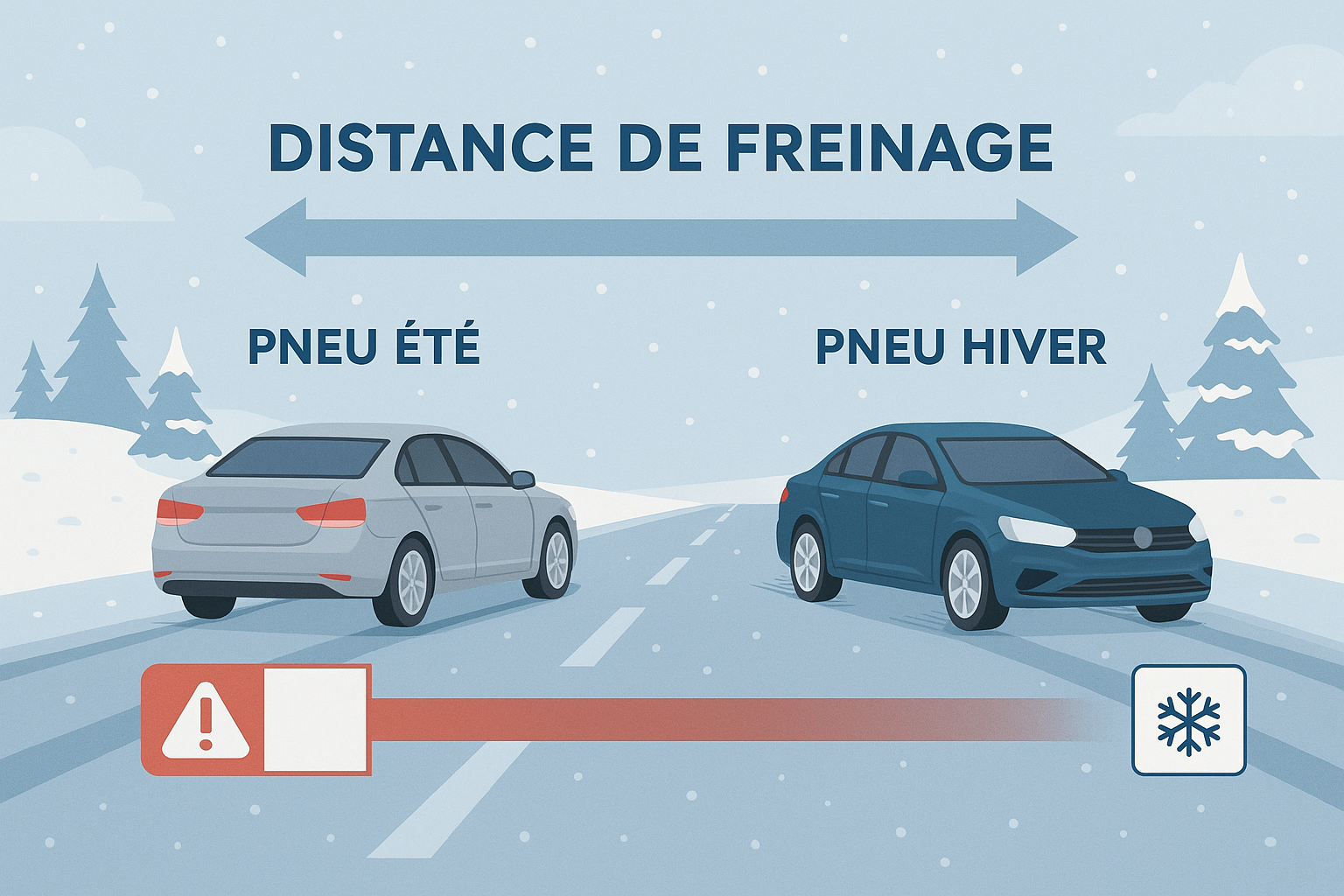
This configuration creates an imbalance between the axles. The vehicle can then become unstable during braking or cornering. Therefore, all four wheels must be fitted with tyres of consistent characteristics.
Waiting for the first snowfall
Cold temperatures often arrive before the snow. Therefore, anticipate changing your tyres to avoid stock shortages and fitting delays.
Choose based on price only
A low price does not make up for poor grip on wet or snowy roads. Therefore, compare several criteria before ordering.
To think you're protected by a 4x4
All-wheel drive improves traction, but it's no substitute for the right tyres. Braking still depends on the grip between the tyre and the road.
Keeping your winter tyres on all year round
When the temperature rises, the softer rubber wears out quickly. Furthermore, the vehicle's handling can deteriorate on a hot road surface.
13. Winter tyre FAQ
From what temperature should winter tyres be fitted?
The 7°C threshold is a good guide. However, above all, observe the average temperatures, the risk of frost, and your travel times.
Can you drive on snow with summer tyres?
This remains strongly inadvisable. Their rubber compound and tread pattern are not designed to offer good grip in these conditions.
Are all-season tyres effective in snow?
Yes, provided you choose a 3PMSF model. However, for regular use in the mountains, winter tyres remain preferable.
Do you need to fit four winter tyres?
Yes. Four similar tyres ensure more consistent handling during braking and cornering.
Do snow chains replace winter tyres?
No. Snow chains are a piece of equipment for very snowy roads. They do not replace the daily effectiveness of winter tyres on cold or wet surfaces.
What tread depth should you keep on a winter tyre?
The French legal limit is 1.6 mm. Nevertheless, it is advisable to consider replacement around 4 mm in order to maintain better performance in the snow.
Can winter tyres be used in summer?
This is possible, but not recommended. They wear out faster and can offer less precise handling when the road gets hot.
To drive safely on snow, choose first and foremost equipment suited to your actual driving conditions.
3PMSF winter tyres remain the best solution for cold regions, mountain roads and frequent travel. In contrast, 3PMSF all-season tyres can be suitable when the winter remains moderate and snow is only occasional.
In any case, check the size, pressure and wear of your tyres. Finally, keep compatible snow chains when your route crosses a mountainous area.