Pneumatic Innovations 2025: The Future of the Smart, Sustainable, and Connected Tyre
The tyre sector is experiencing an unprecedented revolution. In 2025, tyres are no longer mere accessories: they are becoming connected, sustainable, intelligent, and strategic objects for the mobility of the future. Between technological innovations, environmental imperatives, and the integration of artificial intelligence (AI), tyres are redefining the standards of safety, performance, and durability.
Smart tyres and IoT sensors
The integration of IoT sensors enables real-time monitoring of pressure, wear, and temperature. The data is transmitted to manufacturers and users via connected applications. For fleets and autonomous vehicles, this technology represents a major step forward in terms of safety and predictive maintenance.
Advanced tests and simulations
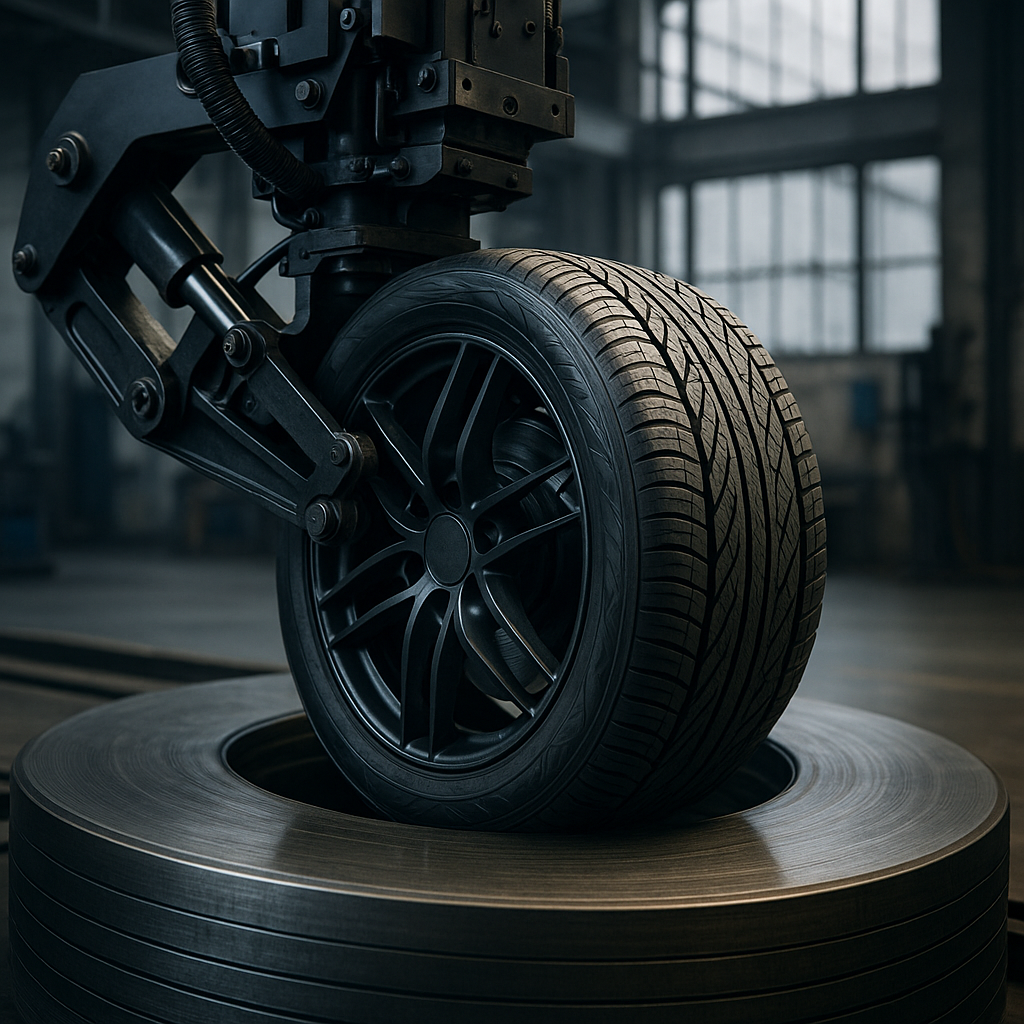
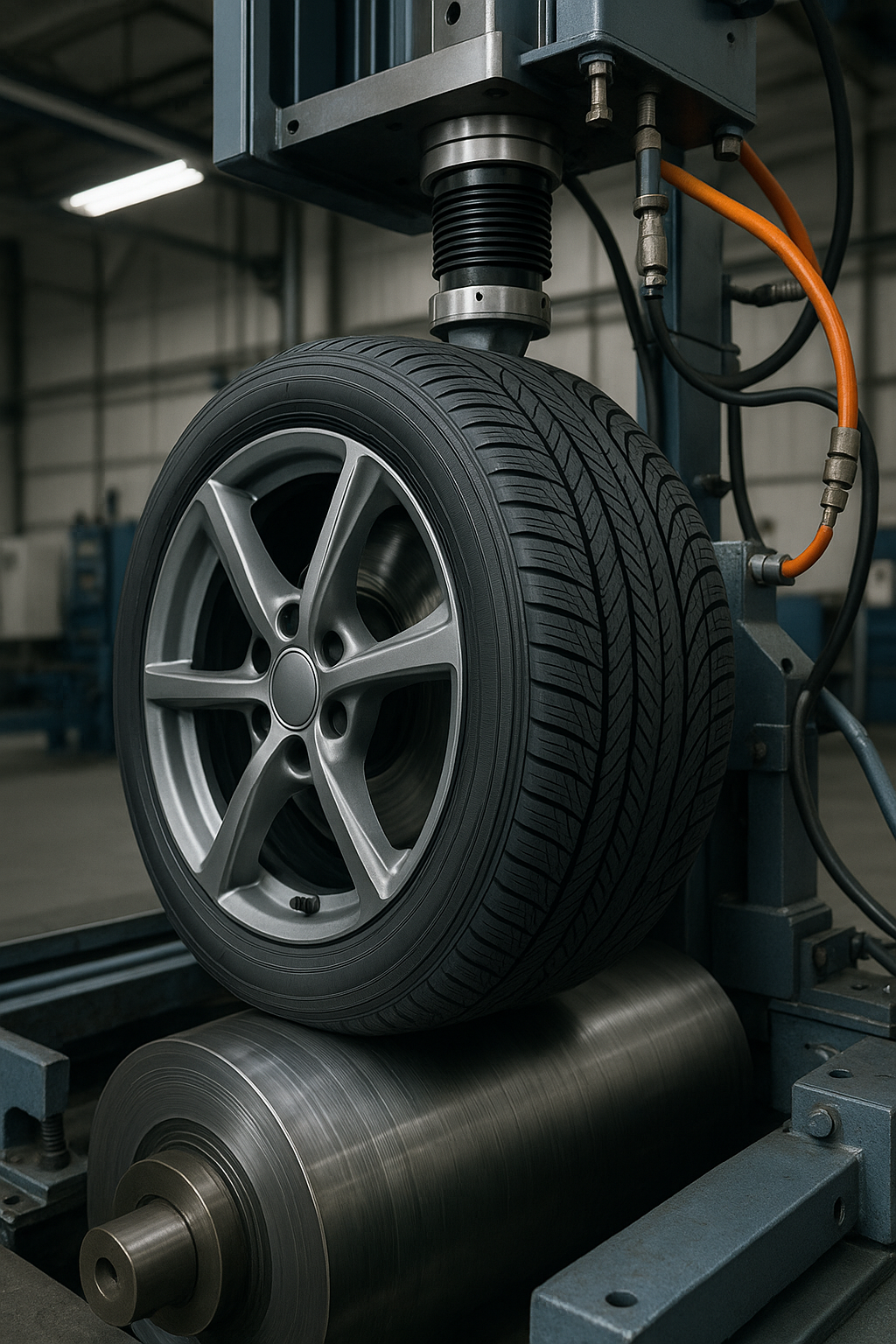
Thanks to AI-powered 3D modelling software, it is now possible to simulate thousands of road scenarios without multiplying physical tests. Automated test benches reproduce extreme conditions and guarantee reliable analyses of durability and energy efficiency.
Biomimetic design
Structures inspired by nature (reptile skins, octopus suckers) offer a Exceptional grip on wet or snowy roads, reducing noise emissions and optimising energy consumption.
Airless and self-healing tyres
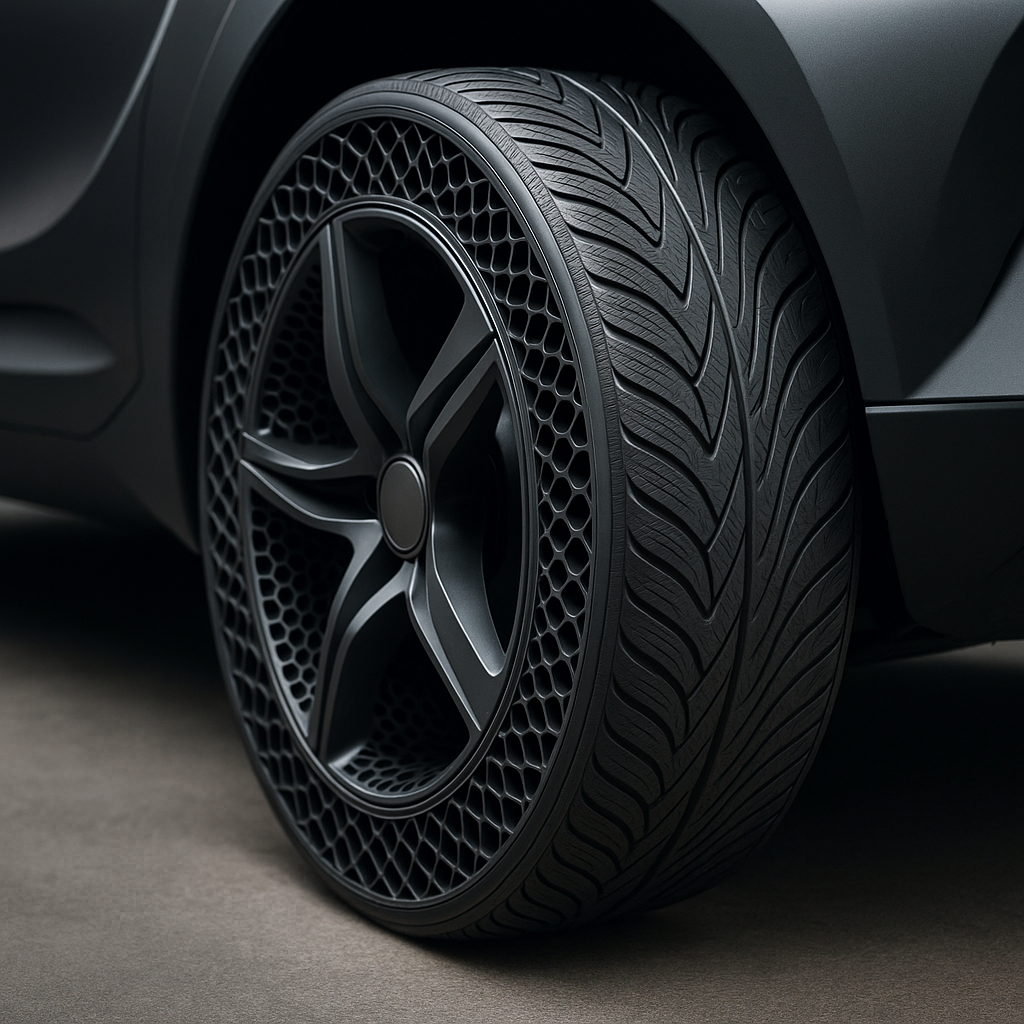
Tires without compressed air, such as Michelin Uptis, make punctures obsolete. Lighter and more durable, they improve energy efficiency and reduce maintenance. Some models go even further by integrating treads repairable or replaceable.
⚙️ Adaptive and evolving tyres
New technologies allow tyres to adapt their rigidity or flexibility according to the terrain, thanks to micro-motors or active fluids. In the city, they become silent and flexible, while off-road they stiffen to offer better grip.
Artificial intelligence applied to tyres
AI optimises design (via generative algorithms), detects anomalies invisible to the naked eye and anticipates maintenance needs. For fleets of heavy goods vehicles, she chooses the most suitable tyres according to road conditions, thus reducing costs and emissions.
Recycling and sustainable materials
New erasers made from renewable sources such as dandelions or rice reduce dependence on natural rubber. Pyrolysis combined with AI makes it possible to recover up to 90 % of a tyre’s components. The first biodegradable tyres should become widespread by 2025.
Electric and autonomous vehicle tyres
The 2025 tyres are designed to support the weight of batteries, reduce rolling resistance and extend the range. They communicate with onboard systems to anticipate braking, grip and active safety.
Regulations, traceability and blockchain
New regulations are imposing increased transparency: RFID tags and QR codes Information on the history of the tyre. Some brands go further by integrating the Blockchain for tamper-proof traceability.
Industrial partnerships and start-ups
Strategic collaborations are emerging: Michelin and Google Cloud on data, Bridgestone and AWS on IoT. Start-ups are innovating in nanomaterials, self-healing, or piezoelectric sensors.
Data exploitation and cybersecurity
Connected tyres generate valuable data for manufacturers and insurers. Cybersecurity is becoming a priority with OTA updates, encryption protocols, and local storage mandated by regulators.
Reducing emissions and ecological challenges
The new designs reduce CO₂ emissions by 8 to 12 % per 100,000 km for an electric vehicle. Bio-based tyres also limit harmful particulate matter, a crucial issue for urban areas.
3D printing and additive manufacturing
3D printing is paving the way for bespoke tyres, adapted to driving style, region or climate conditions. Tyre prototypes capable of generating electricity Thanks to piezoelectric materials, it is also being developed.
Tyre as a Service (TaaS) and new business models
The TaaS model transforms the tyre into a service: a subscription that includes supply, maintenance, replacement, and automatic recycling. A revolution in fleet management.
Distribution, logistics and services
The distribution is automated with robotic centres capable of preparing an order in a few minutes. The services of Express home assembly or in the workplace, in under 24 hours, become a standard.
❓ 2025 Tyre FAQ
What are the advantages of airless tyres?
They eliminate the risk of punctures, reduce maintenance, and improve durability.
Is AI reliable for tyre maintenance?
Yes, it analyses billions of data points to anticipate anomalies and wear and tear.
How long do new tyres last?
Until 80,000 km, which is 20 to 30 % more than traditional tyres.
Are tyres 100 % recyclable?
Not yet, but innovations in pyrolysis and chemical regeneration are already achieving more than 85 %.
Are electric vehicle tyres different?
Yes, they support the weight of the batteries and reduce rolling resistance to preserve the range.
Do connected tyres pose cybersecurity risks?
Manufacturers are now integrating encryption, OTA updates, and local storage to ensure data security.
✅ Conclusion: the tyre, a central player in sustainable mobility
2025 marks a A pivotal year for the tyre world. Futuristic design, embedded intelligence, sustainable materials, cybersecurity, and new business models: tyres are becoming a key component of safer, greener, and more connected mobility.
The future of tyres is being written today, through collaboration between manufacturers, start-ups, researchers and consumers.