The evolution of modern all-terrain tyres
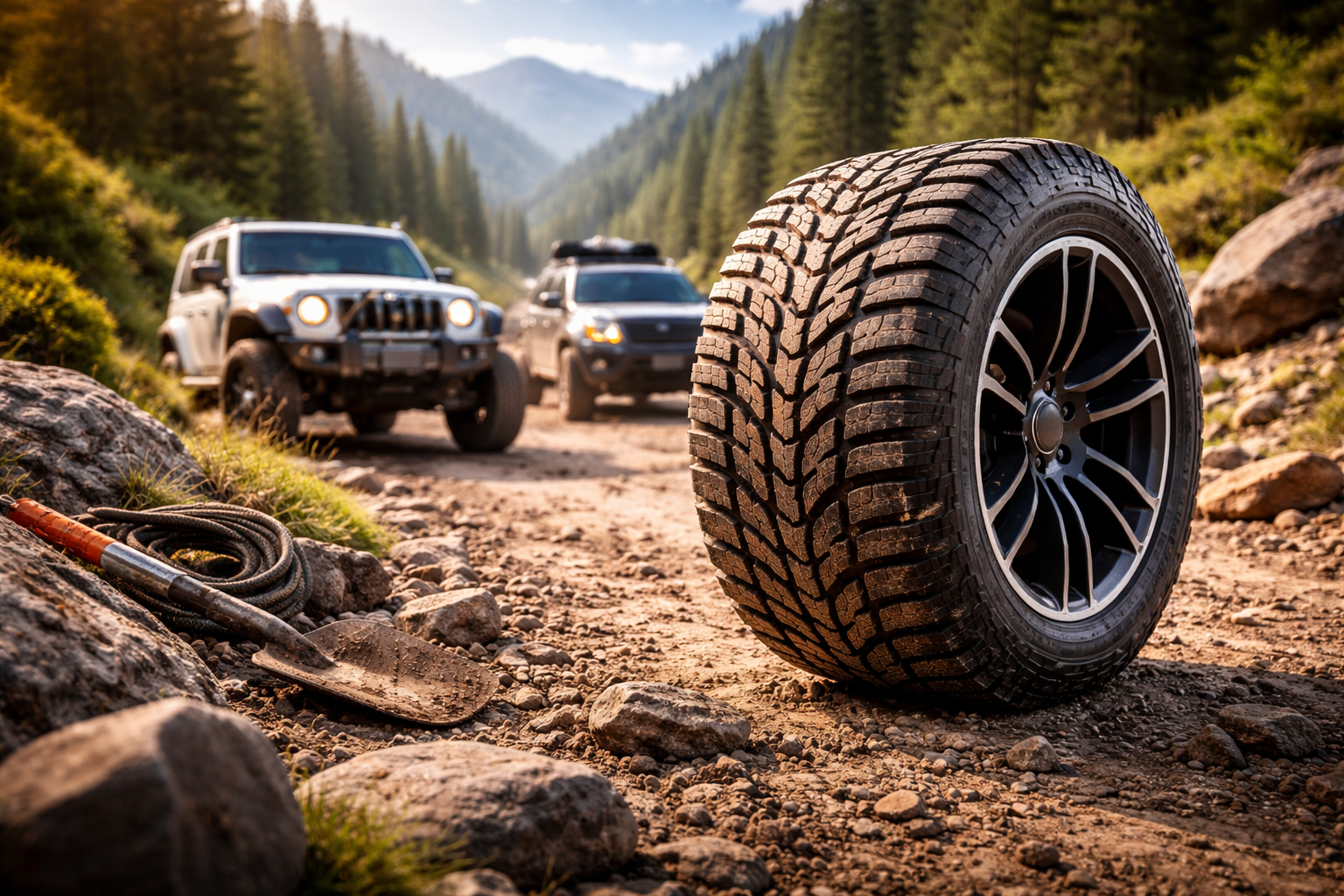
The modern all-terrain tyres They no longer really resemble generations of the past. Long perceived as very specialised tyres, noisy on the road and reserved for extreme uses, they have evolved considerably. Today, manufacturers are looking to offer profiles capable of better combining off-road mobility, resistance to aggression, stability on asphalt and driving comfort. This transformation goes hand in hand with the evolution of the vehicles themselves, ranging from leisure 4xs, versatile pickups and adventure-styled SUVs.
Where do off-road tyre developments come from?
The evolution of all-terrain tyres is directly linked to that of vehicles and their uses. In the past, off-road tyres were primarily designed for utility vehicles, rustic 4x4s or demanding professional applications. Comfort, noise or on-road precision were often secondary considerations.
Today, the situation has changed. Many drivers want a tyre capable of:
- Riding on the road all week,
- remain credible on paths, tracks or loose ground,
- offer more comfort than a pure off-road tyre,
- to better resist wear and tear,
- Maintain good safety in the rain.
It is this search for balance that has prompted manufacturers to modernise their all-terrain ranges.
The great transformations of modern off-road tyres
1. Smarter sculptures
Tread patterns have evolved considerably. Modern tyres retain pronounced blocks to ensure traction on dirt, mud, stones or gravel, but their architecture is now better designed to remain more stable on the road.
Manufacturers are looking to achieve:
- improved sludge evacuation,
- better grip on loose terrain,
- less vibration on tarmac,
- more regular wear.
2. Stronger flanks
The sidewall of an all-terrain tyre is particularly vulnerable to cuts, stones, roots, or impacts. Modern generations therefore focus on more robust reinforcements, capable of better withstanding damage without making the tyre unnecessarily rigid.
3. Improved wet grip
This is one of the great advances in recent all-terrain tyres. Older models could be penalising on wet surfaces. Modern versions focus more on securing road behaviour, with better-formulated rubber compounds and more effective tread patterns for channelling water.
4. A reduction in noise
Road noise has long been the Achilles' heel of the all-terrain tyre. Manufacturers have made notable progress in this area, particularly on the tread patterns. All-terrain. The goal isn't to compete with a touring tyre, but to make everyday use much more acceptable.
5. Better-managed wear and tear
Modern off-road tyres need to last longer, including on the road. This has led manufacturers to improve ground pressure distribution, tread block stability, and overall carcass design.
Towards more versatile tyres
One of the most visible changes is the rise of spiked tyres. All-terrain. They represent a very suitable solution today for many drivers who want neither a purely road tyre nor an extreme tyre designed for deep mud.
This modern category aims to offer:
- good behaviour on tarmac,
- real traction on tracks and paths,
- better stability at sustained speed,
- a more bearable sound level,
- A more assertive aesthetic for SUVs and pick-ups.
In practice, the modern all-terrain tyre often becomes a smart compromise tyre, designed for a variety of uses rather than a single extreme situation.
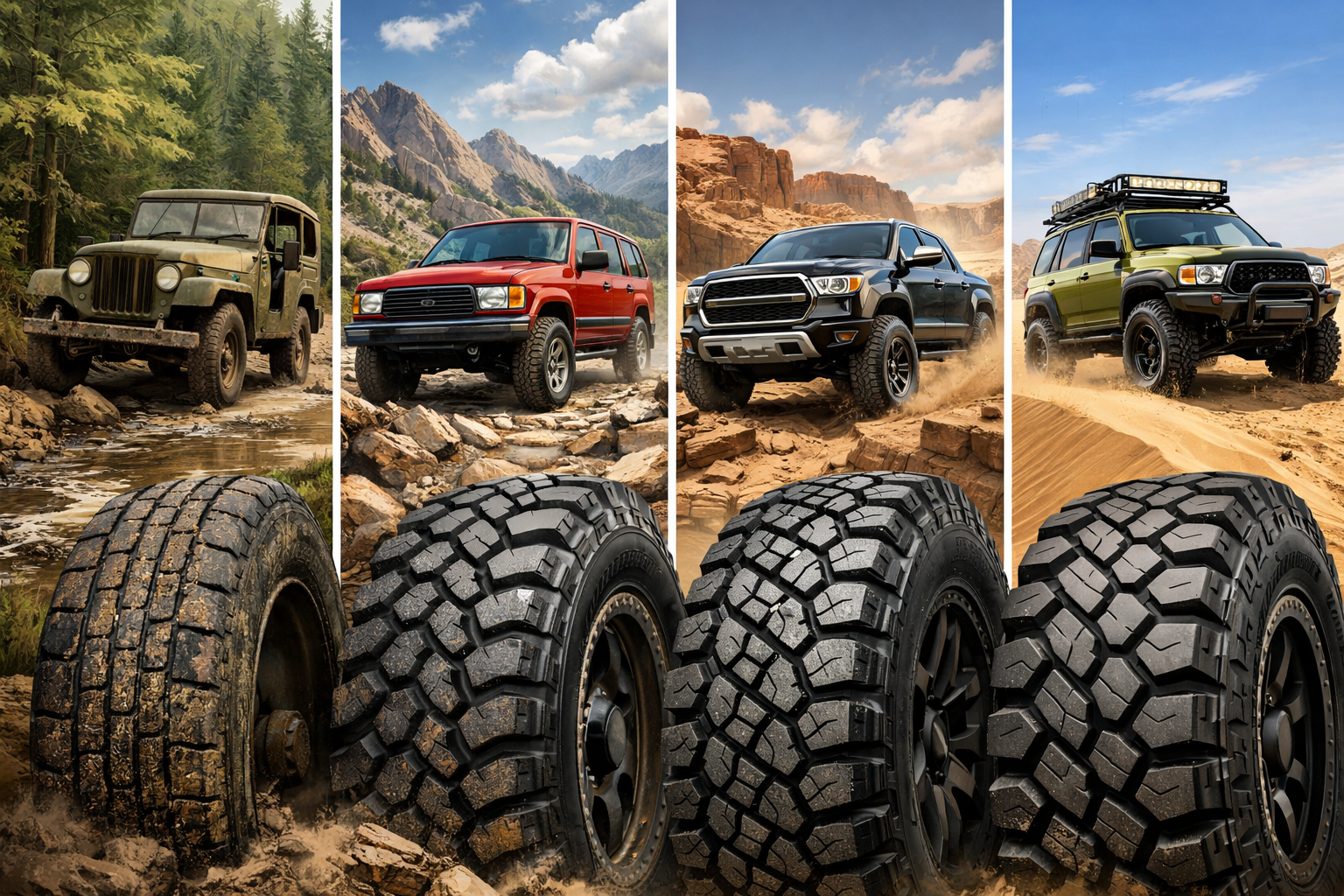
Technologies that are truly changing things
More advanced gum blends
Current compounds aim to reconcile cut resistance, grip on varied terrains and a more interesting lifespan. This is an essential lever in the evolution of modern all-terrain tyres.
Better optimised carcasses
The carcass plays a major role in stability, comfort, and durability. Modern tyres use structures that can better distribute stresses, which improves both road holding and resistance on rough terrain.
More functional shoulders
On many tread patterns, the tyre shoulders contribute more to traction and sidewall protection. They also help to maintain grip when the terrain becomes softer or more irregular.
A design more oriented towards real-world use
Progress doesn't just come from raw technology. It also comes from a better understanding of the actual usage by drivers. Manufacturers are no longer developing tyres solely for pure off-roading, but for mixed use combining road, leisure, travel and trails.
How to choose according to its use?
Not all modern all-terrain tyres meet the same need. The right choice depends on the level of off-road requirement and the time spent on tarmac.
For mixed road and trail use
A tyre All-terrain Modern is often the most coherent choice. It brings good versatility without too much degradation of ride comfort.
For more committed use
If the vehicle is regularly driven on very loose, stony or muddy terrain, a more aggressive tread pattern may be preferable. However, you will have to accept more noise, vibrations, and sometimes faster wear on the road.
For an SUV, mainly for road use
Some drivers opt for an adventurous look despite predominantly urban or motorway use. In this case, it is better to favour a tyre that maintains genuine road safety and a good level of comfort, even if its extreme off-road capabilities are more limited.
What drivers now expect
The modern driver expects more than just a robust tyre. They want a product that can inspire confidence in all circumstances, cope with long journeys, withstand adventurous use, and remain a pleasure for everyday driving.
The most frequent expectations concern:
- versatility,
- longevity,
- wet grip,
- acoustic comfort,
- resistance on difficult terrain.
It is precisely this combination that guides the evolution of the modern all-terrain tyre.
FAQ – The Evolution of Modern All-Terrain Tyres
How have modern all-terrain tyres evolved?
They have become more versatile, with better off-road capability, increased on-road comfort, better wear control, and often lower noise levels than before.
What is the difference between an all-terrain tyre and a mud-terrain tyre?
The all-terrain tyre is designed for mixed use on roads and trails, while the mud-terrain tyre is intended for more extreme terrains such as deep mud or very rough areas.
Are modern all-terrain tyres quieter?
Yes, especially in the all-terrain category. Manufacturers have improved tread patterns and internal structure to limit road noise on tarmac.
Can all-terrain tyres be used every day?
Yes, provided you choose a suitable profile. Many modern tyres are designed to withstand daily road use while retaining genuine off-road capabilities.
Why do manufacturers keep evolving these tyres?
Because vehicles and driver expectations are changing. Drivers today want tyres that are robust, efficient, comfortable and versatile.
To remember
The’Evolution of modern all-terrain tyres It rests on a simple idea: to offer more complete tyres. Manufacturers are no longer just looking to improve off-road traction. They also want to enhance on-road safety, reduce noise, improve wear, and offer true versatility in use.
As a result, today's all-terrain tyres are often better suited to drivers' actual needs than a few years ago. They remain robust and effective off-road, but are also becoming more practical for everyday use on SUVs, 4x4s and pick-ups.
To order your all-terrain, 4×4 or SUV tyres, there's only one place: Pneus-Online.co.uk !