Winter tyres in spring: why it can cost you dearly
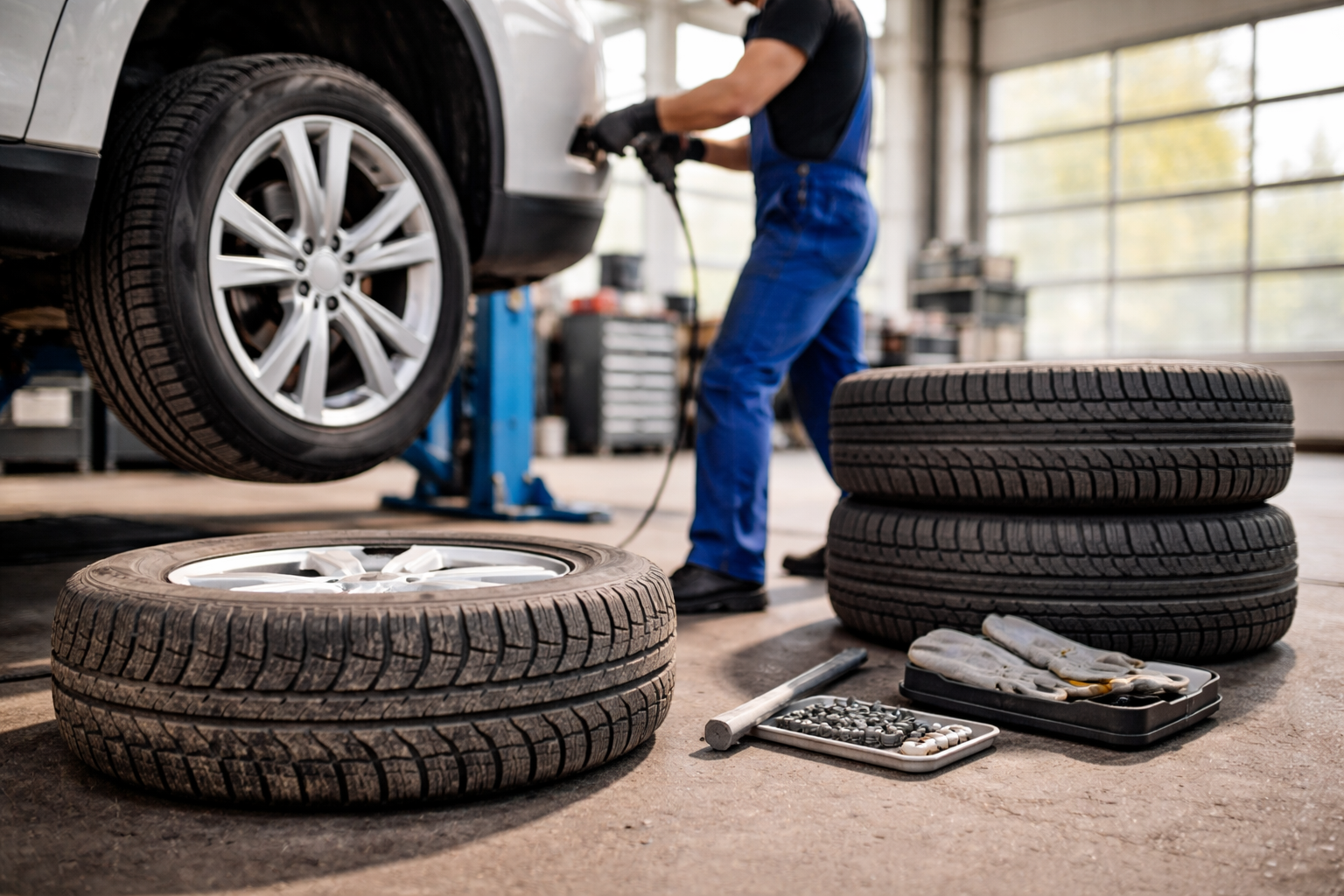
Keeping your winter tyres after 1st April might seem convenient… but this choice could impact your safety, your budget, and even expose you to penalties. With rising temperatures, driving on unsuitable tyres becomes a real trap for many motorists.
Summary
- Why keeping your winter tyres in the spring is a bad idea
- What heat really does to your winter tyres
- Consumption, wear and tear, and safety: the real consequences
- The legal risks not to be underestimated
- When and how to switch to summer tyres
- Our tips for saving on your tyres
- Frequently Asked Questions
Why keeping your winter tyres in the spring is a bad idea
As the warmer weather arrives, many drivers choose to keep their winter tyres. The reason? To avoid a trip to the garage, postpone an expense, or simply to wear them out.
On paper, it might seem clever. In reality, this choice is counterproductive. Winter tyres are designed for cold conditions, often below 7°C. Beyond that, their performance deteriorates rapidly.
What heat really does to your winter tyres
Winter tyres use a specific rubber compound, which is softer and enriched with silica. This composition allows them to remain flexible on cold, snow-covered, or icy roads.
But as soon as the temperatures rise:
- The eraser is getting too soft
- The tyre deforms more
- Handling loses precision
- Rolling resistance increases
Result: your car becomes less stable, especially on dry or hot roads.
Consumption, wear and tear, and safety: the real consequences
Driving with winter tyres in spring results in several negative effects:
- Extended braking up to 20 % further
- Overconsumption up to +0.5 L/100 km
- Accelerated wear up to 40 % shorter service life
- Increased noise Discomfort on long journeys
Over several thousand miles, these impacts translate into a real cost far higher than a simple tyre change.
The legal risks not to be underestimated
The law does not prohibit driving on winter tyres after March 31st. However, it does require a minimum tread depth of 1.6 mm.
Or, with accelerated wear in hot periods, you can quickly fall below this threshold without realising it.
Possible sanctions:
- Fine of €135 per tyre
- Vehicle immobilisation
A not insignificant financial risk, especially if several tyres are affected.
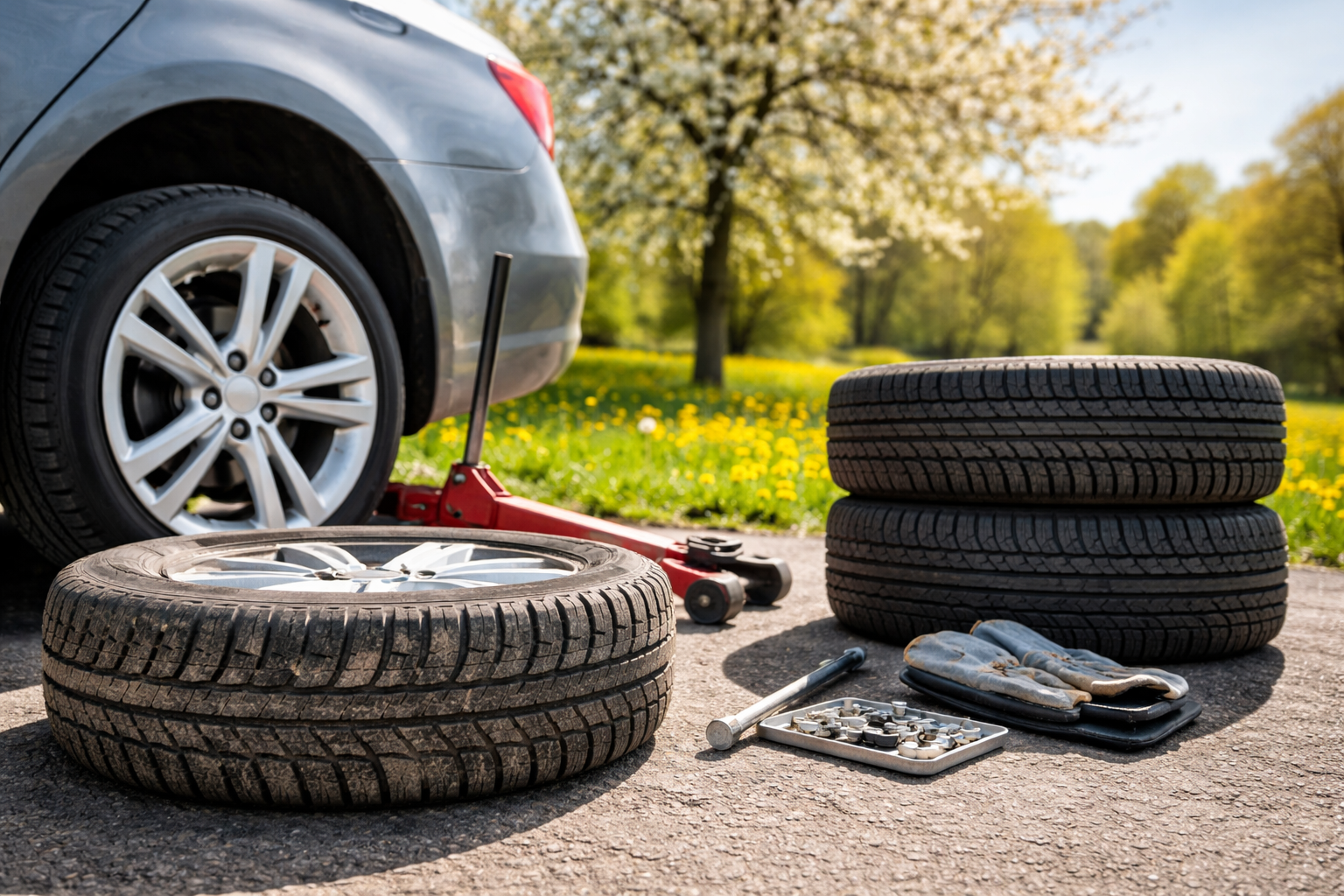
When and how to switch to summer tyres
The rule is simple: as soon as the temperature is consistently above 7 °C, summer tyres become more effective.
In most regions, this corresponds to the period from late March to early April.
You have two options:
- Complete overhaul at a professional's
- Wheel change if you have a second set of rims
The cost remains reasonable compared to the losses incurred by inappropriate use.
Our tips for saving on your tyres
To optimise the lifespan of your tyres and reduce your expenses:
- Store your tyres in a dry, dark place
- Rotate front/back every 10,000 km
- Check the pressure regularly
- Use a security service if necessary
Good management can extend the life of your tyres by several seasons.
FAQ: Winter tyres in Spring
Is it legal to drive with winter tyres in the summer?
Yes, but they must comply with the legal minimum depth of 1.6 mm. However, this remains inadvisable for safety and wear reasons.
Les pneus hiver s'usent plus vite en été car ils se composent d'un caoutchouc plus tendre qui assure une adhérence optimale sur la neige et la glace. Lorsque les températures augmentent, ce caoutchouc ramollit davantage, ce qui le rend plus susceptible à l'abrasion. Par conséquent, les pneus hiver utilisés par temps chaud s'usent plus rapidement que les pneus d'été, qui sont conçus avec un composé de caoutchouc plus dur pour mieux résister à l'usure par temps chaud.
Their softer rubber is designed for the cold. At high temperatures, it degrades more quickly and loses effectiveness.
Do winter tyres use more fuel?
Yes. Their rolling resistance is higher, which increases fuel consumption, especially on long journeys.
When should you switch to summer tyres?
As soon as temperatures regularly exceed 7°C, usually in spring.
Is it profitable to change your tyres twice a year?
Yes. This extends the lifespan of each set of tyres and avoids costly premature wear.
Conclusion : Keeping your winter tyres on in spring might seem economical in the short term, but it's often the opposite in the long run. Safety, fuel consumption and wear: it's better to adapt your tyres to the season.