What to do when a tyre regularly loses pressure?
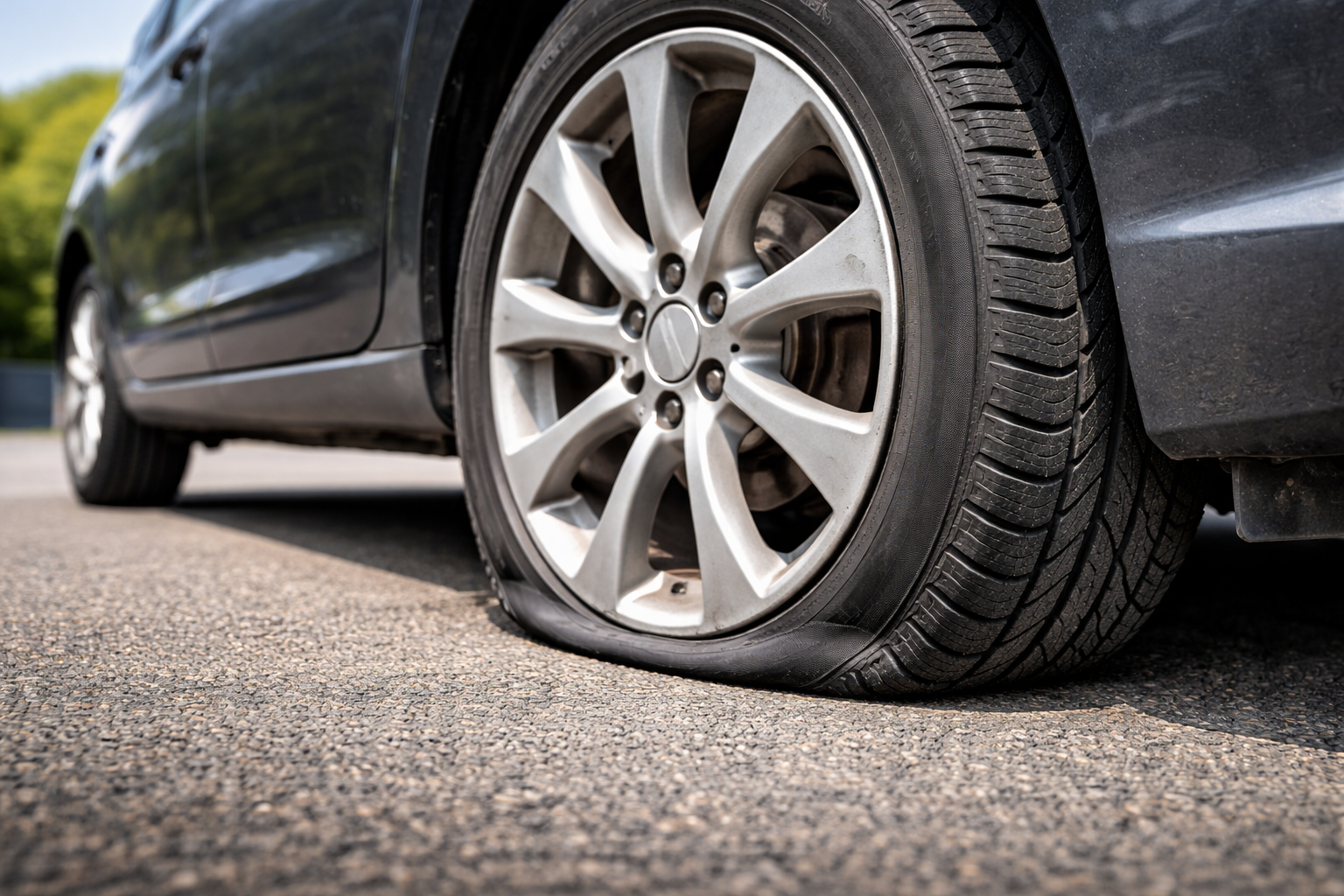
A tyre that frequently deflates is almost always a sign of a slow puncture (nail/screw, valve, rim, bead, porous). Here's how to diagnose it quickly, when to repair it, when to replace it and how to prevent the problem from recurring.
Pourquoi un pneu perd-il régulièrement de la pression ?
One steady pressure loss generally indicates a Slow leak rather than a simple variation linked to the weather. The most frequent causes are:
- Planted object (nail, screw, staple) in the tread: the leak can be gradual and difficult to spot.
- Faulty valve (shutter, seal, valve base): very common, especially after several winters.
- Leak at the heel (tyre/wheel contact area): corrosion, dirt or improper fitting.
- Damaged wheel rim (veiled, cracked): intermittent leak, sometimes worsened on rough roads.
- Porous or aging tyre micro-cracks, tired rubber.
- TPMS sensor / TPMS valve Ageing joint, tightening, corrosion.
To keep in mind If you're frequently reinflating it (every week or every 10–15 days), there's very likely a leak to be found.
Quick home diagnosis (in 10 minutes)
1) Check the tyre pressure when “cold” and compare it to the manufacturer's recommended value.
Measure the pressure before riding (Cold tyre). Compare with the manufacturer's label (often on the door, fuel flap, or manual). Note the value and check again 24–48 hours later.
Visual inspection
- Check the tread: presence of a nail/screw, damp area or stuck-on dust.
- Inspect the sidewalls: bulges, cuts, scuffing.
- Check the rim: visible impact, crack, damaged edge.
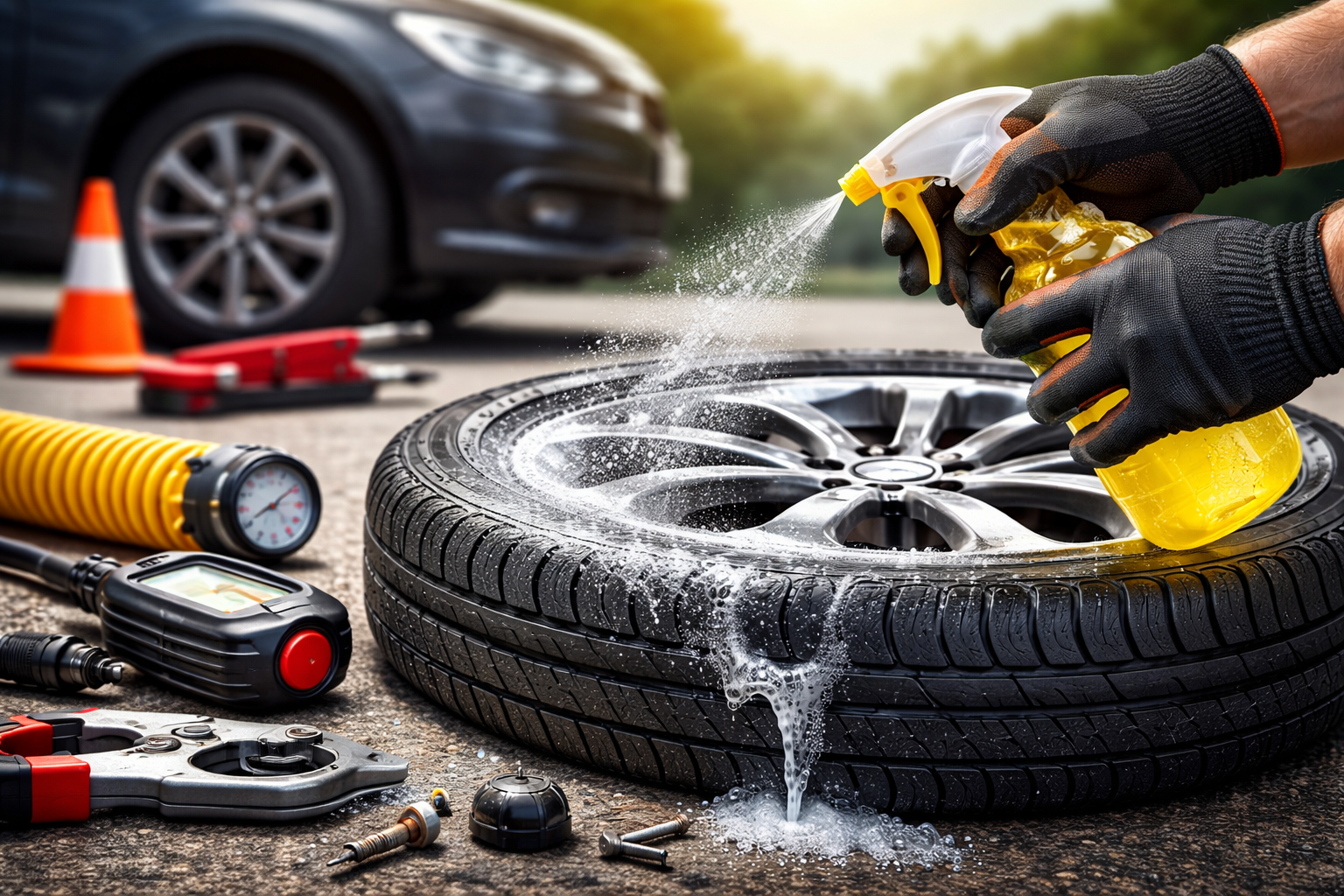
3) Soapy water test (most effective at home)
Mix water + washing-up liquid. Spray or brush on:
- On the Valve (shutter included),
- all around talon tyre/wheel,
- On the Tread and the suspect areas.
West bubbles indicate the location of the leak.
4) Check the valve and plug
A valve cap does not provide the main seal, but it does offer protection. If the leak originates from the internal seal, replacing the valve (or valve core) may be sufficient.
5) If the leak cannot be found
A slow leak may only appear under load or at certain angles (buckled rim, bead). In this case, an inspection at a workshop (bath, dismantling, rim/TPMS inspection) is recommended.
Safety: When not to ride
Avoid driving and get checked immediately if:
- the pressure is dropping Very quickly within a few hours,
- you observe a Hernia or one cut on the flank,
- you have driven Under-inflated (very “squashed” tyre),
- The vehicle pulls to one side or vibrates abnormally.
Advice: An under-inflated tyre heats up, wears out faster and increases the risk of a blowout. Adjust the pressure as soon as possible.
Repair or replace: which to choose?
Repair possible if:
- the perforation is located on the Tread (not on its side),
- the diameter of the hole is reasonable and the internal structure is not damaged,
- The tyre did not run for long at very low pressure.
Replacement recommended if:
- The leak is on Flanc (structural risk),
- le pneu présente une Hernia, visible threads, or tears,
- the tread is close to the wear indicator,
- the tyre is old and cracked (micro-cracks).
And what if it's the rim or the bead?
A heel leak is often treated by Dismantling, cleaning/treatment (corrosion), and reassembly with the correct products. A buckled/cracked rim may require specialist repair or replacement.
Preventing a further loss of pressure
- Monthly check Check the pressure at least once a month and before a long journey.
- Cold pressing Always measure before riding for a reliable reading.
- Valves Replace them regularly (often at each tyre change) and check the TPMS seals.
- Wheel cleaning In case of corrosion (winter/salt), cleaning the rim seat can prevent bead leaks.
- Avoid shocks Kerbs, potholes and pavements can damage the rim and bead.
Tip: If the pressure on the same tyre is always dropping, note the rate (e.g. -0.2 bar/week). This information will speed up diagnosis at the garage.
FAQ: Tyre pressure dropping
Can a drop in pressure come from the cold?
Yes. The pressure drops when the temperature falls. However, if a single tyre loses significantly more pressure than the others, it's usually a slow leak (valve, nail, bead, rim).
How long can I drive on a slow-leaking tyre?
As little as possible. Even a slow leak increases wear and heating. Re-inflate to the recommended pressure and have it checked as soon as you notice a repeated drop.
How to know if the valve is the problem?
Perform a soap and water test on the valve and the seal: bubbles indicate a leak. A worn valve or a tired TPMS seal is a common cause.
Can a sidewall puncture be repaired?
As a general rule, no: a perforation or hernia on the flank affects the structure. Replacement is strongly recommended for safety.
Why won't the garage take back the tyre if I've reported the problem?
Certain returns are subject to deadlines and procedures (photos, proof of pressure, inspection). If the claim is filed late, the supplier may refuse. Hence the importance of acting at the first signs.
What pressure should I inflate my tyres to?
At the value indicated by the manufacturer (door sticker / fuel filler flap / manual). The pressure often depends on the load (driver alone vs. loaded).
Would you like to go further?
If one of your tyres is regularly losing pressure, the most effective thing to do is Locate the leak (soapy water) and then have it confirmed in a workshop for a durable and safe repair.