Heatwave and tyres: what temperature does the road reach and do your tyres wear out faster?

When temperatures soar in summer, the heat isn't just about the ambient air. The road surface heats up, the tyres heat up while driving and their pressure changes naturally. So, what really happens when you take to the motorway in 37 or 38 °C heat?
Summary
- Why does heat affect your tyres directly?
- Why do tyres heat up on the motorway?
- Does the heat wear tyres out more?
- What happens to tyre pressure when the weather is hot?
- Why is under-inflation particularly problematic in summer?
- What to check before a long journey in hot weather?
- Which tyres should I choose for driving in summer?
1. Why does heat act directly on your tyres?
It is necessary to distinguish between air temperature forecast by the weather and that of the road surface. A dark road surface exposed to the sun for several hours absorbs a significant amount of solar radiation. Its surface can therefore become much hotter than the ambient air.
During a day in 37 or 38 °C, a heavily exposed road surface can exceed 50 °C and, under certain very sunny conditions, reach or exceed the 60 °C.
This does not mean that a tyre will automatically be damaged. The car tyres are designed to withstand high operating temperatures, provided they are correctly inflated and suited to the vehicle.
2. Why do tyres heat up on the motorway?
The road surface temperature is only part of the phenomenon. As the car drives, the tyre continuously deforms at its contact patch with the road. With every wheel rotation, the casing and the rubber work and then return to their shape.
This deformation itself generates heat. The higher the speed, load and journey duration, the more the tyre is stressed. It is notably for this reason that the choice of good summer tyres is particularly important for high-mileage drivers.
On the motorway, several factors combine
- A high outside temperature ;
- sun-heated tarmac; ;
- a constant speed for several hours; ;
- the load of the vehicle and luggage; ;
- permanent tyre deformation ;
- potential insufficient pressure.
Drivers who use their car all year round with the same set of tyres can also compare the all-season tyres, which are a versatile alternative to seasonal tyres.
3. Does the heat wear tyres out more quickly?
Yes, high temperatures can promote tyre wear, particularly when combined with high speed, a heavy load or incorrect pressure.
When the rubber heats up, its properties change. On a long motorway journey, this can increase the stress on the tread and gradually accelerate its wear.
Longevity also varies depending on the chosen model. Some tyres are more geared towards endurance, such as the Michelin Primacy 4, known for favouring longevity and the maintenance of performance.
What really accelerates wear and tear in summer
- a Under-inflation ;
- a heavily laden car ;
- heavy acceleration and braking; ;
- a high speed maintained for a long time; ;
- incorrect geometry ;
- heavily worn or ageing tyres ;
- a highly abrasive coating.
4. What happens to tyre pressure when the weather is hot?
The tyre pressure varies with their temperature. When the air contained in the tyre heats up, the pressure rises naturally.
After driving several dozen miles on the motorway, it is therefore normal to measure a higher pressure than the one recorded before departure.
5. Why is under-inflation particularly problematic in summer?
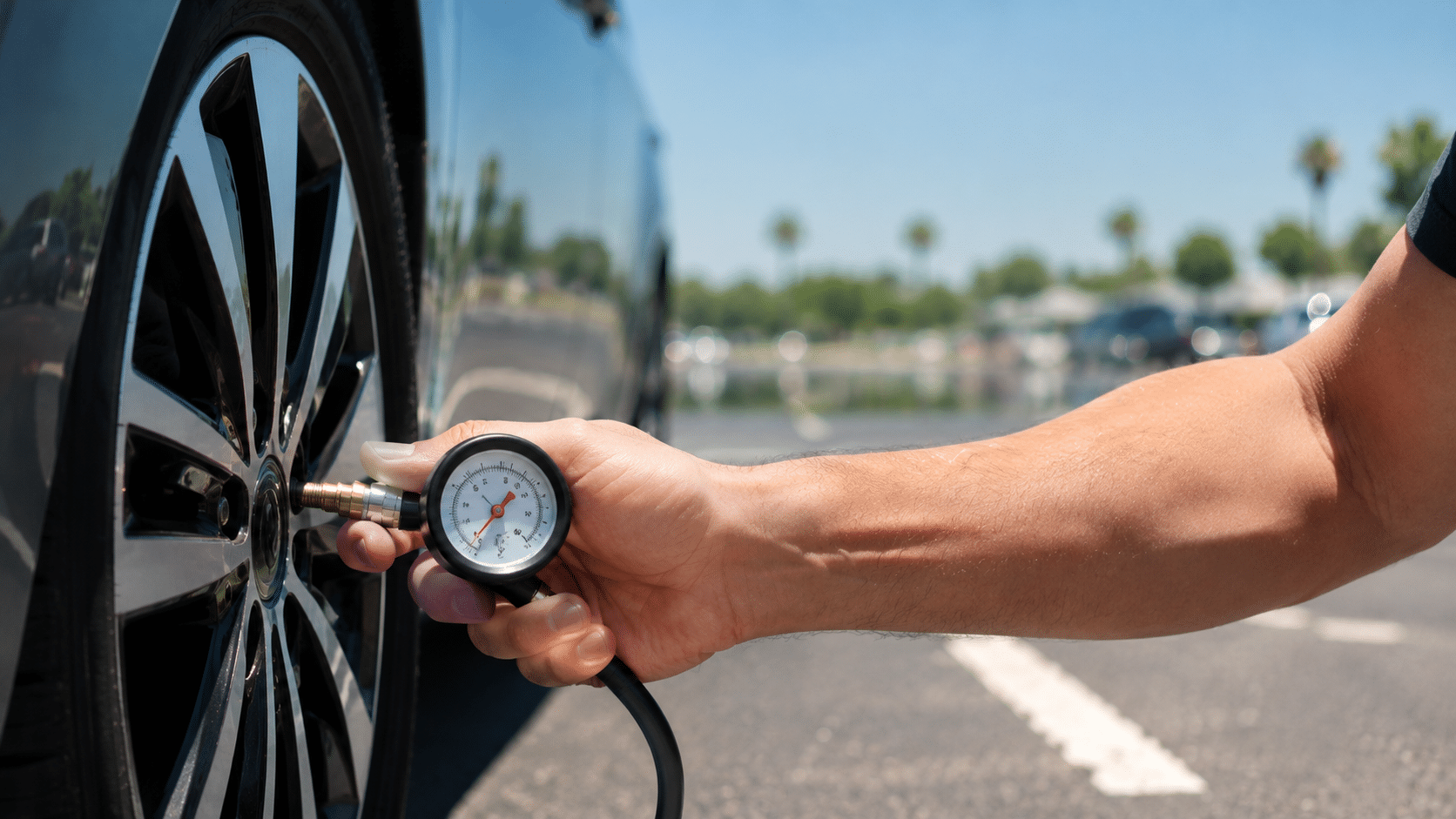
When a tyre lacks pressure, its sidewalls deform more during driving. This additional deformation increases its heat build-up. A good tyre pressure monitoring so before departure it makes it possible to limit this phenomenon.
With a loaded car, a scorching road and several hours of motorway, a Under-inflated tyre combines several adverse factors.
- an increase in the tyre's internal temperature; ;
- A premature wear of the tread ;
- an increase in rolling resistance; ;
- an increase in fuel or energy consumption; ;
- deterioration in road handling; ;
- an increased risk of tyre deterioration.
6. What to check before a long journey in hot weather?
Before driving several hundred miles on the motorway, particularly during a heatwave, a few simple checks will allow you to set off in better conditions.
Tyre pressure
Check it cold, ideally before setting off. If the car is carrying several passengers and a lot of luggage, use the manufacturer's recommended pressure for a loaded vehicle. You can find more information in our tyre pressure advice.
2. Tyre wear
Monitor regularly tyre wear and the depth of the sculptures. A significant difference between the inner and outer sides can notably indicate a geometry problem.
3. The tyre sidewalls
A hernia, a cut, a crack or an abnormal deformation must be checked before departure. The visual condition of the tyre is particularly important before a long, high-speed motorway journey.
4. Dimensions and indices
When replacing your tyres, ensure you follow the tyre sizes, the’Load index and the’Speed index designed for your vehicle. You can use the search engine Tyres online by size to identify the compatible references.
5. The vehicle load
Going on holiday often means a full boot, several passengers and sometimes a roof box. This extra load increases the stress placed on the tyres. Therefore, remember to check the manufacturer's specific recommendations for a loaded vehicle.
6. Adopt a smooth driving style
Smooth driving helps to limit the stress placed on tyres. Harsh acceleration, late braking and rapid changes of direction increase the forces applied to the rubber and can contribute to accelerating its wear.
7. Which tyres should you choose for driving in summer?
The summer tyres are specially designed to offer good performance when temperatures are mild or high, on both dry and wet roads.
The choice must always respect the approved dimensions, load index and speed rating recommended for your vehicle.
Before buying, it can be worth checking a summer tyre comparison in order to compare road holding, comfort, noise, and the balance between wear and mileage.
For those who wish to keep the same tyre fitment all year round, the All-season tyre comparison also allows you to check the performance of numerous models.
A model like the Nexen N Blue 4 Season exemplify this category of all-season tyres.
The drivers of electric cars must also take into account the vehicle weight, the instantly available torque and the rolling resistance.
And when the temperatures drop?
The constraints change when winter returns. At low temperatures, the winter tyres are designed with rubber compounds and tread patterns suited to cold conditions.
If you are looking for a year-round solution, the all-season tyres represent an alternative to the seasonal changes between summer and winter tyres.
Summary: the right habits during a heatwave
À 37 or 38 °C, the temperature of a road exposed to the sun can greatly exceed that of the air. On the motorway, tyres also heat up due to their continuous deformation and sustained high-speed driving.
Heat can help accelerate wear, but it never acts alone. Pressure, vehicle load, speed, driving style, the condition of the tyre and the quality of the road surface also play a major role.
FAQ: tyres and hot weather
What temperature can tarmac reach when it is 38 °C?
Road surfaces exposed directly to the sun can be much hotter than the ambient air. Under certain conditions, a dark pavement can exceed 50 °C and reach or exceed 60 °C.
Do tyres wear out faster when it is very hot?
Heat can help accelerate tyre wear, particularly when combined with incorrect pressure, a heavy load, high speed or dynamic driving.
Does tyre pressure increase with heat?
Yes. As the tyre and the air it contains heat up during driving, the pressure naturally increases. This is a normal phenomenon.
Should you deflate your tyres after driving in hot weather?
No. You should not deflate a hot tyre simply to get back to the pressure measured when cold. Checking and adjustment must be carried out when the tyres are cold, in accordance with the manufacturer's recommendations.
When should you check the tyre pressure before setting off on holiday?
Ideally before setting off, when the tyres are cold. The manufacturer's specific recommendations must also be taken into account when the vehicle is heavily loaded.
Which tyres are best to use in summer?
The summer tyres are designed specifically for mild and warm temperatures. The model chosen must nevertheless comply with the dimensions and ratings approved for your vehicle.
Conclusion
A day in 37 or 38 °C places more demanding conditions on tyres, particularly during a long motorway journey. The road surface temperature can be significantly higher than that of the air, while tyres heat up naturally while driving.
The best prevention remains simple: check the tyre pressure when cold, monitor the condition and wear of the tyres, follow the manufacturer's recommendations and adopt a smooth driving style.
If your tyres need to be replaced before departure, find our car tyres available on our website, as well as the Summer tyre tests and comparisons to choose a model suited to your vehicle and your use.