
Which tyre should I choose for mixed road and motorway driving?
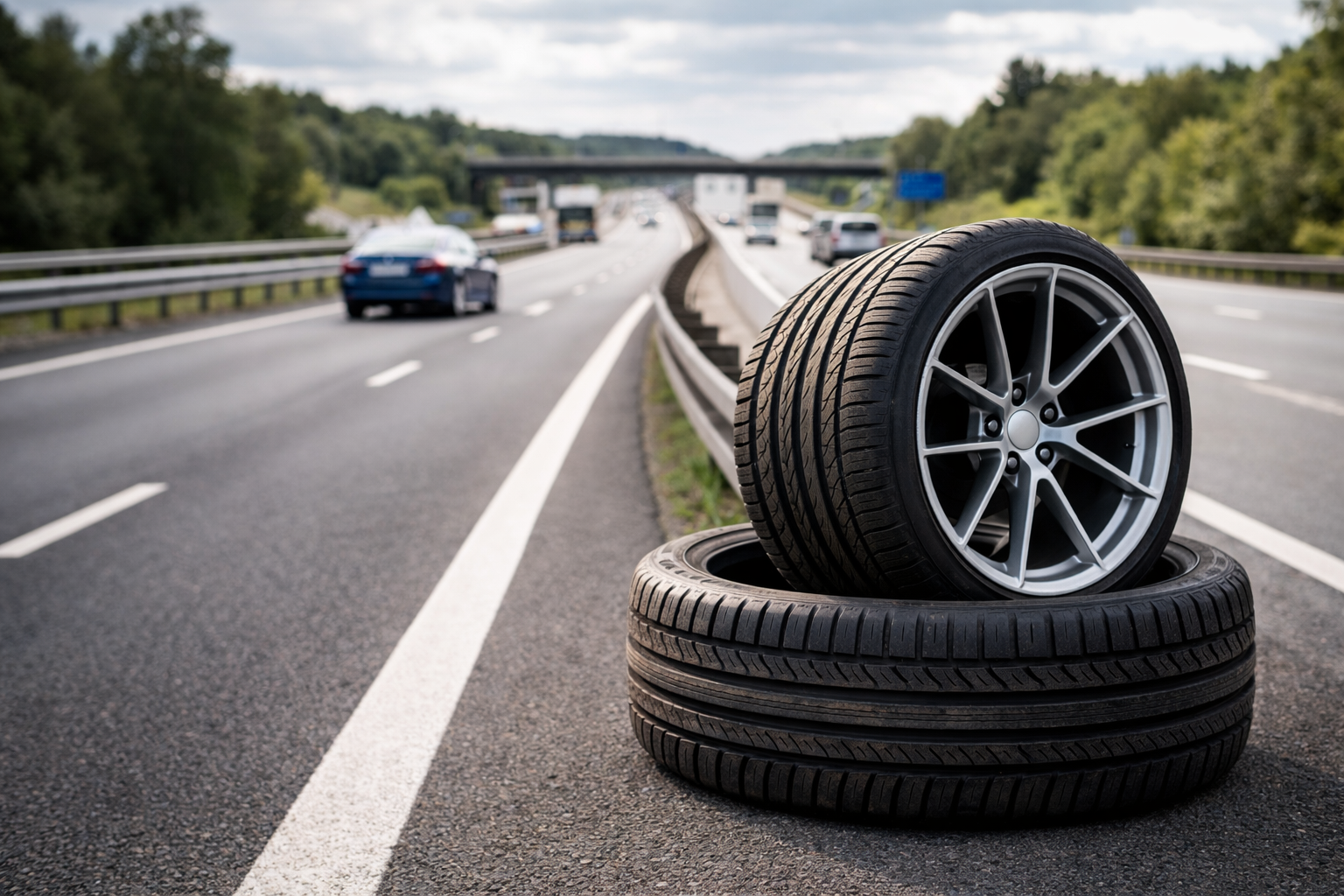
Choose the good tyre for mixed driving on the road and on the motorway It is essential to drive safely while maintaining a good level of comfort, stability and longevity. Between daily commutes, provincial roads, national roads and long stretches of motorway, the ideal tire must be capable of offering Good compromise between grip, silence, endurance and controlled consumption. In this practical guide, discover which criteria to prioritize, what type of tire to choose, and how to avoid the most common mistakes.
Why the choice of tire is important in mixed driving
One mixed driving on the road + on the motorway imposes various constraints on tires. On the road, the tire must absorb changes in the surface, offer grip at turns, brake effectively, and remain reassuring on degraded roads. On the highway, it must maintain excellent stability at sustained speed, To limit rolling noise and resist heating up over long distances.
A poorly chosen tire can quickly lead to:
- a decrease in comfort ;
- faster wear; ;
- an increase in Noise over a long distance; ;
- average stability at high speeds; ;
- decreased performance in the rain; ;
- a higher fuel or energy consumption.
For this type of use, the best choice is almost always a tire. Balanced and versatile, Rather than a model that is too radical or too specialized.
The profile of the good road tire + highway
The Good tire for mixed driving It is not the one who excels in one area, but the one who remains consistent in most situations.
Good stability on the highway
On a highway, the tire must ensure excellent directional stability, healthy steering, and good resistance to overheating. This is essential for driving comfortably over long distances.
A reassuring grip on the road
On secondary or national roads, the tire must offer good grip when braking, in curves and during acceleration, especially when the surface varies.
Good behavior in the rain
Mixed use often means driving in changing conditions. A high-performance tire on moist ground is indispensable to maintain security and serenity.
A contained noise level
The highway quickly reveals the acoustic defects of a tire. On long journeys, a quiet model significantly improves comfort on board.
Regular wear and tear
For drivers who travel on both the road and the motorway throughout the year, the Longevity becomes a real selection criterion. A balanced tire must offer good mileage without sacrificing safety.
Good to know: for mixed driving, the tires premium tourism and the tires Versatile, oriented towards comfort and endurance They are often the most relevant options.
The essential criteria to compare
1. Dry road driving
A good tire should remain precise and stable, both on the road and on the highway. This improves driving quality and overall safety.
2. Braking and grip on wet roads
This is one of the most important criteria. In mixed driving, you will inevitably encounter rain, water splashes, or wet roads. The tire must remain efficient and progressive.
3. Driving comfort
A tire that is too firm can become tiring in everyday use, especially on uneven roads. For mixed use, it is better to choose a model that properly filters out irregularities.
4. The noise of the wheels
The noise becomes particularly noticeable on the motorway. A quiet tire improves comfort on long journeys and reduces fatigue on board.
5. Longevity
Drivers who drive a lot on the road and on motorways are well advised to compare not only the purchase price but also the estimated lifespan of the tire.
6. Resistance to wear
A well-designed tire can also help to reduce fuel or energy consumption. This criterion is interesting for heavy-duty vehicles, without sacrificing safety.
Tyre summer, Winter Or 4 seasons : which one to choose?
The summer tire: the most common reference
The Summer tyre It remains the most suitable solution if you drive mainly in mild or warm temperatures. It generally offers the best balance between stability, braking, precision, and comfort for the road as well as on the motorway.
The winter tire: indispensable in cold weather
If you drive regularly in cold weather, on wet roads, in the mountains or in snow, a winter tyre It remains indispensable to maintain good security.
The 4-season tire: the practical solution
The all-season tyre It may be suitable for mixed driving if you are primarily looking for simplicity and live in a region with a moderate climate. It represents an interesting compromise for driving all year round with just one tire change.
However, for a very heavy rider or intensive highway use, an excellent summer tire in the hot season and a dedicated winter tire in the cold season often perform better.
Which tire for your actual usage?
You mostly do long highway trips
Focus on a tire that is focused on comfort, the stability, the silence and the Longevity. It is the best choice for accumulating kilometers without excessive fatigue.
You alternate between secondary roads and major highways
Opt for a premium or versatile touring tire that is reassuring in the rain, precise in everyday driving, and comfortable over long distances.
You drive a lot in all weather conditions
Adhesion on wet roads must become a priority. A balanced tire with excellent water drainage will be more consistent than a model that relies solely on durability.
You are looking first and foremost for economy of use
Compare the purchase price, lifespan, potential consumption, and overall performance level. The cheapest tire is not always the most cost-effective over the long term.
Mistakes to avoid
- Choose a tire only based on its price ;
- neglecting performance on wet road ;
- Opting for a tire that is too sporty for family or highway use; ;
- forget the criterion of rumbling ;
- mounting tires that are not suitable for the approved dimensions and indices; ;
- underestimating the impact of pressure on wear and consumption.
In mixed use, the most common mistake is choosing a tire that is too specialized, when a versatile model is often much more suitable for everyday use.
Tips to keep your tires lasting longer
- control the Pressure at least once a month; ;
- Have it checked Geometry if the vehicle is pulling to one side or if the wear is irregular; ;
- avoid abrupt braking and too rapid acceleration; ;
- regularly monitor the condition of the tread belt; ;
- adapt their speed and driving style to the weather conditions; ;
- replace the front tires before they lose too much efficiency in the rain.
A well-chosen and well-maintained tire allows you to maintain an excellent level of safety and comfort, both on the road and on the highway.
Clear summary
For one mixed driving on the road + on the motorway, You need to choose a versatile tire that can offer both stability, comfort, silence, wet grip and good durability. Premium touring tires and endurance-oriented models are often the most suitable. The best choice then depends on the annual mileage, the climate, the type of roads traveled, and the level of comfort desired.
FAQ on tires for mixed road and highway driving
Which tire should I choose to use on the road and on the highway?
To drive on the road and on the motorway, it is advisable to choose a versatile tire that is stable at high speeds, comfortable, quiet, and effective on wet roads.
Is a highway tire different from a road tire?
There is no real separate category called “highway tire”, but some tires are better suited for long journeys thanks to their stability, silence and durability.
Should we prioritize comfort or longevity?
For mixed driving, the best approach is to aim for balance. A good tire should be comfortable enough for long trips and durable enough to offer good value for money.
Are the 4-season tires suitable for the road and the highway?
Yes, 4-season tires can be suitable for mixed driving in regions with a moderate climate. They offer a convenient solution, but remain a compromise compared to a dual set of tires for both summer and winter use.
What is the most important criterion for a road + motorway tire?
The most important criterion is overall balance: good grip, stability, wet safety, comfort, and regular wear. A tire that is too specialized is often less relevant for mixed use.
Why do my tires wear out quickly on the highway?
Rapid wear can be caused by incorrect pressure, a misalignment, a tire not properly adapted to the vehicle, or simply by repeated high mileage at sustained speed.