How to properly maintain your tyres daily?
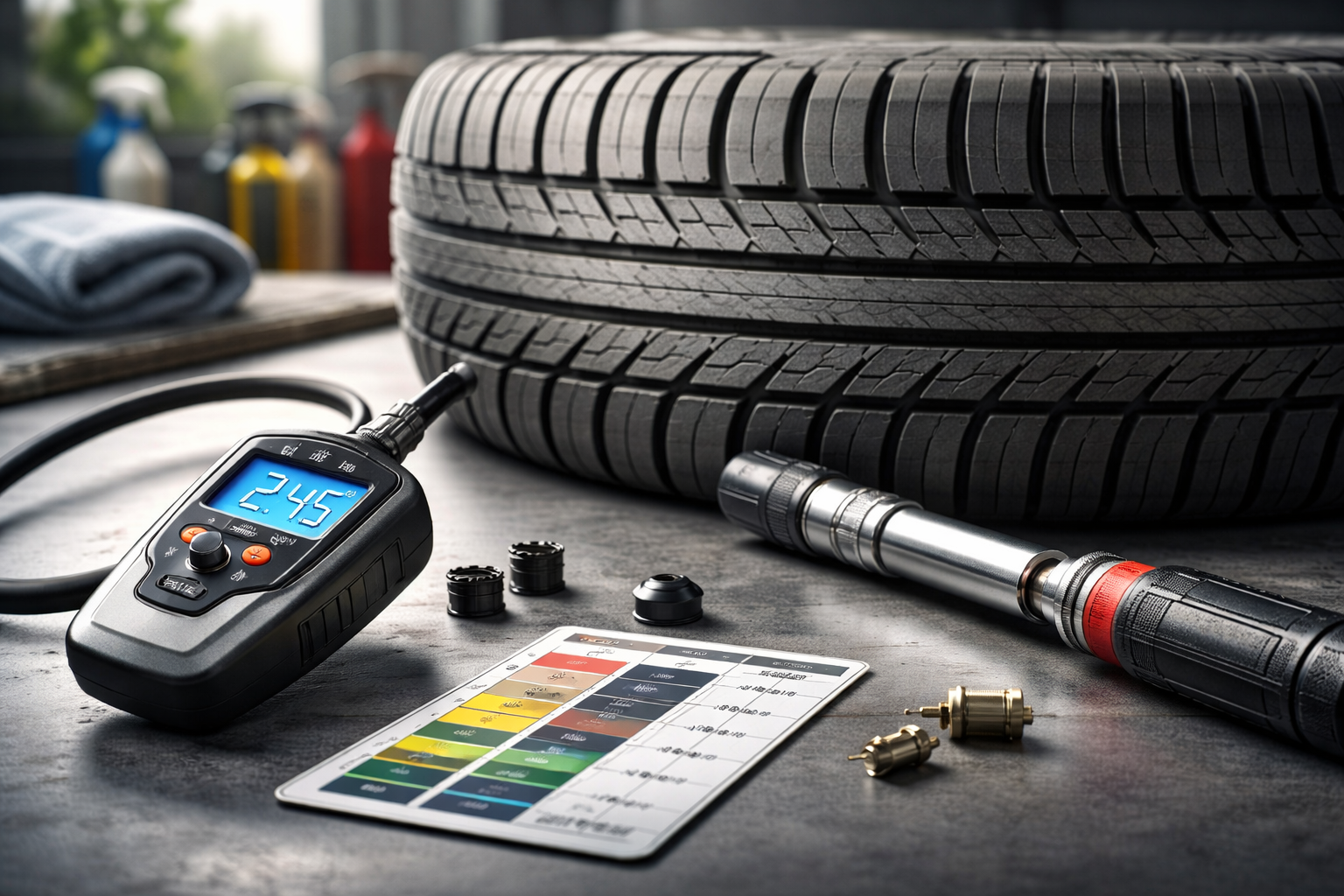
Taking good care of your tyres It is essential for driving safely. Indeed, their condition directly influences grip, braking, vehicle stability and driving comfort.
Incorrect pressure, irregular wear, or a damaged edge can quickly reduce the performance of your tires. car tyres. On the other hand, a few simple checks can extend their lifespan and limit unnecessary expenses.
Pressure, wear, geometry, storage, or driving: discover the right steps to take to take care of your tyres on a day-to-day basis.
1. Why is it necessary to maintain your tires regularly?
The tyres They represent the only point of contact between your vehicle and the road. Therefore, their condition plays an essential role in your safety.
West Properly maintained tires They ensure better grip on dry roads as well as on wet roads. In addition, they guarantee more stable braking and more precise steering.
Regular maintenance also allows for:
- to slow down the wear of the rubber; ;
- to reduce the risk of aquaplaning; ;
- to limit vibrations and noise; ;
- to better control fuel consumption; ;
- to preserve the autonomy of an electric vehicle; ;
- to avoid some expensive repairs.
However, even some car tyres Well-maintained parts should be replaced when they become too worn or damaged. You can then directly search for your size among the many available options. tyres available on Pneus Online France.
2. What routine should I adopt to check my tires?
Taking care of yourself tyres It does not require much time. However, regularity remains essential to quickly detect an anomaly.
Every week
Start by circling the vehicle. Observe the four tyres to detect a cut, a bump or an object stuck in the rubber.
Next, check that they do not appear abnormally crushed. A loss of pressure can sometimes be visible to the naked eye.
Finally, pay attention to the vehicle's behavior. A sudden vibration, an unusual noise, or a car that pulls to one side can reveal a problem at the level of the suspension. tyres.
Every month
Control the pressure of all four tires car tyres cold. Also consider examining the inner part of the front tires, as this area is often difficult to see.
Furthermore, check the condition of the valves and plugs. A damaged valve can cause a gradual loss of pressure.
Before a long journey
Before leaving for vacation or taking a long journey, check:
- The pressure of the four tyres ;
- the condition of the flanks; ;
- the depth of the sculptures ;
- the absence of cuts or deformation; ;
- the pressure of the spare tire; ;
- the expiration date of the anti-cracking kit; ;
- the recommended pressure when the vehicle is loaded.
In this way, you reduce the risk of breakdowns and improve the stability of the vehicle during the journey.
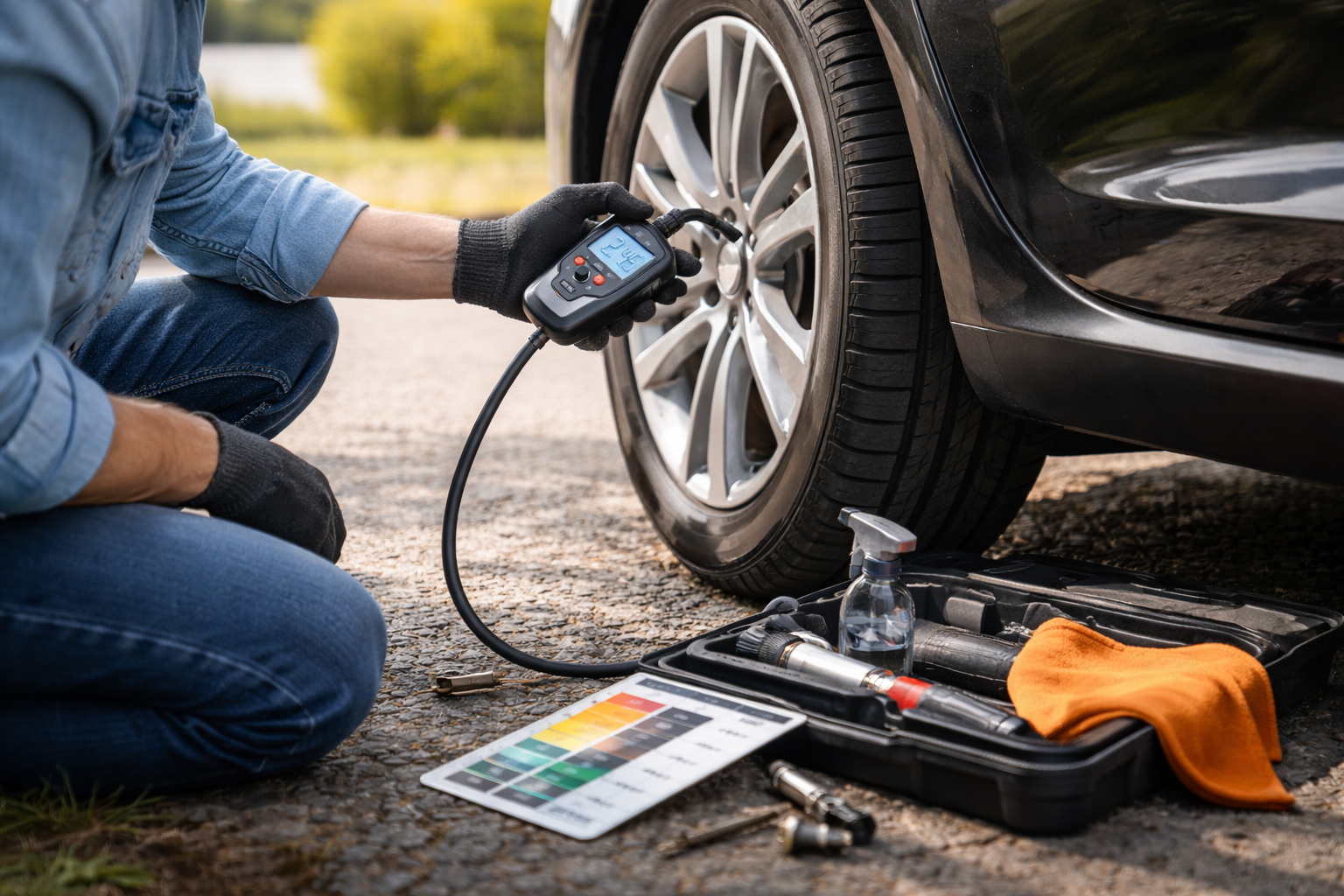
3. How to check the tire pressure?
Pressure is one of the most important aspects of tire maintenance.
A underinflated tire deforms more when it is driven. Consequently, it heats up, wears out more quickly on the shoulders and can increase fuel consumption.
Conversely, a tire that is inflated too much offers a reduced contact surface with the road. The center of the tread will then wear out more quickly.
For good practices, consult our guide dedicated to tire pressure.
How often should I check the pressure?
As a general rule, check the pressure:
- at least once a month; ;
- every two weeks if you drive a lot; ;
- before every long journey; ;
- after a significant temperature variation; ;
- when the pressure light comes on.
In addition, remember to perform this check after a long period of immobilisation.
Underinflation should never be ignored. It can lead to premature wear, tire overheating, and less good road grip. Find out more in detail the risks associated with an underinflated tire.
How to measure pressure correctly?
Always measure the temperature at cold temperatures. Ideally, the vehicle should have been stopped for at least two hours or have covered only a few kilometers at a moderate speed.
Next, refer to the values recommended by the manufacturer. They are usually found in:
- in the driver’s door frame; ;
- inside the fuel tank; ;
- in the vehicle's manual; ;
- sometimes in the engine compartment.
Some vehicles have two levels of pressure. The first corresponds to normal use. The second applies when the car carries several passengers or more luggage.
Finally, don’t forget to put the valve caps back on. They protect the valves from dust and moisture.
If one tire is regularly losing pressure, a slow leak may be the cause. Check out our guide to know What to do when a tire regularly loses pressure.
What should I do when the TPMS light comes on?
The TPMS system monitors tire pressure. When a warning light appears on the dashboard, quickly check the four tires.
After the refilling, a reset may be necessary depending on the vehicle. Find all the useful information in our dedicated dossier on Operation of the TPMS system.
What about electric vehicles?
Electric vehicles are often heavier than thermal models. Moreover, their immediate torque places a heavy strain on the tires.
An adapted pressure becomes particularly important. It helps to reduce wear and tear, preserve autonomy and maintain stable driving behavior.
To choose the appropriate mount, consult our guide dedicated to tyres for electric vehicles.
4. How to monitor tire wear?
The wear of a tire progresses slowly. However, its performance can decrease before it appears completely worn out.
To begin with, observe the wear marks located in the main grooves. When the rubber reaches its level, the depth of the carvings reaches the legal limit of 1.6 mm.
However, it is preferable not to wait until the last limit is reached. In fact, a very worn tire evacuates water less effectively and increases the risk of aquaplaning.
To learn more about this topic, consult our advice on Tire aging and wear.
How to measure the depth of sculptures?
Preferably use a depth gauge. This tool allows for quick and accurate measurements.
Then measure the depth at several places:
- on the inner part of the tire; ;
- in the center of the tread; ;
- on the external part; ;
- in different places around the circumference.
In addition, compare the two tires on the same axle. A significant difference may indicate a problem with the pressure, geometry, or suspension.
When should you replace your tyres?
The level of wear is not the only criterion to take into account. Age, mileage, season and the general condition of the tire also count.
To get an overview, discover when changing tires according to their wear, age and mileage.
Which signs should alert you?
Have your tires checked quickly when you notice:
- a flank hernia ;
- a deep cut ;
- numerous cracks; ;
- a deformation of the tread; ;
- very irregular wear; ;
- repeated pressure loss ;
- visible threads or fabric; ;
- an unusual vibration.
In these situations, do not continue driving without checking the tire’s condition.
A deformation can sometimes be difficult to identify. In case of doubt, consult our guide for detecting a deformed tire and recognizing the main signs.
How to interpret irregular wear?
Wear on the two shoulders of the tire often indicates underinflation. However, concentrated wear at the center can indicate an overinflation.
Furthermore, marked wear on one side may be caused by a geometric defect. Finally, wear in the tread can be related to a balance problem or worn out shock absorbers.
5. When to check the geometry and the balance?
Proper pressure is not always enough to ensure regular wear. In fact, improper adjustment of the rolling train can quickly deteriorate tires that are in good condition.
Signs of a geometry problem
Have the geometry checked when:
- the car is pulling to the right or to the left; ;
- the steering wheel is not centered on a straight line; ;
- a tyre wears out more on one side; ;
- the vehicle hit a sidewalk; ;
- you have rolled into a significant nest of hens; ;
- a steering or suspension part has been replaced.
Properly adjusted geometry improves driving precision. In addition, it helps to maintain uniform tire wear.
Signs of poor balance
A misalignment of the balance causes vibrations. These vibrations often appear in the steering wheel at a certain speed.
However, they can also be felt in the seat or in the floor when the rear wheels are affected.
In this case, have the wheels checked quickly. An incorrect balance reduces comfort and unnecessarily stresses the tires and several vehicle components.
All the precautions to be observed during an intervention are presented in our guide on The assembly, balancing and storage of tires.
Why is it necessary to monitor the valves?
Valves ensure the tightness of tires. However, they can crack or become fragile over time.
Therefore, ask them to check them during each assembly. Also, remember to have the TPMS sensors checked when your vehicle has them.
6. Should the tires be rotated?
The permutation consists of changing the position of the tires between the front and the rear. This operation can help distribute wear more evenly.
It proves particularly useful on vehicles with traction, as the front tires ensure both steering and power transmission.
However, this method of swapping parts does not work for all cars. Always consult the manufacturer’s recommendations before making any changes.
It can generally be considered:
- every 8,000 to 12,000 kilometers; ;
- when the front tires wear out faster; ;
- when the front and rear dimensions are identical; ;
- when the manufacturer recommends it.
However, respect the direction of rotation of the directional tires. On an asymmetrical tire, also follow the instructions «Inside» and «Outside».
Finally, do not replace tires to cover up abnormal wear. First, correct the pressure, geometry, or suspension problem.
Find other practical tips for Extend the lifespan of your tires.
7. How do you maintain your tires according to the season?
Temperature and road conditions directly affect tires. It is therefore important to adapt their maintenance to the seasons.
Before choosing a model, you can also consult our General comparison of car tires.
Maintaining summer tires
During hot weather, check the pressure and condition of the tires regularly. In fact, a hot road increases the stresses placed on the tires.
In addition, avoid sudden acceleration and braking. Flexible driving limits overheating and slows wear and tear.
To compare the available performance, please consult our ranking of summer tires.
Maintaining winter tires
Before the arrival of cold weather, check the depth of the tires and the condition of the tread. The more worn the tires are, the less effective they will be on snow and icy roads.
Then, clean the mud and salt regularly. This will protect the rims, valves and the various components of the wheel.
To find a suitable model, consult our Winter tyre comparison.
If you are traveling in a mountainous area, also check the authorized equipment and the periods involved in our dossier dedicated to this topic. Law of the Mountain in France.
Maintaining 4-season tires
The 4-season tires are used all year round. Therefore, their wear must be checked regularly.
In particular, check their behavior in the rain. In addition, examine their condition before each change of season.
When choosing new tires, make sure that their markings correspond to your needs and the conditions encountered.
Discover our Comparison of all-season tyres.
8. What driving habits preserve tires?
Driving style directly influences the lifespan of tires. Fortunately, a few habits can help slow down their wear.
First of all, accelerate gradually. Sudden starts put a heavy strain on the tires, especially on powerful or electric vehicles.
Next, anticipate your braking. A smoother ride limits the heat build-up and stresses on the tread.
In addition, slow down before the turns. Excessive speed increases wear on the tires’ shoulders.
Also avoid jumping abruptly onto the sidewalks. A crash can damage the tire casing, even if no immediate marks appear.
On a degraded road, reduce your speed. This will limit the impact on the nests.
Finally, respect the maximum weight of the vehicle. Excess weight increases tire temperature and changes their behavior.
9. How to clean and store your tires?
Good storage allows the rubber to be preserved between two seasons. However, the rules differ depending on whether the tires are mounted on rims or not.
Find all the recommendations in our comprehensive guide dedicated to the storage of summer, winter and 4-season tires.
How to clean your tires before storage?
Start by rinsing them in clear water. Then, remove any pebbles and small debris that are stuck in the grooves.
Avoid solvents and too aggressive products. They can alter the rubber and accelerate its aging.
Finally, let the tires dry completely before storing them. Moisture should not remain trapped in a cover.
How to store tires without rims?
Place the tires upright on a clean, flat surface. Then, rotate them slightly from time to time to limit deformations.
However, avoid suspending them. Also, do not stack them for an extended period of time.
How to store tires mounted on rims?
Complete wheels can be stacked flat or suspended. However, always protect them from dust and moisture.
Choose a place:
- dry; ;
- expenses; ;
- somber; ;
- properly ventilated; ;
- protected from the sun; ;
- removable from oils and solvents; ;
- away from electric motors and compressors.
10. What to do in case of a puncture, a nail or a hernia?
Not all damage has the same level of severity. Therefore, you need to adapt your response to each situation.
A nail or a screw is found in the tire
Do not remove the object immediately. In fact, it can temporarily slow down the air leakage.
Start by checking the pressure. Then, drive slowly to a professional if the tire remains sufficiently inflated.
Repair can sometimes be considered when the puncture is located on the tread. However, a professional must inspect the inside of the tire before making a decision.
To find out if an intervention remains possible, consult our guide: flat tire, should it be repaired or replaced?
A hernia appears on the flank
A bulge on the flank indicates a deterioration of the internal structure. The risk of rupture then becomes significant.
In this case, stop driving and replace the tire. A hernia cannot be repaired safely.
The vehicle suddenly starts to vibrate
Gradually reduce your speed. Then, stop in a safe place.
Inspect the tires and rims. Look for deformation, loss of pressure, or a stuck object.
If you have any doubts, do not continue your journey. Have the vehicle inspected by a professional.
Is an anti-cracking kit enough?
The anti-crevice kit is only a temporary solution. Moreover, it is not suitable for cuts, tears or damage to the side.
After use, have the wheel inspected quickly. The professional will then be able to determine whether the tire can still be repaired.
11. FAQ on tire maintenance
How often should tire pressure be checked?
Check the pressure at least once a month. However, check it more often if you drive a lot.
Also consider performing this check before a long journey and after a significant temperature change.
Why do my tires wear down inside?
Internal wear can be caused by a geometry defect. It can also indicate a worn suspension part.
Therefore, have the vehicle inspected before installing new tires.
How to find out the age of a tyre?
Look for the DOT marking on the side. Its last four digits indicate the week and year of manufacture.
For example, the code 1224 corresponds to the twelfth week of the year 2024.
To better understand the dimensions, indices and inscriptions present on the flank, consult our guide for read the tyre marking.
Does pressure change with temperature?
Yes, temperature variations affect pressure. Thus, check your tires during seasonal changes and after a period of cold or high heat.
Should I change the tires to two?
In most situations, it is recommended to replace both tires on a single axle. This ensures a more uniform level of grip.
However, the dimensions, the type of tire and the level of wear must remain compatible with the manufacturer's recommendations.
Before any intervention, check the rules to be followed changing your tyres.
What should I do when the TPMS light comes on?
Quickly check the pressure of the four tires. Then, inflate them according to the values indicated by the manufacturer.
If the light reappears, a slow leak, a defective valve, or a sensor problem may be at fault.
How to limit the risk of aquaplaning?
Maintain the correct pressure and monitor the depth of the sculptures. Additionally, reduce your speed when it rains.
Finally, avoid sudden acceleration and braking on a muddy road.
To remember
Proper maintenance of your tires only takes a few minutes. Yet these checks significantly improve safety, comfort, and tire lifespan.
Regularly check the pressure, wear and condition of the tires. Additionally, be alert to vibrations and changes in the vehicle’s behavior.
When your tires reach the end of their life, choose a size suitable for your car on Pneus Online France. You will then be able to select one of the partner assembly centers located near you.