Seeing tire pressure: why does it light up when it’s cold?
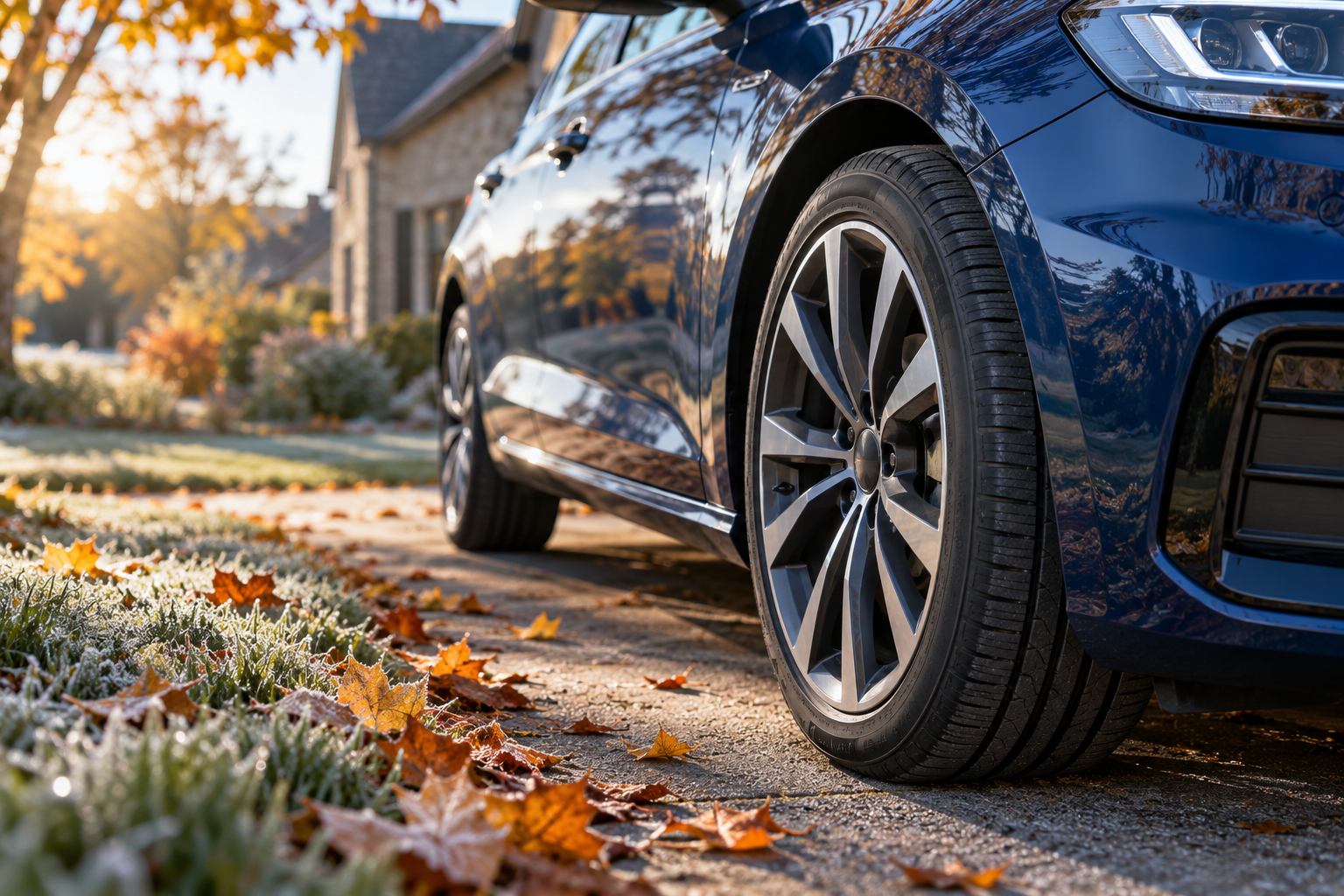
First cool morning, contact made… and an orange tire-shaped light appears on the dashboard. Should we be worried about a puncture? A faulty sensor? The cold may explain this warning, but it should never be ignored without checking the tires.
Here's how to understand the tire pressure gauge, Perform the right checks and prepare your autumn trips so that you are not caught off guard.
Summary
1. Why the tire pressure light comes on with cold weather
The air pressure contained in the tire varies with the temperature. In fact, when the air cools, its pressure decreases. A tire adjusted several weeks earlier, in milder weather, can thus fall below the vehicle’s warning threshold on a cold morning.
This phenomenon does not automatically mean that a tire is punctured. However, The weather does not allow for a diagnosis to be made A slow leak can occur at the same time. Therefore, the pressure must be measured and then observed over time.
To remember
A light that goes out after a few kilometers does not prove that everything is in order. The tires get warmer as you drive: check their pressure cold before the next departure.
2. Lighted sign: good gestures, in the right order
Start by reading the message associated with the light and the instructions in the manual. If you feel an unusual vibration, an abnormal direction, or a rapid loss of pressure, slow down without sudden maneuvers and stop in a safe place. Do not continue with a tire that is visibly flat or damaged.
Find the values of your car
Use the pressures recommended by the manufacturer, usually indicated on a vehicle label and in its manual. Also take into account the load: leaving with several passengers and a full trunk may require different values. The maximum pressure inscribed on the sidewall of the tire is not the inflation pressure recommended for your car.
Measure the four tires at cold temperatures
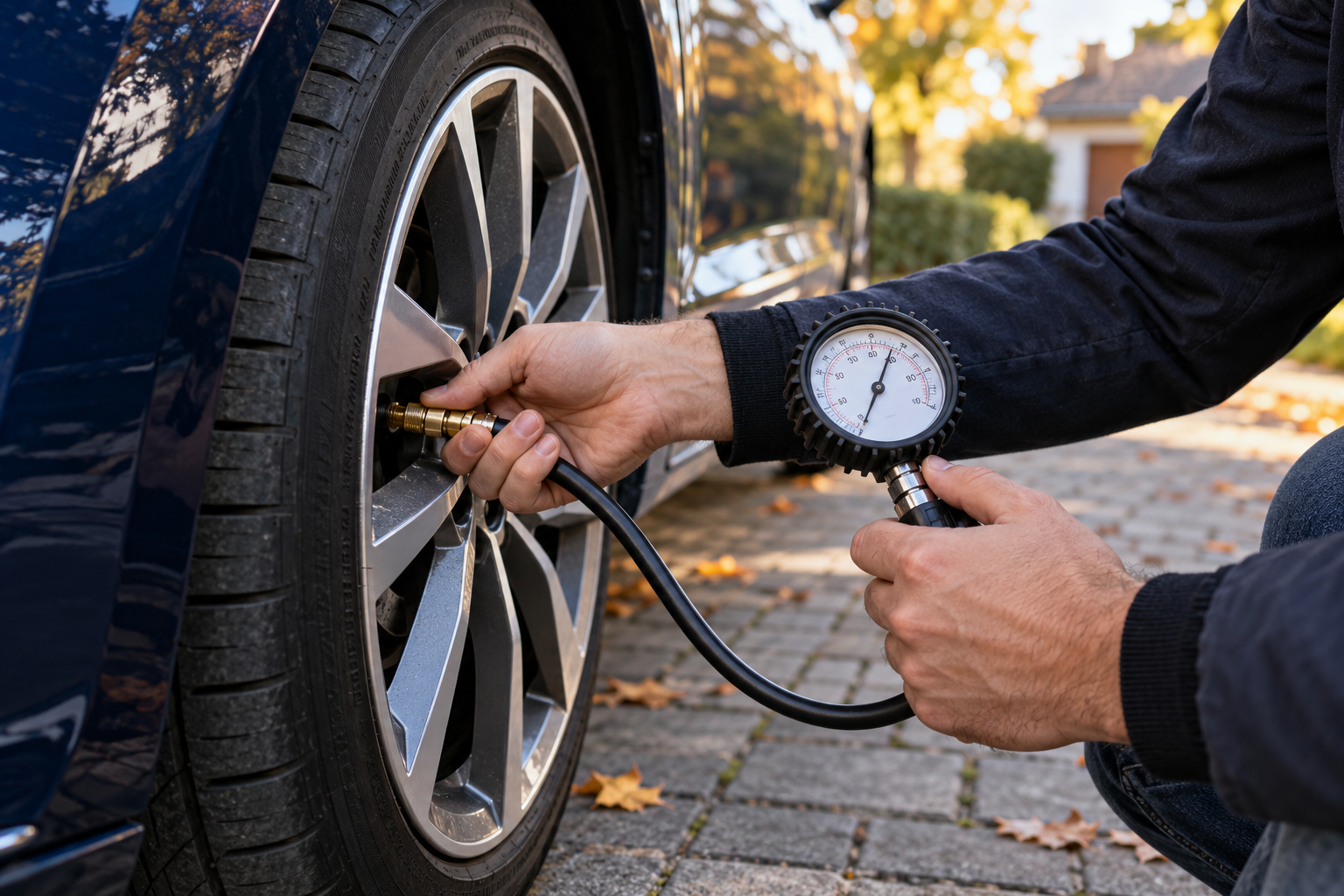
Check before driving, after a parking period long enough according to the manufacturer’s instructions. Then, use a reliable pressure gauge and check each wheel. If the tires are hot, do not deflate them to reach the cold-set pressure: refer to the manual or ask a professional for advice.
Adjust, then monitor
Correct the pressure if necessary and replace the valve caps. Then note the measurements: if one wheel loses pressure again while the others remain stable, have it investigated. After all, repeated topping up does not replace a diagnosis.
3. TPMS direct or indirect: what does your car monitor?
TPMS is the tire pressure monitoring system. Depending on the vehicle, it uses one of two methods:
- The direct system receives the measurements from the sensors placed in the wheels. Some vehicles display pressure for each tire.
- The indirect system It relies, in particular, on differences in the rotation speed of the wheels, based on the information used by the ABS. It detects a variation without necessarily displaying a measurement in bars.
To determine your equipment, consult the manual rather than relying solely on the appearance of the valve. Thus, the operation of the display and the procedures after inflation depend on the model.
4. Reset the light: only after the checks
Attention: The «SET» button or the reset command does not inflate the tires and does not repair any leaks. On some systems, this operation registers a new reference. Launching it with incorrect pressures can therefore compromise the relevance of the following warnings.
Check first, then correct; only reset if the manual requires it. The procedure may also include learning while driving. Therefore, follow the manufacturer’s instructions: there is no combination of buttons that is valid for all cars.
5. When should I go to the workshop?
Professional inspection is useful if the warning signal keeps coming back, if one tire deflates faster than the others, or if damage appears on the sidewall. For example, a valve, a tire rim, or the tire itself may be at fault.
If the warning light flashes then remains on, an anomaly in the system is possible on some vehicles. Check the exact meaning in your manual and have the TPMS checked if necessary. A change of wheels may also require a sensor recognition procedure.
During a meeting for your car tyres, Please indicate the type of alert, the measures taken, and any recent changes in tires. This information will help the professional guide his or her inspections.
6. FAQ: tire pressure and cold light
Can I just wait for the light to turn off?
Have the pressure checked as soon as possible under safe conditions. In fact, the disappearance of the warning light does not replace a cold measure.
Should a fixed amount of air be added in winter?
Do not choose a universal correction. Start from the requirements of the manufacturer for your vehicle, the load and the measurement conditions.
Does a light that is on indicate that the tires need to be changed?
Not necessarily. The cause must be identified before any decision is made: pressure to adjust, leakage to be investigated, or a monitoring problem. If a replacement is necessary, compare the Tires adapted to your vehicle in compliance with the approved dimensions and indices.
A little check to better prepare your trips
Before the first severe frosts, take a few minutes to check your reference pressures and your four tires. In case of an emergency, keep the same order: understand the message, measure, correct, and have the problem checked if the problem persists.
You can also find the ranges for your next equipment on Pneus Online.
To learn more: TPMS operation – Michelin ; tire pressure in winter – Continental. Finally, consult the instructions for your specific car.