How electric vehicle tyres will evolve in 2026
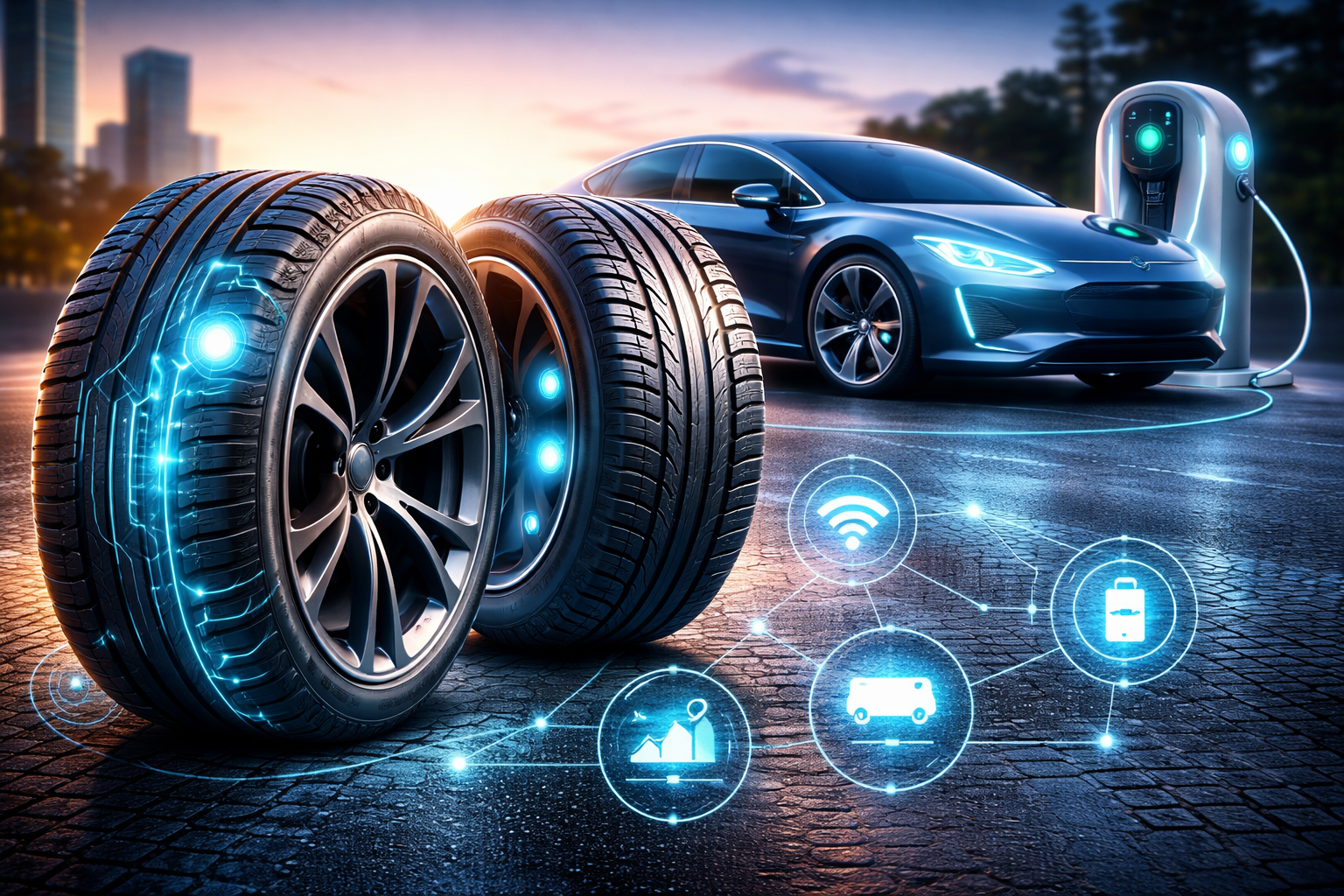
In 2026, tyres for electric vehicles will become quieter, more durable, more efficient and smarter. Their evolution addresses very specific needs: to withstand high instant torque, limit wear related to battery weight, preserve range and maintain a high level of safety on both dry and wet roads.
This article simply explains what will change on EV tyres in 2026, why these developments are important, and how to choose a model suited to your needs.
In summary
Electric car tyres are no longer just standard touring tyres adapted for a new engine. By 2026, they will become a category in their own right. Manufacturers are working on five major areas: low rolling resistance, longevity, noise reduction, grip under heavy load, and the integration of tracking technologies.
For drivers, this means more specialised tyres, better suited to the demands of modern electric vehicles, whether it's a city car, an electric SUV or a high-end saloon.
What is an electric vehicle tyre?
An electric vehicle tyre is a tyre designed to meet the specific characteristics of an electric car. It generally needs to handle a higher weight than an equivalent internal combustion engine model, instant torque available from a standstill, and a more noticeable level of rolling noise in the absence of a thermal engine.
In practice, an EV tyre seeks to find the best balance between autonomy, Adhesion, durability and comfort. It is precisely this balance that is set to improve further in 2026.
Pourquoi les pneus pour véhicules électriques évoluent-ils si rapidement ?
The rise of electric vehicles is pushing the entire tyre industry to accelerate. The needs are not theoretical; they are visible on a daily basis. An electric car can wear out its tyres more quickly if its fitment is not adapted, particularly due to its weight and brisk acceleration.
Manufacturers must therefore improve several points simultaneously:
- Reduce energy losses to protect autonomy. ;
- reinforce the tyre structure to support heavy loads; ;
- reduce wear during regenerative starts and braking; ;
- reduce road noise in the cabin; ;
- Maintain excellent grip in all seasons.
In 2026, these goals will not disappear. On the contrary, they will become more important as electric vehicles become more widespread and diverse.
The major expected developments in tyres for electric vehicles in 2026
More efficient erasers
Manufacturers will continue to develop rubber compounds capable of reducing rolling resistance without compromising grip. The objective is clear: to help vehicles consume less energy while maintaining sound road handling.
2. Reinforced carcasses
In 2026, more and more EV tyres will be designed with optimised structures to handle the weight of batteries and load transfers. This evolution will particularly affect electric SUVs, which are increasingly present in the market.
3. Better noise control
The quiet operation of an electric vehicle makes road noise more noticeable. Therefore, new-generation tyres will increase focus on tread pattern, block spacing, and sometimes on acoustic absorption technologies within the tyre.
4. More regular wear
EV tyres from 2026 are expected to better withstand the repetitive stresses associated with instant torque. Progress will be made in the rubber compound, sidewall stiffness, and tread stability.
5. More sensors and tracking
Tyres for electric vehicles will also evolve towards greater connectivity. Monitoring pressure, temperature, and sometimes wear status will become more relevant for optimising safety, range, and maintenance.
Tyres designed to preserve range
In 2026, range will remain a major commercial selling point for manufacturers and motorists alike. Tyres will therefore play an even more strategic role. A tyre that rolls more easily requires less energy from the vehicle, which can help to improve everyday efficiency.
This doesn't mean all EV tyres will become ultra-hard or solely focused on energy-saving. The trend is rather towards more balanced products, capable of reducing rolling resistance while maintaining good road holding, especially in the rain.
For drivers, the benefit is twofold: to cover more miles on a single charge and to maintain predictable performance, even on mixed urban and motorway journeys.
Increased wear resistance
One of the major challenges for electric car tyres is longevity. The vehicle's weight and immediate torque can accelerate wear if the fitment is not suitable. By 2026, manufacturers will continue to work on more resistant compounds and on profiles capable of better distributing stress.
We can expect to see more EV tyres designed for:
- limit gumming up during acceleration; ;
- to better distribute wear across the entire tread ;
- to durably support high loads; ;
- offer good fuel economy without sacrificing safety.
This development will be of particular interest to high-mileage drivers, fleets and electric SUV drivers.
More acoustic comfort
On an electric vehicle, tyre noise becomes a central issue. At a steady speed, it can even become the primary source of noise perceived in the cabin. In 2026, EV tyres will therefore continue to advance in this area.
The development paths are already clearly identified:
- Enhanced tread patterns ;
- Paving sequencing to break certain sound frequencies; ;
- work on the internal cavities of the tyre ;
- soundproofing technologies on certain premium ranges.
The expected benefit is simple: a smoother, less tiring drive, especially on fast roads.
Enhanced safety despite the weight of the vehicles
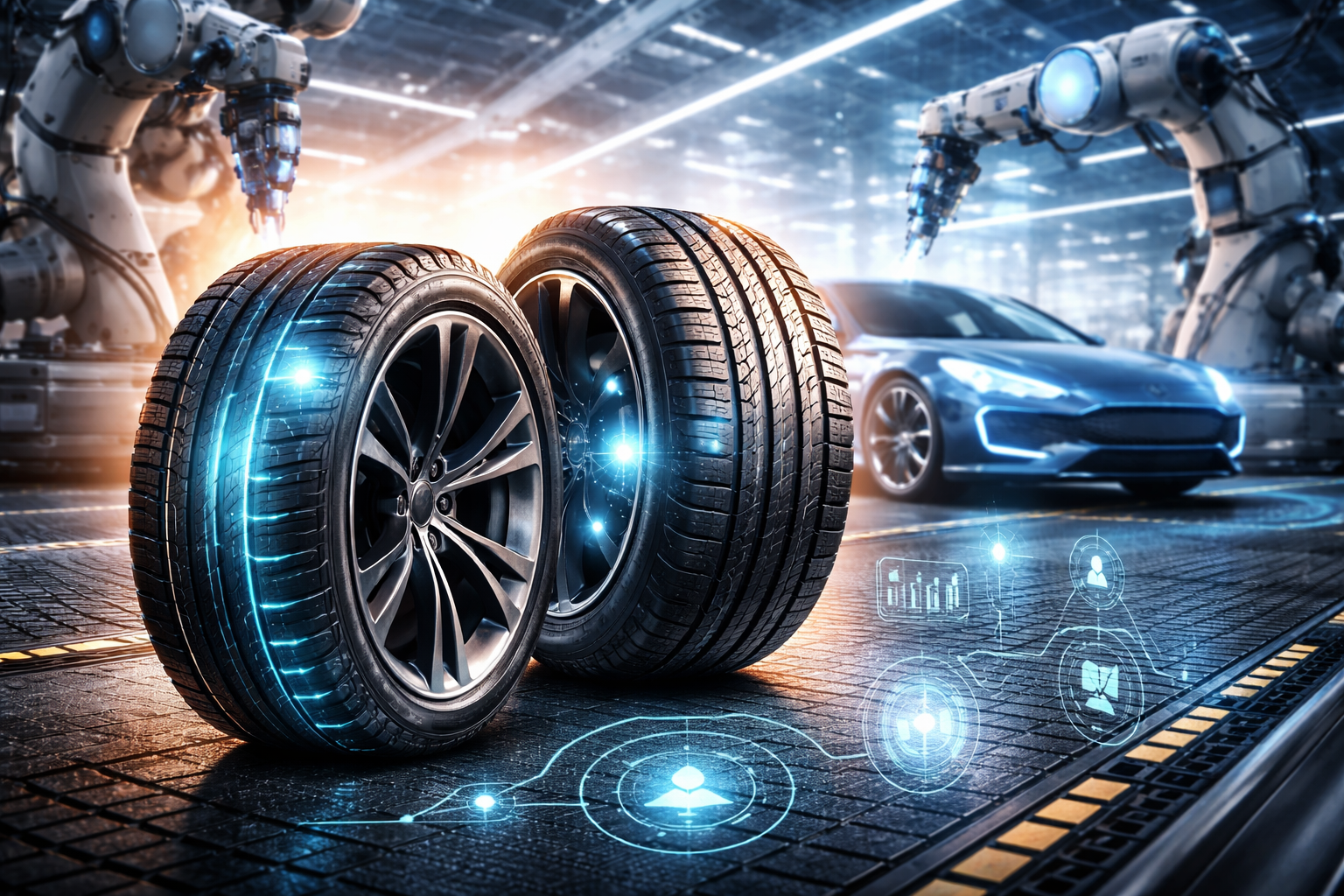
Electric cars are often heavier than their internal combustion engine equivalents. By 2026, dedicated tyres will therefore need to manage braking, load and changes of direction even better with a significant onboard mass.
This evolution will involve:
- more robust internal structures ;
- better calibrated flanks to maintain precision; ;
- rubbers capable of operating over a wide temperature range; ;
- a better compromise between dry grip and wet road performance.
For the user, this will translate into a more reassuring, stable and coherent ride, more in line with the actual performance of recent electric vehicles.
Towards more connected and easier-to-monitor tyres
In 2026, automotive connectivity will not be limited to the central screen or driving aids. The tyre will also take a more active role in the vehicle's ecosystem. Pressure monitoring is already commonplace, but the future lies in finer monitoring of the tyre's actual condition.
In the medium term, the most likely developments concern:
- more precise reading of the operating temperature; ;
- a better diagnosis of under-inflation; ;
- better integrated wear alerts ;
- more predictive maintenance for fleets and professionals.
For electric vehicles, this monitoring is of immediate benefit: an under-inflated tyre can reduce the range, accelerate wear, and compromise safety.
How to choose your electric vehicle tyres in 2026
The best EV tyre won't be the same for all drivers. The right choice will depend on the vehicle, driving style and the type of journeys undertaken. In 2026, several criteria will need to be considered before purchasing:
- Vehicle compatibility Dimensions, load and speed indices, manufacturer's recommendations.
- The level of efficiency useful for preserving daily independence.
- Longevity essential for compensating for the constraints specific to electric vehicles.
- Rolling noise particularly important on a quiet car.
- Wet performance a non-negotiable point for safety.
- Seasonality Summer, winter or all-season tyres depending on your region and your usage.
An urban driver in a small electric car won't be looking for exactly the same thing as an EV SUV owner who does a lot of motorway driving. The most relevant approach therefore remains to choose a tyre suited to actual usage, and not just EV marketing.
Summary
In 2026, tyres for electric vehicles will evolve around five priorities: autonomy, durability, silence, Security and Connectivity.
- They will have lower rolling resistance to limit energy consumption.
- Their structure will be better suited to the weight of the batteries and the immediate torque.
- They will aim for more regular wear and improved lifespan.
- They will further reduce rolling noise in the cabin.
- They will gradually integrate more intelligent monitoring for pressure, temperature, and wear status.
In summary, the 2026 EV tyre will be less of a mere consumable and more of a strategic component for the overall performance of the electric vehicle.
FAQ: Electric Vehicle Tyres in 2026
Are electric car tyres really different?
Yes. They are generally designed to better support the vehicle's weight, the immediate torque of acceleration, and the quietness requirements specific to electric models.
Why does battery range also depend on the tyres?
Because a tyre with lower rolling resistance requires less energy to move forward. It can therefore contribute to improving the vehicle's efficiency.
Do EV tires wear out faster?
They can wear out faster if the fitting is unsuitable or if the driving is very aggressive. In 2026, manufacturers will specifically aim to improve their resistance to wear and tear.
Is tyre noise more significant on an electric car?
Yes. As the electric motor is quiet, tyre noise becomes more noticeable. This is why acoustic comfort is a major criterion for EV tyres.
Is it mandatory to buy tyres marked for electric vehicles?
Not systematically, but you must always choose a tyre compatible with the dimensions and ratings required by the manufacturer, as well as with your actual use. Tyres specifically designed for EVs can offer a better balance between range, silence, and longevity.
What will be the main trend in 2026?
The main trend will be overall optimisation: tyres capable of improving range without sacrificing safety, comfort, or lifespan.