
Europe is preparing its digital passport; what will it be used for?
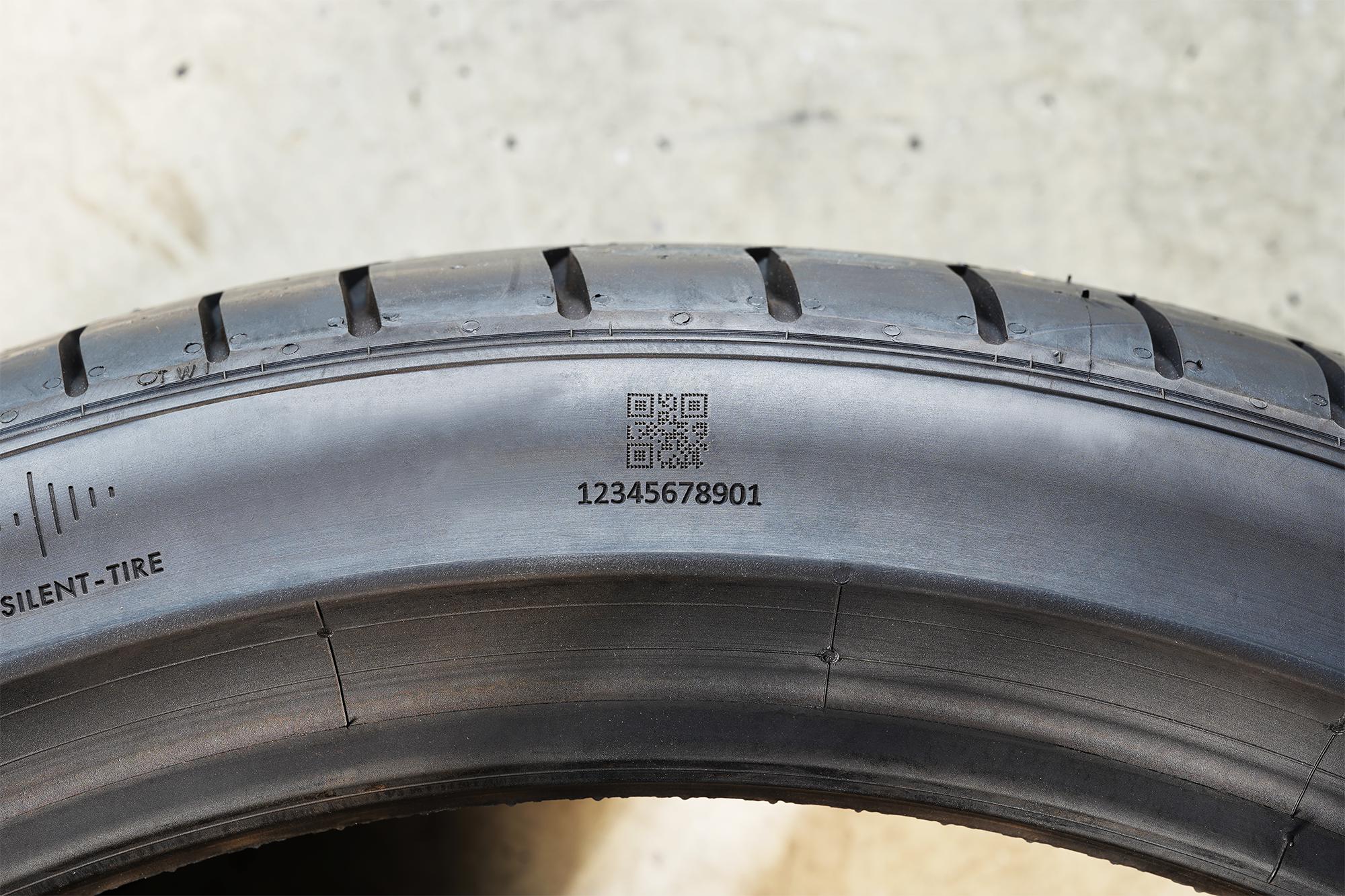
Dimensions, consumption, grip on wet roads, noise level, homologation: a tire already contains a lot of information.
In the coming years, some of this data could become even more easily accessible thanks to the development of the digital product passport in Europe.
The principle? To associate a product with a digital identity that allows for the retrieval of various information throughout its lifecycle.
The tires are part of the categories covered by the European works.
So, what could the digital passport for a tire look like? What could it contain? And most importantly, what could it change for motorists?
Summary
- What is a digital product passport?
- Why are tires affected?
- What information could be found?
- Will I have to scan a QR code?
- What is the connection with the European tire label?
- What will this change for the motorist?
- And what about used tires?
- When will this system arrive?
- FAQ: digital passport and tires
1. What is a digital product passport?
The Digital Product Passport is a kind of digital identity card associated with a product.
Its goal is to make certain information more easily accessible to the various actors: consumers, professionals, manufacturers, or authorities.
Depending on the type of product, this passport can, in particular, allow for the centralization of information regarding:
- its technical characteristics; ;
- its composition; ;
- its origin; ;
- its performance; ;
- its sustainability; ;
- or its recycling.
Not all product categories will necessarily have the same information.
The requirements will be adapted gradually to each sector.
2. Why are tires affected?
Tyres are a particularly technical product. The same model comes in many dimensions, load indices, speed indices and versions.
It also has various important characteristics for the motorist, such as its energy efficiency, its grip on wet roads, and its noise level. The European Union has therefore identified the tires among the product groups that will gradually be covered by the work on the digital passport.
The objective is, in particular, to improve the availability and traceability of information regarding the products marketed on the European market.
3. What information could be found?
The exact content of the future digital passport for tires must still be defined by sector-specific texts.
But several types of information are particularly interesting in the case of a tire.
For example, it could become easier to access the features that make it possible to identify a tire precisely:
- the brand and model; ;
- the size ;
- the load index ;
- the speed index ;
- the various homologations; ;
- some environmental information; ;
- or data useful for its recycling.
4. Will I have to scan a QR code on my tire?
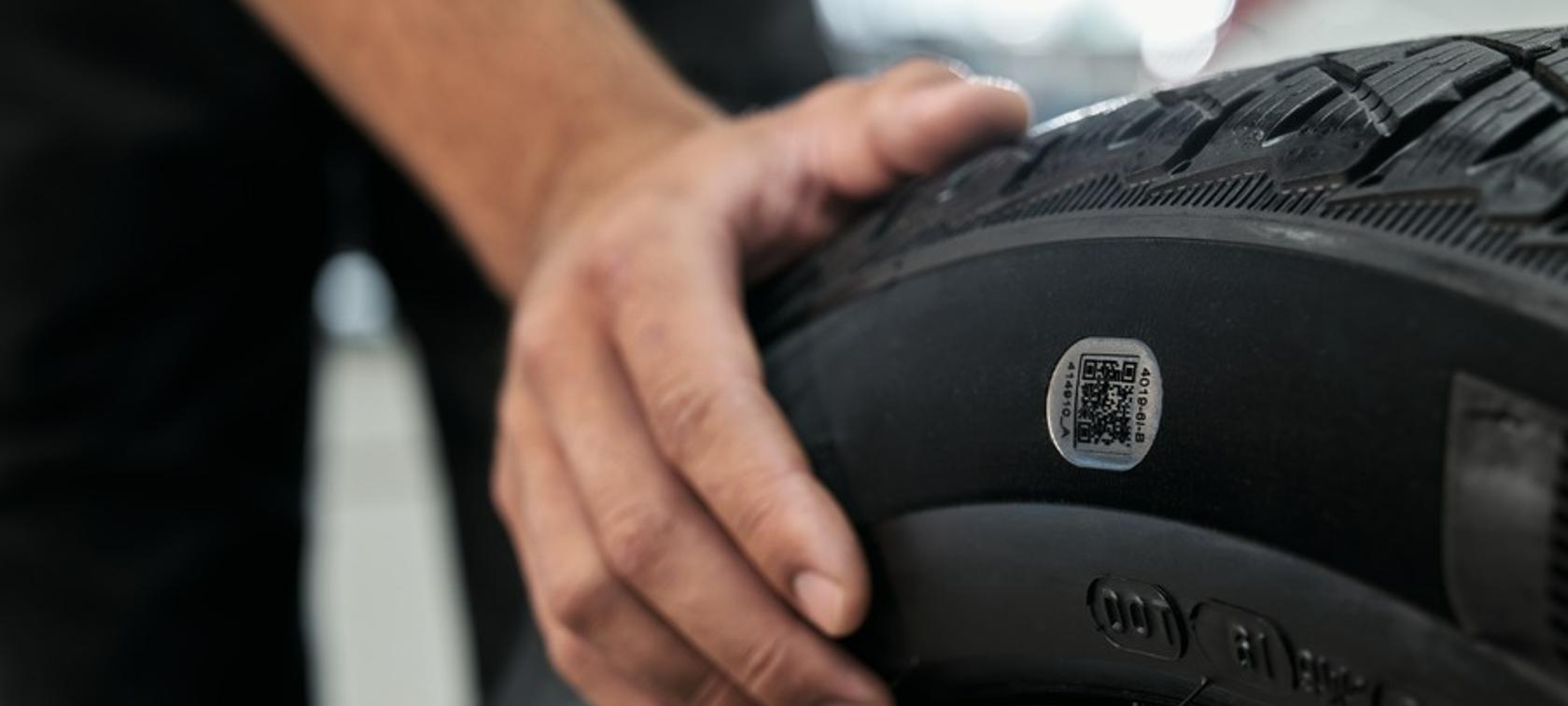
The QR code is one of the possible solutions for providing access to digital information, but the future European system is not necessarily limited to this technology.
The standards adopted in 2026 include, among other things, the operation of unique identifiers, data storage media, and the exchange between the various digital databases.
In the automotive sector, various identification technologies are already in use or under study, notably 2D codes and RFID.
For the motorist, the idea is mainly simple: being able to switch much more easily from the physical tire to its digital counterpart.
5. What is the link with the European tire label?
Drivers already have a tool to compare certain criteria: the European tire label.
It makes it possible to find, among other things:
- the energy efficiency class ;
- wet grip; ;
- the level of external noise; ;
- as well as some markings related to the winter conditions.
In 2026, the European Commission also proposed further developing digital access to data related to the labeling of tires.
In the long run, the consumer could therefore have access to more information without having to manually search for the technical data sheet that exactly matches their tire.
6. What will this change for the motorist?
For the driver, one of the main benefits of such a system could be its simplicity.
It is not always easy to decipher all the inscriptions on the side of a tire.
Digital identification could make it possible to access more directly the characteristics that correspond precisely to the model in question.
This could be particularly useful at the moment:
- to buy new tires; ;
- to verify a reference; ;
- to compare several models; ;
- to have a tire replaced; ;
- or to find certain information several years after the purchase.
In the meantime, it remains essential to know Read the markings on a tire, especially to identify its dimensions and its indices.
7. And what about used tires?
This is one of the areas in which better traceability could become particularly interesting.
When a tire changes hands, some information can now be difficult to find.
A digital system could facilitate the preservation of certain data related to the identification of a product throughout its life cycle.
This could also be of interest to professionals responsible for collecting, sorting or recycling tires.
8. When will the digital passport for tires arrive?
The European system is currently under construction.
In July 2026, the European Commission launched the register for digital passports for products, as well as an environment for companies to test its functionality.
Tyres are among the priority categories identified by the European Union.
The calendar currently presented by the Commission envisages the adoption of the specific requirements regarding tires during the second half of 2027.
This means that the system won't appear overnight on all tires.
It will be gradually defined and then integrated into the regulations applicable to the sector.
FAQ: digital passport and tires
Will tires already have a digital passport in 2026?
No. The European infrastructure for the digital passport is currently being implemented, and the specific rules for tires still need to be defined.
Will the digital passport replace the registration on the tire?
It is not currently planned to consider the digital passport as a general replacement for all regulatory markings present on the tire.
Will the QR code be printed on the side of the product?
The precise procedures applicable to tires have not yet been finalized. Several digital identification systems can be used, depending on the requirements that will be adopted.
Can we already obtain digital information about a tire?
Yes. The European label and the European base EPREL already allow access to various information regarding the performance of tires marketed in Europe.
How to choose your tires today?
The future digital passport does not change the current essential criteria. It is necessary to select the car tyres whose dimensions, load and speed indices correspond to the vehicle, and then compare the performance suited to its use.
Does RFID technology already exist in tires?
Yes, radiofrequency identification is already used or being developed in the tire industry. A new ISO specification dedicated to the testing methods of tires equipped with RFID was published in 2026.
Conclusion
After the performances, the labeling and the various regulatory markings, The tire is gradually entering the era of digital identity.
The digital passport could tomorrow facilitate access to the characteristics of a tire, improve its traceability and accompany its monitoring until its end of life.
For the motorist, the change should primarily make it easier to access information that is currently scattered across the side of the tire, its label, and various databases.
In the meantime, find all the information and our selection of tyres on P.