Harvard tanglemer rubber: towards more sustainable car and motorbike tyres?
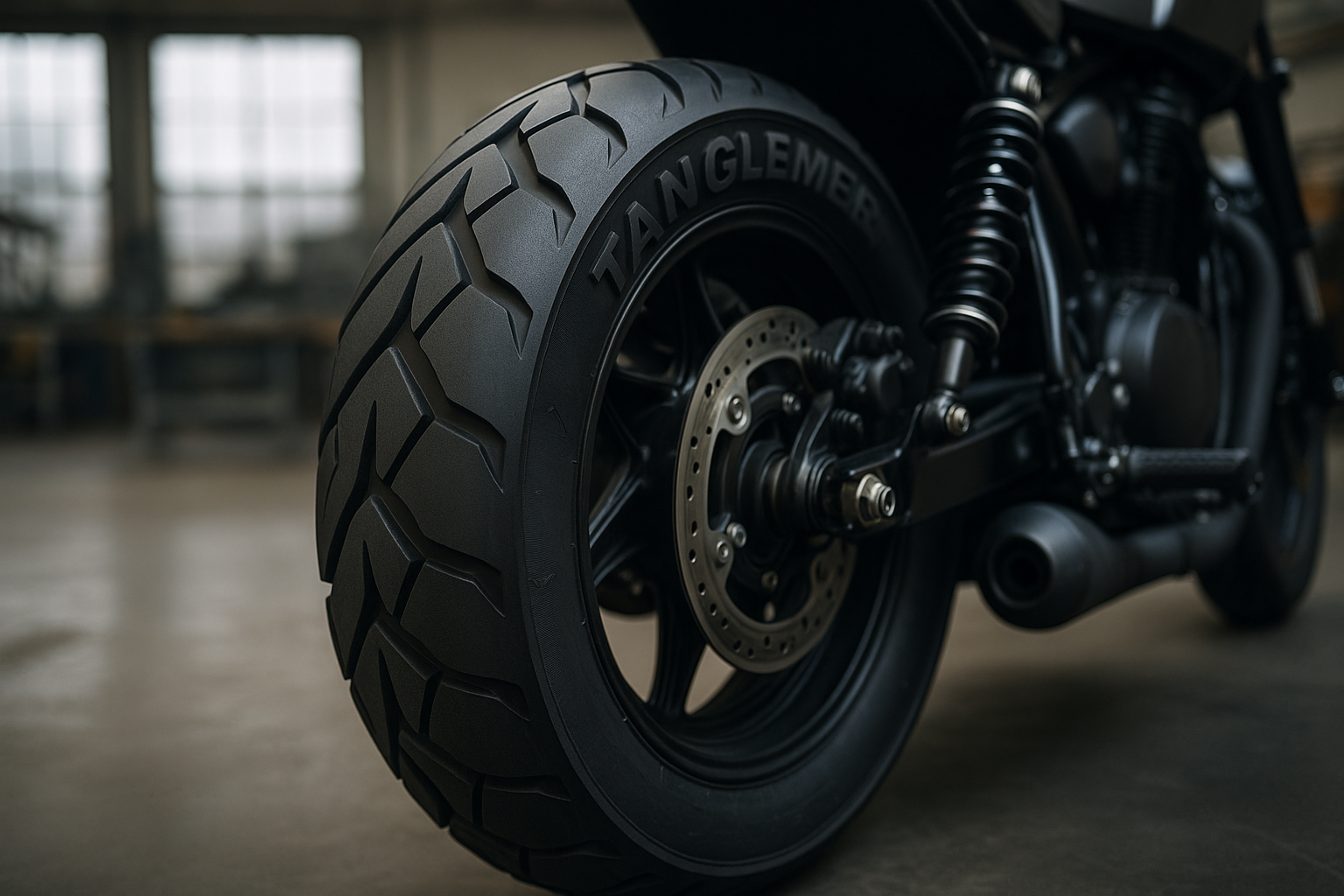
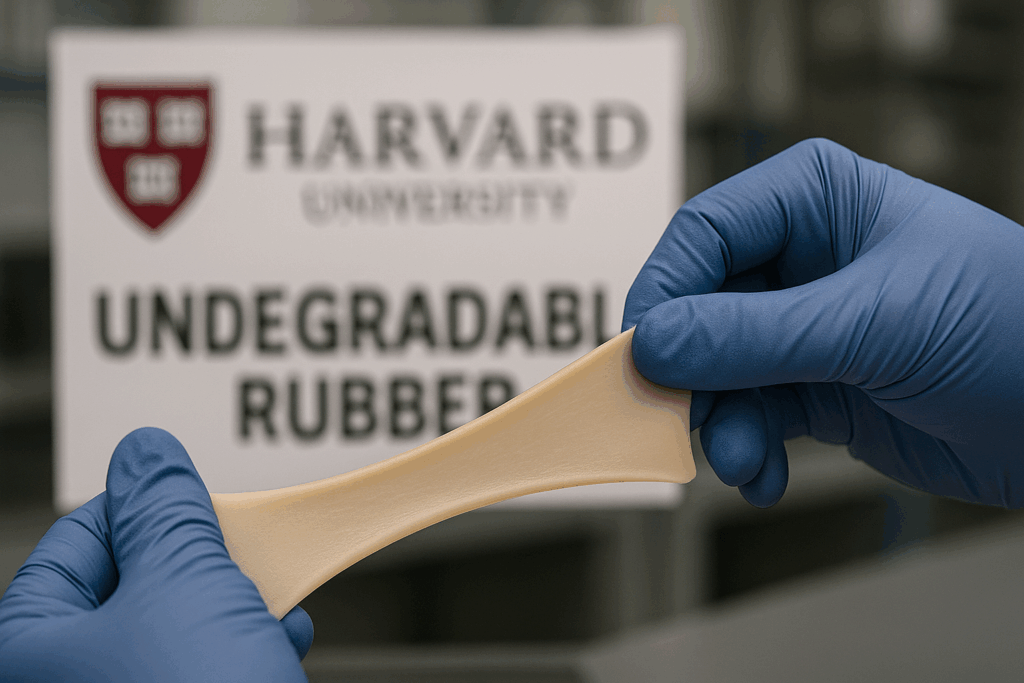
Can we design a tire that is more durable, more resistant and less polluting without sacrificing safety? Researchers at Harvard are currently exploring a promising path with a new natural rubber called tanglemer.
This material is based on very long chains of highly intertwined polymers. Thanks to this structure, it is better able to resist the formation and propagation of cracks.
The first results obtained in the laboratory therefore attract attention. The tanglemer would resist slow crack growth four times better during repeated stretching. Moreover, its toughness could exceed up to ten times that of the reference natural rubber.
However, this advance does not mean that tires will soon become unusable. No manufacturer is yet marketing tires containing tanglemer. Moreover, researchers still have to solve several technical and industrial challenges.
In the meantime, until these innovations arrive, you can already compare them. Auto tires available on Pneus Online France depending on your vehicle, size and driving style.
Summary
- What is a tanglemer rubber?
- How does this new structure work?
- What are the differences with traditional rubber?
- Why is this innovation of interest to the tire industry?
- Tire wear, a major environmental issue
- Will tires really become useless?
- What applications are there for car tires?
- What applications are there for motorcycle tires?
- A particular interest in electric vehicles
- The other innovations that transform the tire
- What are the current limits of tanglemer?
- How can you keep your tires lasting from today onwards?
- FAQ on the tanglemer
- Conclusion
1. What is the tanglemer rubber?
Tanglemer refers to a new form of natural rubber. Researchers have modified its molecular structure to make it more resistant to cracking.
Its name comes from the English word tangle, which means «entanglement». Indeed, the material contains very long chains of intertwined polymers. Their organization resembles a plate of spaghetti.
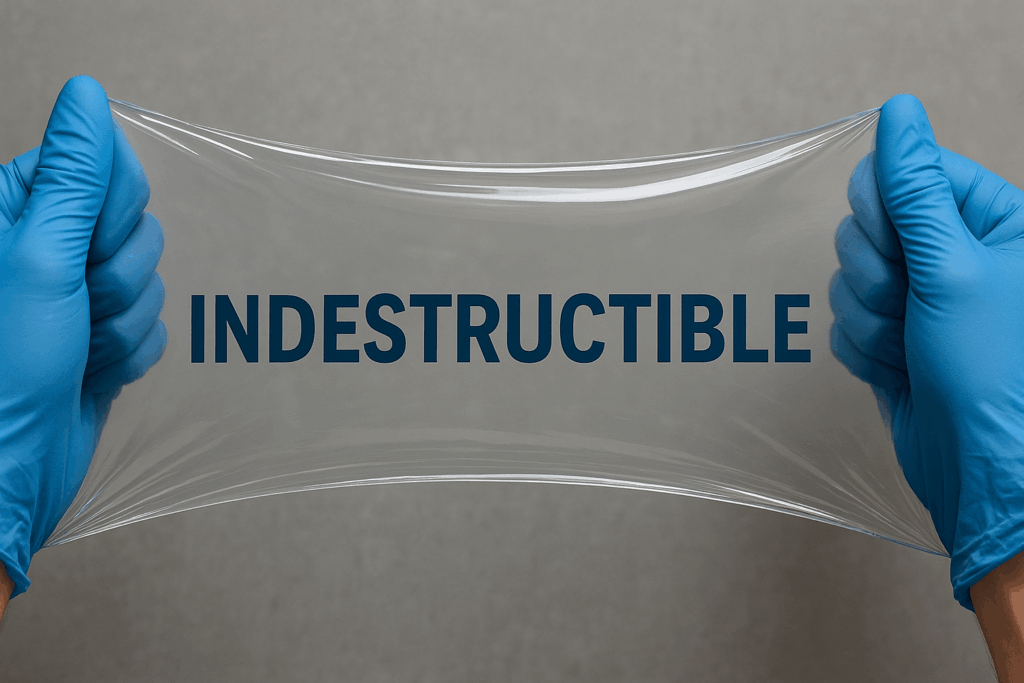
However, this material should not be presented as completely indestructible or indestructible. The study focuses primarily on its resistance to mechanical fatigue and the propagation of cracks.
To achieve this result, the researchers sought to preserve the long polymer chains present in natural latex. Traditional processes can shorten these chains during the processing of rubber.
Conversely, the new method retains a large part of their length. Thus, the chains become more intertwined while retaining a limited number of permanent chemical bonds.
This organization distributes forces better when the material undergoes tension or compression. Consequently, the rubber retains its flexibility while also resisting cracks more effectively.
2. How does this new structure work?
In conventional rubber, many chemical bonds connect the polymer chains. These bonds provide stability and elasticity.
However, they can also concentrate the tensions around a small crack. Under the effect of repeated deformations, this crack may then grow larger.
The tanglemer has a different mode of operation. Its long, tightly entwined chains can slightly slide against each other.
Thus, they do not concentrate all the strain on a tiny area; on the contrary, they distribute it over a larger surface.
This redistribution of efforts can notably:
- limit the strain at the end of a crack;
- slow down the progression of microcracks;
- to preserve the flexibility of the rubber;
- improve resistance to repeated deformations;
- strengthen overall resistance to fatigue.
Furthermore, long chains favor the crystallization of rubber when it stretches. This phenomenon temporarily strengthens the material in areas that are subject to high stress.
The results remain limited to laboratory samples, however. The researchers have not yet tested complete tires on the road with this technology.
3. What are the differences with traditional rubber?
The industry generally transforms rubber through vulcanization. This process involves heating the material with sulfur or other agents.
Vulcanization then creates bonds between the polymer chains. Thanks to these bonds, the rubber gains elasticity, stability and resistance to heat.
The tanglemer does not necessarily eliminate all these connections. However, it favors physical entanglement between long chains.
| Criterion | Traditional rubber | Rubber tanglemer |
|---|---|---|
| Structure | Channels strongly linked by chemical bonds | Long chains heavily intertwined |
| Flexibility | Variable depending on the formulation | Good despite increased resistance |
| Resistance to cracks | Variable | Significantly improved in the laboratory |
| Industrial production | Processes largely controlled | Still an experimental procedure |
| Use in tires | Generalized | No tire currently on the market |
| Resistance to abrasion | Known by the blends | Still to be measured |
| Availability | Immediate | Laboratory technology |
In short, traditional rubber relies more on chemical bonds. The tanglemer, on the other hand, relies on long chains that are better able to distribute the stresses.
4. Why is this innovation of interest to the tire industry?
A tire undergoes thousands of deformations during a single journey. With each rotation of the wheel, its tread flatters against the road, then resumes its original shape.
Furthermore, the tire must withstand many stresses:
- the accelerations;
- the braking;
- the curves;
- the weight of the vehicle;
- the charges carried;
- temperature variations;
- road irregularities;
- the impacts against the sidewalks;
- the passages in the brood nests.
Over time, these efforts can lead to the appearance of microcracks. They can also wear down the various rubber compounds.
Thus, a material that slows the progression of cracks could extend the service life of certain components.
However, mechanical resistance is not enough. A good tire must also guarantee:
- effective adhesion on dry ground;
- good road holding in the rain;
- short braking distances;
- a rapid evacuation of the water;
- good resistance to speed;
- low rolling resistance ;
- satisfactory comfort ;
- a controlled sound level.
Therefore, manufacturers will have to find a balance between resistance, adhesion and energy efficiency. They will not be able to improve one criterion at the expense of the others.
5. Tire wear, a major environmental issue
The environmental impact of a tire is not limited to its manufacturing or recycling processes. Its daily use also plays an important role.
As the tire rotates, it gradually loses tiny fragments of rubber. The rain can then carry these particles to the ground, sewers and aquatic environments.
The amount of material lost depends on several factors:
- the composition of the tire;
- the inflation pressure ;
- the weight of the vehicle;
- the speed;
- driving style ;
- the condition of the road;
- the temperature;
- the vehicle's geometry.
In addition, the European regulation Euro 7 now includes tire wear as one of the emissions not related to exhaust emissions. Its implementation will progress according to the tire categories.
To better understand this topic, consult our dossier dedicated to tyre particles and their environmental consequences.
The case of the 6PPD
Manufacturers add various products to the rubber to preserve its properties. Among them, 6PPD protects the rubber from the effects of ozone.
However, its reaction with ozone can produce 6PPD-quinone. The rainwater can then carry this substance to the rivers.
The available research shows that it can become very toxic for some species of fish. In particular, coho salmon seem to be very sensitive to this substance.
More durable rubber could, in theory, limit some emissions. However, no study yet proves that tanglemer will reduce the abrasion of a real tire.
The resistance to cracking and the resistance to abrasion correspond, in fact, to two different phenomena.
6. Will tires really become useless?
No. Even if manufacturers integrated the tanglemer into their future tires, they would still wear out.
Therefore, several forms of degradation must be distinguished.
The cracking
The cracking corresponds to the appearance and progression of cracks in the material.
Repeated strain, deformation and aging can accelerate this phenomenon. However, the tanglemer has shown very good results in this area.
The abrasion
Abrasion corresponds to the loss of material caused by friction against the road surface.
Thus, a material can very well resist cracking while still losing its elasticity. The researchers will therefore have to measure the abrasion of the tanglemer during specific tests.
The perforations and the shocks
Furthermore, a tire will remain vulnerable to external aggressions, such as:
- a nail;
- a screw;
- a deep cut ;
- a collision with a sidewalk;
- a hen's nest;
- a flank hernia ;
- Prolonged rolling with underinflation.
Finally, natural aging will continue to alter the gum. Oxygen, ultraviolet rays, heat, and storage also affect its condition.
The term «unbreakable tire» is therefore a shorthand. It is better to talk about a rubber that is highly resistant to the spread of cracks.
7. What applications are there for car tires?
In the long run, manufacturers could integrate the tanglemer into different parts of an automobile tire.
Better resistance to fatigue
The sides and the tread surface continuously deform during driving.
Thus, a rubber that is more resistant to cracking could slow down some of the degradation associated with compression and stretching cycles.
A potentially longer period of use
If the full tire tests confirm the laboratory results, the tanglemer could extend the service life of certain components.
However, we cannot claim that a tire would travel twice as many kilometers. The laboratories will first have to measure its real performance on the road.
They will need to study, among other things:
- the loss of gum;
- wet grip ;
- braking distances ;
- rolling resistance ;
- high-speed behavior;
- the regularity of wear;
- the performance after aging.
An interest in highly demanding vehicles
This technology could be of particular interest to:
- heavy vehicles;
- SUVs;
- utility vehicles;
- sports cars;
- the fleet vehicles;
- cars traveling long distances.
In the meantime, seek your dimension among the car tires offered by Pneus Online.
8. What applications are there for motorcycle tires?
On a motorcycle, the tire directly influences stability, cornering, handling, and braking.
Furthermore, the contact surface with the road remains particularly reduced. The tire must therefore offer precise and predictable behavior.
During driving, he must in particular bear the responsibility for:
- rapid changes in angle;
- strong accelerations;
- firm braking;
- rapid variations in temperature;
- a significant deformation of the carcass;
- a prolonged driving at high speed.
Therefore, a softer and more resistant rubber to repeated stress could be of interest to motorcycle tire manufacturers.
However, the laboratories will have to conduct tests on the road and on the track. They will have to evaluate:
- cold adhesion;
- the hot adhesion;
- precision in the turns;
- high-speed stability;
- behavior in the rain;
- the rise in temperature;
- the regularity of wear.
At this stage, no studies confirm that the tanglemer would be suitable for competition or hypersport motorcycles.
You can still find them right now Motorcycle tires available on Pneus Online France.
9. A particular interest in electric vehicles
Electric cars impose specific constraints on their tires.
First of all, batteries often increase the weight of the vehicle. The tires therefore have to bear a significant load.
Then, the electric motor immediately delivers its torque. Frequent and powerful accelerations can therefore accelerate wear.
Finally, the absence of engine noise makes the tire noise more noticeable. Acoustic comfort then takes on an important role.
Electric vehicle tires must therefore balance several criteria:
- sufficient load-bearing capacity ;
- good wear resistance; ;
- low rolling resistance ;
- effective adhesion;
- limited noise;
- a precise direction; ;
- good preservation of autonomy.
The tanglemer could therefore better withstand certain mechanical stresses. However, it should not increase the tire's weight or rolling resistance.
To learn more about this topic, please consult our Complete guide to electric car tyres.
You can also compare directly the Tyres suitable for electric vehicles.
10. The other innovations that transform the tire
The tanglemer is just one of many research projects. In fact, the industry is also developing smarter, lighter and more durable tires.
The airless tires
Several manufacturers are working on structures that do not use traditional air pressure.
These solutions aim in particular to avoid punctures caused by perforation or loss of pressure.
However, their generalization will depend on several criteria. Manufacturers will need to master comfort, weight, cost, and rolling resistance.
Low rolling resistance tires
Manufacturers are also developing lubricants that limit energy losses.
Thus, a tire with low rolling resistance can reduce the consumption of a thermal vehicle. It can also preserve the range of an electric car.
However, designers must maintain good grip in the rain. They must also limit premature wear.
Connected tires
Furthermore, some tires already incorporate sensors. These can monitor:
- the pressure;
- the temperature;
- the charge ;
- wear and tear;
- the driving conditions;
- the condition of the road.
This information facilitates the maintenance of vehicles and fleets. Moreover, it can help the driver detect an anomaly earlier.
Renewable and recycled materials
Manufacturers are also studying new raw materials, such as:
- natural rubber from alternative sources;
- silica derived from agricultural residues;
- recycled carbon black;
- oils of vegetable origin;
- recycled steel;
- textiles made from plastic bottles.
The goal is to reduce the tire’s impact throughout its entire life cycle.
Finally, several major brands are investing heavily in these innovations. You can find, in particular, the various ranges of Michelin tires available on Pneus Online.
11. What are the current limits of tanglemer?
Despite its encouraging results, the tanglemer is still far from being ready for industrial production for tires.
A process difficult to industrialize
First of all, the process requires the evaporation of a large amount of water.
At present, this method is therefore better suited to fine products, such as gloves, than for bulky tires. Harvard itself points out this industrial limitation.
However, a tire factory must produce large volumes at a high rate of production. The researchers will therefore have to adapt their method.
A tire combines many materials
Then, a tire is not composed of just one type of rubber.
It usually combines:
- several mixtures of gums;
- silica;
- carbon black;
- oils;
- resins;
- additives;
- textile reinforcements;
- metal cables;
- steel bars.
The tanglemer must therefore integrate into this complex assembly. Above all, it must not compromise the other performance parameters.
An unknown resistance to abrasion
Furthermore, a high resistance to cracking does not guarantee low wear on the road.
The laboratories will have to compare:
- the loss of mass;
- the total mileage;
- the remaining depth of the sculptures;
- emissions of particulate matter;
- irregular wear;
- the performance after aging.
Tests under all conditions
Furthermore, a future tire containing tanglemer will have to face very varied situations:
- strong heat;
- negative temperatures;
- rain;
- snow;
- frost;
- dry road;
- high speed;
- heavy load;
- emergency braking;
- Extended storage.
Manufacturers will therefore have to conduct numerous tests before any commercialization.
Costs still unknown
The cost of large-scale production remains unknown as well.
At launch, new technology can be expensive. Indeed, it requires investments, new equipment, and lengthy research phases.
The market will only accept this extra cost if the driver obtains a real advantage in terms of safety or longevity.
Essential approvals
Finally, manufacturers will have to comply with all regulations applicable to tires.
They will be required to, among other things, check:
- wet grip; ;
- high-speed resistance;
- endurance ;
- load capacity ;
- The rolling noise ;
- rolling resistance ;
- abrasion;
- Safety in case of loss of pressure.
Therefore, no credible date for commercialization can yet be announced.
12. How to keep your tires lasting from today onwards?
While waiting for future generations of rubber, several simple actions already help to limit premature wear.
Check the pressure regularly
First of all, check the pressure of your tires when they are cold.
A tire that is underinflated deforms more easily. Consequently, it heats up and wears out its shoulders more quickly.
Conversely, excessive pressure can reduce comfort and mark more of the center of the tread.
Always follow the manufacturer's recommendations. You will usually find them on the door, in the fuel tank, or in the manual.
To learn the right reflexes, consult our Complete guide on tire pressure.
Adopting a gradual approach
Next, avoid sudden acceleration and late braking.
Flexible driving limits the stresses placed on the rubber. Moreover, it reduces consumption and promotes regular wear.
Slow down also before the curves and on degraded roads. This will limit the effort imposed on the sides.
Monitoring the geometry
Poor parallelism can quickly wear down the inside or outside of the tire.
Several signs should alert you:
- the car is pulling to one side;
- the steering wheel remains slightly off-center;
- the tires show asymmetrical wear;
- the vehicle lacks stability;
- vibrations appear.
In this case, ask a professional for an inspection quickly.
Regularly inspect the tires
Furthermore, perform frequent visual checks.
Look for, in particular:
- a cut ;
- a crack ;
- a hernia ;
- a nail;
- a screw;
- a damaged valve;
- uneven wear ;
- the sculptures are too shallow.
Find all the points to check in our guide dedicated to The daily maintenance of tires.
Avoid overcharges
A too high load increases the strain and the heating of the tires.
Therefore, please respect:
- the maximum load of the vehicle;
- the tire load index;
- the recommended pressure at full load.
Before leaving for a vacation, also consider checking the distribution of luggage.
Change the tires when the mounting allows it
Depending on the vehicle, a rotation can even out wear between the axles.
However, this operation is not suitable for all mounting setups. The dimensions may differ between the front and the rear.
Similarly, directional tires or certain asymmetrical profiles impose specific rules.
To go further, discover all our methods for extend the life of its tyres.
Finally, check out our guide to know when changing tires according to their wear, age, and season.
13. FAQ on the tanglemer
Will the tanglemer make tires completely unusable?
No. The tanglemer mainly improves the resistance to the propagation of cracks.
The tires will continue to suffer from abrasion, shocks, punctures, and natural aging.
Will tires containing tanglemer last twice as long?
We cannot yet know that.
The researchers tested the material in the laboratory. They have not yet measured the mileage of a complete tire on the road.
Will this technology reduce tire particles?
It could eventually limit certain forms of degradation.
However, researchers still need to measure its abrasion under real conditions. They will also need to analyze the particulate emissions.
Can the tanglemer make a tire indestructible?
No. Better resistance to cracking does not automatically protect against a nail or a deep cut.
Likewise, it does not eliminate the damage caused by the sidewalks and the bird nests.
Will the tanglemer be suitable for electric cars?
Potentially. Its resistance to fatigue could meet the constraints related to weight and torque.
However, manufacturers will have to check its influence on autonomy, noise, and rolling resistance.
Will it be able to equip motorcycle tires?
The principle seems compatible with the requirements of motorcycle tires.
Nevertheless, manufacturers will have to test the grip, stability, temperature rise and wet road performance.
Is the tanglemer already available in stores?
No. It is still a material that has been studied in the laboratory.
No manufacturer currently offers a car or motorcycle tire that uses this technology.
When will the first tanglemer tires arrive?
No date has been announced.
Researchers still need to industrialize the process. Then, manufacturers will have to design, test, and homologate the future tires.
Will the tanglemer replace all traditional rubber?
This seems unlikely in the short term.
Manufacturers could first integrate it into certain areas of the tire or into specific technical products.
Will these future tires cost more?
It is too early to estimate their price.
The cost will depend on the raw materials, the volumes produced, the industrial process and the necessary investments.
14. Conclusion
The tanglemer rubber represents a promising scientific breakthrough for the tire industry.
By preserving long polymer chains, the researchers at Harvard obtained a material that distributes stresses more evenly. Thus, it resists the propagation of cracks more effectively.
In the long term, this technology could contribute to creating tires for cars and motorcycles that are more resistant to mechanical fatigue.
However, the tanglemer will not make tires indestructible. Its behavior in the face of abrasion, braking, heat, and aging still needs to be demonstrated.
Furthermore, the current process still does not allow for the production of the volumes required for the industrial manufacture of a tire.
In the meantime, good pressure, gradual driving and regular maintenance remain the best ways to prolong the life of your tires.
Do your tires need to be replaced? Find your size among the car tyres available on Pneus Online. Then select one partner assembly center near you for delivery and installation.