How to reduce your fuel consumption with your tyres
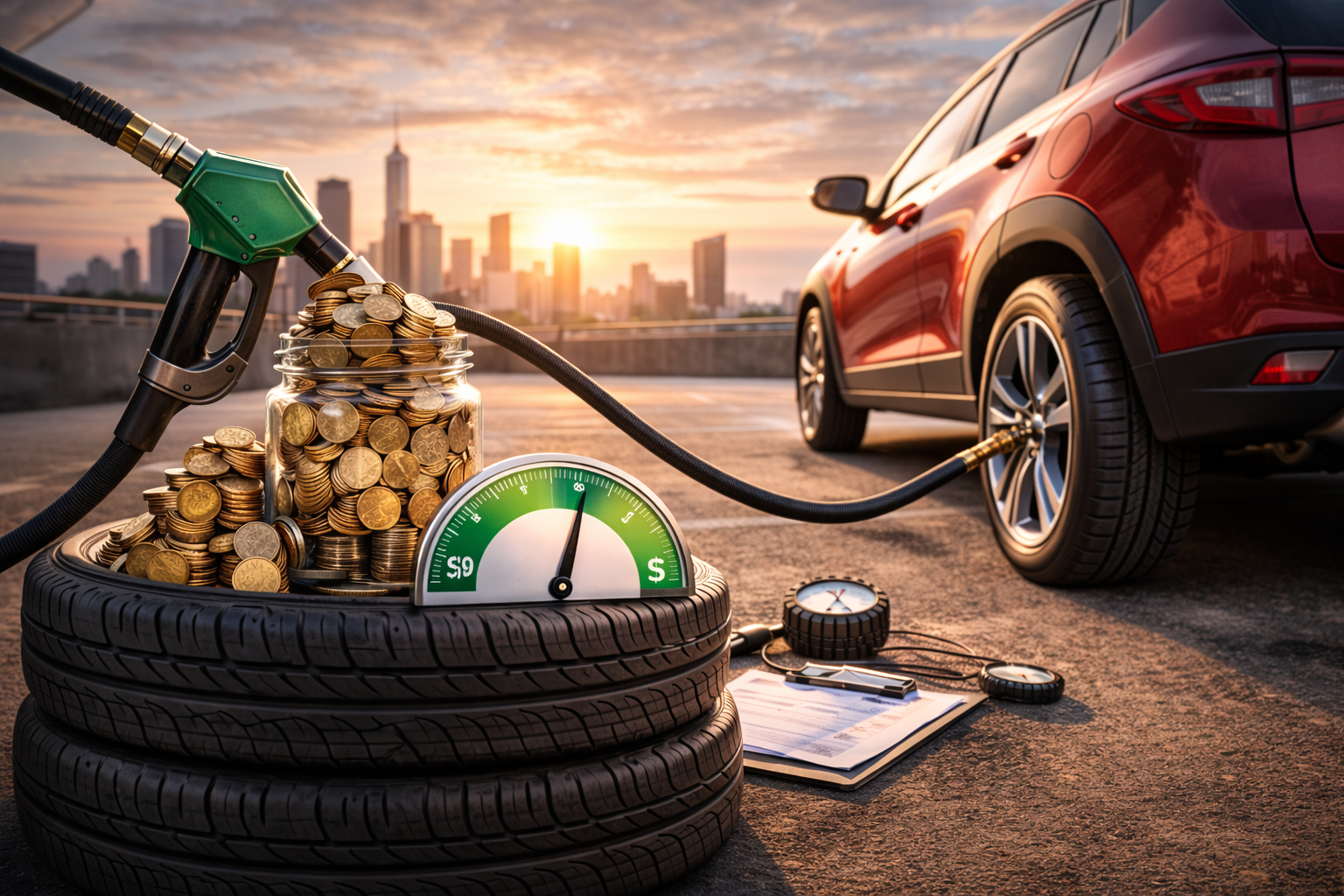
Tyres are not just there to keep you on the road: they can also save you fuel (or energy, if you drive an electric car).
Pressure, rolling resistance, maintenance and driving style: a few simple steps are enough to reduce your consumption while improving safety.
Why tires affect consumption
With every turn of the wheel, a tire deforms when it comes into contact with the road. This deformation creates energy losses: this is what is called the rolling resistance. The higher it is, the more effort the engine has to provide to move forward.,
and the more the Fuel consumption increases.
In short: tires that are properly adapted, inflated properly and well maintained reduce losses, improve performance and can contribute to consume less on a day-to-day basis.
1) Pressure: the simplest lever to consume less
Insufficient pressure increases the contact area and the deformation of the tire: the rolling resistance increases,
The car “sucks” and the consumption follows. Moreover, an underinflated tire wears out faster and heats up more.
How to check the correct pressure
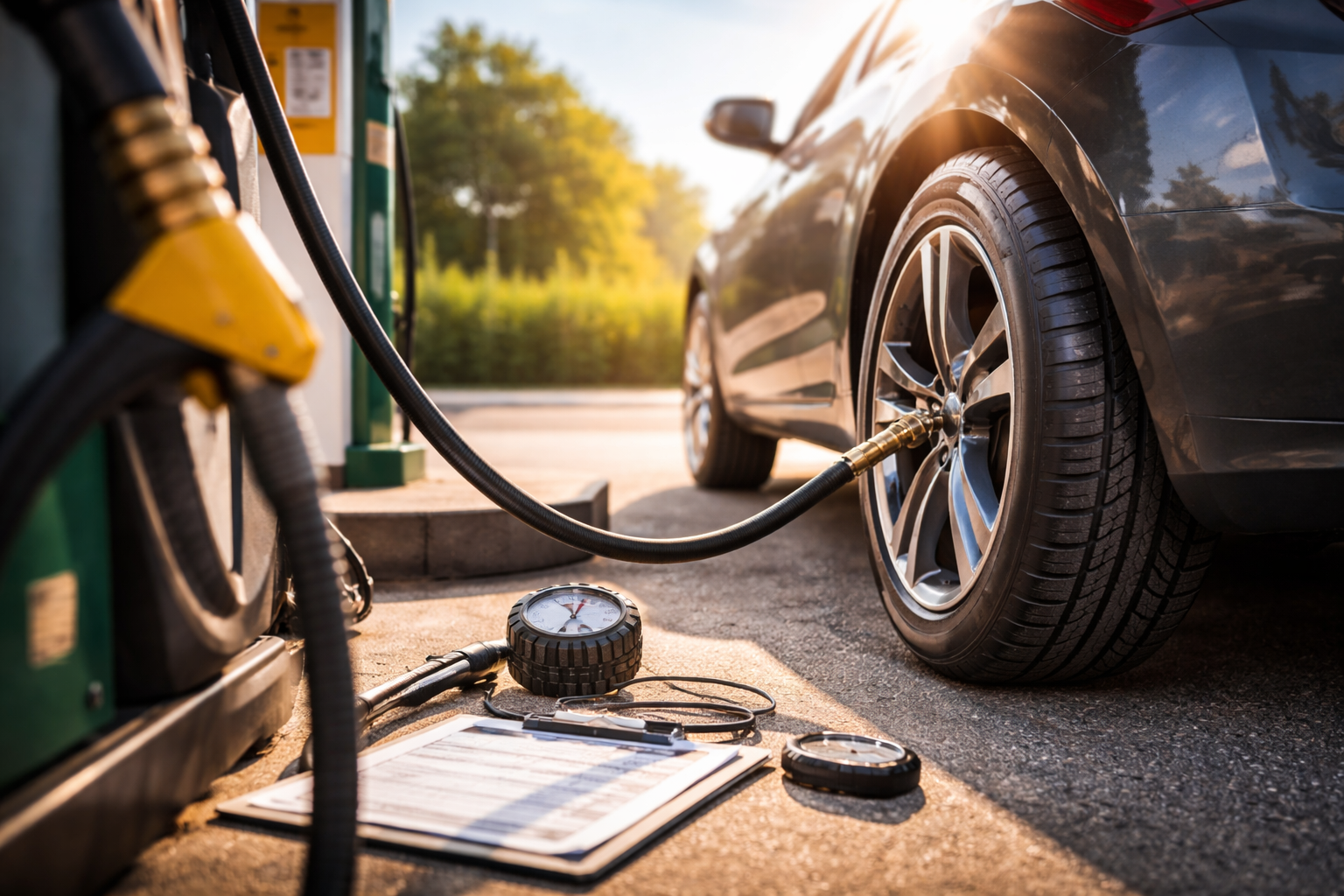
- Refer to the manufacturer's pressure rating In the door frame, the fuel tank hatch or the manual.
- Check cold (before driving or after a few very quiet kilometers).
- Measure at least Once a month and before a long journey.
- Don’t forget the Spare wheel if it is present.
Front/rear pressure: why it matters
The pressure may differ between the front and the rear depending on the distribution of masses and the load.
Adhering to these values helps maintain stable behavior and controlled consumption.
2) Resistance to wear: choose economical tires
Not all tires are equal in terms of fuel economy. Some models are designed to offer better performance in certain conditions. Low rolling resistance, Thanks to gum blends, optimized sculptures and carcasses.
Economy tires: For which drivers?
If you drive a lot on the road or on the motorway, an “efficiency” oriented tire may be an excellent choice.
The gain is often achieved over time, with slightly lower consumption, while maintaining a good level of grip.
Not sacrificing security
A tire must remain effective on wet ground. The goal is to find a good balance between consumption, Braking and Longevity.
3) Reading the European label: the key information for consumers
The European tire label helps you compare models. To reduce consumption, pay attention to the following:
Energy efficiency note (related to rolling resistance).
The 3 main indicators
- Energy efficiency The higher the rating, the more efficient the tire is.
- Wet grip : essential for safety and braking distances.
- External noise from the wheels : acoustic comfort and sound impact.
To optimize your consumption, aim for good energy efficiency while maintaining the grip on wet ground suitable for your use.
4) Dimension, index and choice: avoid costly mistakes
Changing the size without following the recommendations can increase consumption. For example, a wider tire
This can increase rolling resistance (and sometimes weight), which translates into a higher energy demand.
Staying true to the recommendations
- Respect approved dimensions (width, height, diameter).
- Choose the right one Load index and Speed index.
- Adapt the tire type to the season: summer, Winter, or 4 seasons.
5) Geometry, parallelism, balancing: reducing losses
A misaligned vehicle “grinds” more on the road: this increases wear and consumption. A misalignment defect
This sometimes results in a car that pulls to one side, a steering wheel that isn’t straight, or irregular wear on the tires.
When should the geometry be checked?
- After a significant impact (bump, sidewalk, impact).
- If you observe a Abnormal wear or fast.
- If the vehicle shot either on one side or if the steering wheel is off center.
- At every tire change if you have any doubts.
The balancing system, on the other hand, limits vibrations and contributes to comfort, while avoiding some premature wear.
6) Wear, rotation and storage: keep a tire “efficient”
A tire that is used irregularly or stored poorly can lose its effectiveness. Maintaining your tires helps to keep them in good condition.
homogeneous performance, therefore stable consumption.
Best practices
- permutation (according to the manufacturer’s recommendations) to balance wear on the front and rear.
- Regular verification of the depth of the carvings.
- Visual inspection: cuts, hernias, embedded objects.
- Seasonal storage: a dry, cool place, away from the sun and hydrocarbons.
7) Driving and tires: the winning combination
Even with excellent tires, abrupt driving can cancel out the benefits. Rapid acceleration, late braking,
High speed: all of this increases consumption and puts more strain on the tires.
Simple gestures to save money
- Adopt one gradual acceleration and anticipate slowdowns.
- Stabilise your speed and use the regulator when it is relevant.
- Limit unnecessary weight and aerodynamic resistance (trunk lid, etc.).
- Avoid driving with tires that are too “aggressive” for your daily use.
Case of hybrid and electric vehicles: reduce energy consumption (and gain in autonomy)
On a hybrid or electric vehicle, the logic is the same: less rolling resistance = less energy consumed.
Result: one Potentially improved autonomy.
Many electric vehicles use specific tires designed to withstand the instantaneous torque, the higher weight, and reduce noise. Again, pressure and maintenance remain crucial.
FAQ: frequently asked questions
Do “eco” tires really consume less fuel?
A tire with low rolling resistance can help reduce consumption, especially on long journeys.
The mileage depends on many factors: vehicle, driving style, roads, pressure and maintenance.
How often should tire pressure be checked?
Ideally once a month and before every long journey, always cold.
Do 4-season tires consume more fuel?
It depends on the models. Some 4-season tires can have higher rolling resistance than summer tires.,
But the difference varies greatly depending on the range and the label. The important thing is to choose a model that suits your needs.
Can poor geometry increase consumption?
Yes: A misalignment can increase friction and wear, requiring more energy to move forward.
Express checklist to save fuel with your tires
- ✅ Check the Pressure (cold) every month
- ✅ Choose a tire with good Energy efficiency on the label
- ✅ Maintain a good grade’wet grip (Safety first)
- ✅ Respect the approved dimensions and the clues
- ✅ Control geometry/parallelism in case of symptoms
- ✅ Monitor the’Sure and permute if recommended
- ✅ Adopting a driving style flexible and proactive