How artificial intelligence is transforming tyre design
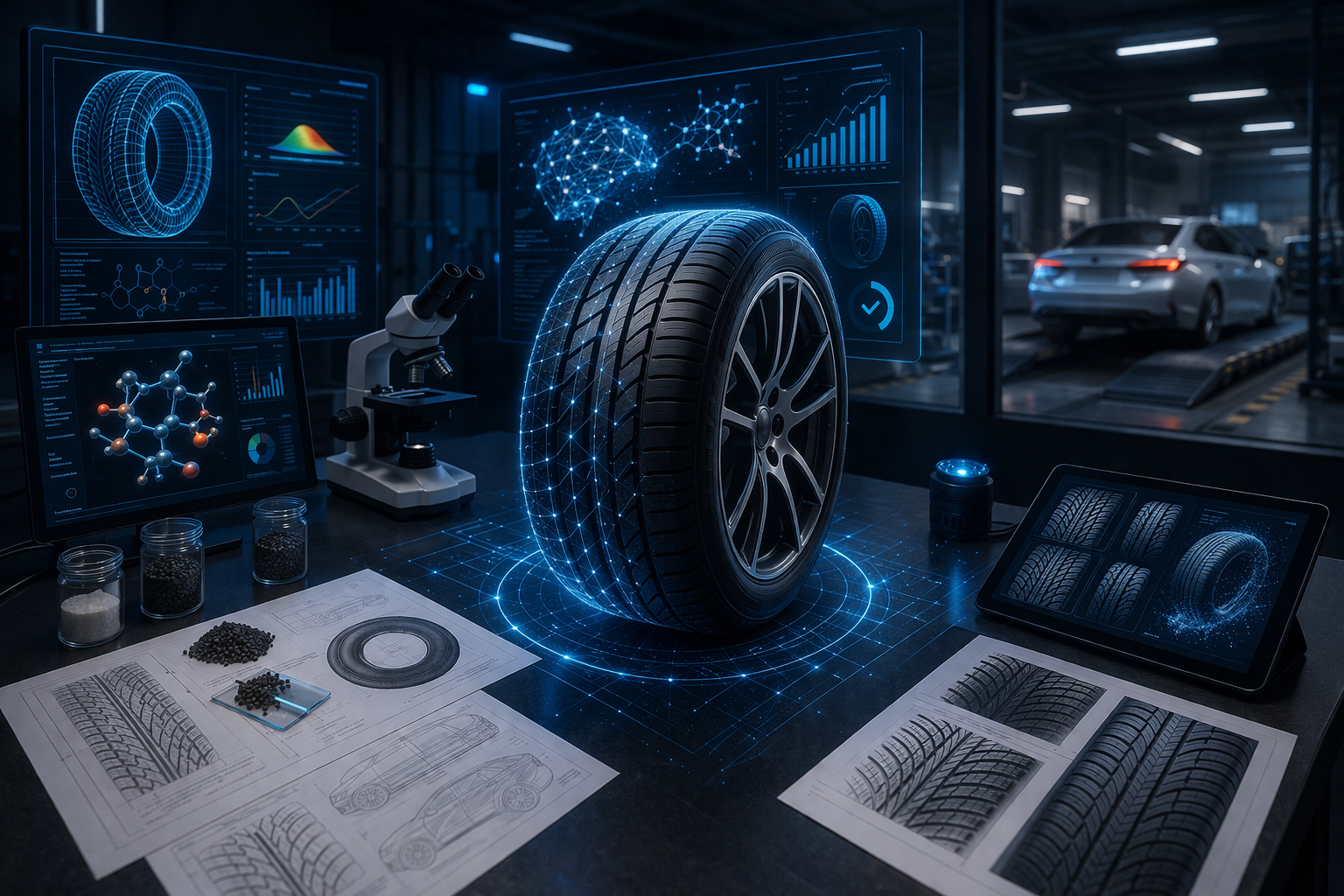
Artificial intelligence in tyre design is profoundly changing the way tyres are conceived, tested, and optimised. Thanks to data analysis, advanced simulation, and automation, manufacturers can now design tyres that are safer, more durable, quieter, and better suited to real-world use.
At Pneus Online, we are closely following these developments in order to help motorists better understand the technologies present in current tyres. Our objective remains the same: to enable everyone to choose Car tyres suitable for their vehicle, its journeys, its budget and its driving conditions.
This transformation therefore does not only concern research laboratories. It directly influences the performance, longevity, safety and comfort of the tyres offered to drivers today.
Summary
- A silent revolution in the tyre industry
- Why AI is becoming essential in tyre design
- Data exploitation and predictive simulation
- How AI is improving materials and structures
- Higher-performance, safer tyres
- Towards a more personalised design according to usage
- From innovation to choosing the right tyre with Pneus Online
- What impact on costs, deadlines, and innovation?
- Limitations and challenges to overcome
- Conclusion
- Frequently Asked Questions
A silent revolution in the tyre industry
For a long time, tyre design relied primarily on engineers' expertise, physical testing, and a logic of gradual improvement. Each new generation was developed from the results obtained on previous models.
Today, this way of working is evolving quickly. Artificial intelligence applied to tyre design allows for the processing of a considerable volume of data from laboratories, numerical simulations, production lines, connected vehicles, and observed road usage conditions.
Manufacturers can thus make faster, more accurate, and better-documented decisions. AI does not replace the engineer: it allows them to explore more solutions and more effectively identify the best combinations among several criteria:
- adhesion ;
- rolling resistance ;
- longevity ;
- acoustic comfort ;
- stability ;
- behaviour on dry or wet roads.
This analytical capability becomes a strategic advantage for manufacturers, who are developing increasingly specialised models. Michelin, Continental, Bridgestone, Goodyear, Pirelli, Dunlop and Hankook, for instance, each offer their own technologies and tyre ranges.
Sir Pneus Online allows motorists to find and compare the main tyre brands according to their vehicle, size, and needs. Innovations developed in the laboratory thus become concrete criteria when selecting new tyres. The official Pneus Online page brings together premium brands as well as all other manufacturers offered on the site.
Why AI is becoming essential in tyre design
Designing a modern tyre is a particularly complex balancing act. An improvement in one area can sometimes have a negative impact on another.
For example, improving grip can accelerate tyre wear. Conversely, reducing rolling resistance in order to minimise energy consumption can affect the level of grip or driving precision.
It is precisely in this search for a compromise that artificial intelligence brings significant value.
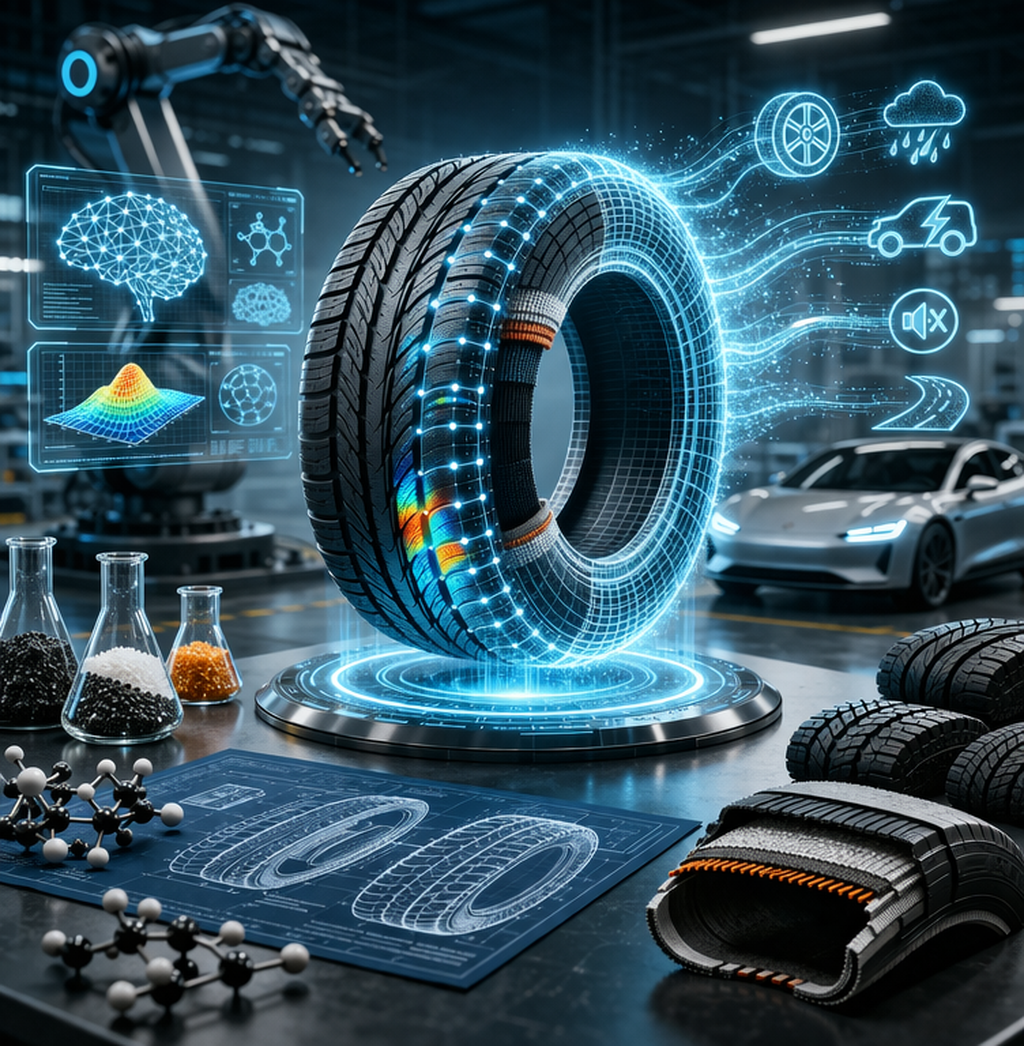
By analysing thousands, or even millions, of possible combinations, machine learning models can help development teams identify the most promising architectures. In particular, they allow for virtual variation of:
- the composition of the gum; ;
- the shape of the grooves; ;
- the depth of the sculptures ;
- the stiffness of the sidewalls ;
- the internal structure of the tyre ;
- the distribution of materials; ;
- the contact surface with the road.
The least suitable solutions can be ruled out even before a physical prototype is built. This saves the teams time and allows them to focus their real-world testing on the configurations with the greatest potential.
The main advantages of this approach
- Simultaneous optimisation of multiple performances
- Reducing development time
- Best use of testing data
- Faster detection of high-risk situations
- A reduction in the number of physical prototypes
- Accelerating product innovation
For drivers, these advancements translate into more specialised tyres – some models prioritise quietness, others grip on wet surfaces, longevity or low rolling resistance.
The Car tyre comparator Pneus Online allows you to consult and compare different models according to several criteria such as road holding, comfort, noise level, wear and tear, or value for money.
Data exploitation and predictive simulation
Transformation begins with data. When it comes to tyre design, there is a particularly large amount of information available:
- Gum mixture composition ;
- Tread geometry ;
- carcass architecture ;
- inflation pressure ;
- temperature ;
- load borne; ;
- vehicle speed; ;
- behaviour on different surfaces ;
- sound level ;
- Rolling resistance ;
- energy consumption ;
- change in wear.
Artificial intelligence makes it possible to cross-reference all these variables and identify correlations that are difficult to spot manually.
Thanks to predictive simulation tools, engineers can more finely model tyre deformation, heating, wear, and its reaction in very different situations: emergency braking, high-speed cornering, heavy rain, degraded roads, or prolonged motorway driving.
The importance of tyre pressure
The simulation can also incorporate real-life maintenance conditions. Incorrect pressure alters the contact surface with the road, increases heating, and can cause uneven wear.
To preserve the performance intended by the manufacturer, it therefore remains essential to regularly check the pressure recommended by the car manufacturer.
Le guide Pneus Online consacré à la tyre pressure Explain how to carry out this check and understand the values indicated for your vehicle. This URL links directly to the official Pneus Online advice section.
Faster virtual trials
Before the development of these technologies, a great deal of optimisation relied on long and costly physical testing campaigns. Each modification often required the manufacture of a new prototype, followed by numerous laboratory and track trials.
Predictive models now allow for the filtering of solutions in the early stages of a project. Less relevant configurations are discarded more quickly, while the most promising options are selected for real trials.
This approach does not eliminate physical tests. It allows them to be better targeted.
A better understanding of actual uses
Data from vehicle fleets, connected vehicles and feedback can also enrich the design.
AI is capable of spotting trends related to:
- to the regions; ;
- subject to climatic conditions; ;
- to the seasons; ;
- to vehicle categories ;
- at the distances covered; ;
- to driving styles; ;
- the types of roads taken.
This information helps to bring the design closer to the conditions actually encountered by motorists.
Manufacturers can also gain a better understanding of wear mechanisms and identify factors causing uneven or premature tread degradation.
This technological analysis must nevertheless be supplemented by regular vehicle maintenance. Pneus Online provides a guide dedicated to tyre wear and tear to help motorists recognise the main signs of wear and make their tyres last longer.
How AI is improving materials and structures
Innovation in the tyre sector also involves materials. The choice of elastomers, reinforcing fillers, silica, resins, and various additives directly influences:
- adhesion ;
- sustainability ;
- the flexibility of the rubber ;
- energy efficiency ;
- heat resistance ;
- behaviour according to temperature.
Artificial intelligence is accelerating the search for new formulations. It analyses the performance obtained in previous trials and helps teams select material combinations that are likely to meet the specifications.
This approach is particularly useful when you need to achieve conflicting objectives, such as achieving good handling while reducing wear and rolling resistance.
AI does not create a new eraser on its own. It helps materials specialists prioritise leads and focus their research on the most promising formulations.
A more optimised tyre sculpture
The tread is also subject to advanced optimisation.
Algorithms can virtually test a large number of variations of:
- longitudinal grooves ;
- drainage channels ;
- cobblestones ;
- lamellae ;
- shoulder blocks ;
- asymmetrical or directional motifs.
The objective is to find the architecture best suited to the specifications: wet grip, noise reduction, traction, durability, comfort, or energy efficiency.
Designs suited to the different seasons
The design also varies according to the product category. A winter tyre must retain its flexibility at low temperatures and offer good traction on cold, wet or snowy roads.
A summer tyre must remain stable as temperatures rise, whereas a four-season tyre must seek a balance between summer and winter conditions.
To better compare available performance, Pneus Online offers dedicated areas:
- Aux Summer tyre tests and comparisons ;
- Aux Winter tyre tests and comparisons ;
- Aux 4-season tyre tests and comparisons.
The three URLs have been checked and correspond perfectly to the direct pages of the Pneus Online France website.
A more precise structural design
Beyond the visible surface, artificial intelligence also intervenes in the internal structure of the tyre.
It can help to adjust:
- stress distribution ;
- the rigidity of key areas ;
- the strengthening of the flanks ;
- stability under load ;
- high-velocity deformation ;
- the distribution of pressure at the contact patch.
Improved mastery of these elements can enhance driving accuracy, comfort, and tyre longevity.
Higher-performance, safer tyres
Safety remains a central issue in tyre design. Thanks to artificial intelligence, manufacturers can better anticipate a tyre's critical behaviour in difficult conditions.
Predictive models make it possible, among other things, to refine the trade-off between:
- wet grip ;
- high-speed stability ;
- aquaplaning resistance ;
- braking distances ;
- handling when cornering ;
- resistance under heavy load.
AI can simulate a multitude of situations and detect configurations where performance is likely to degrade.
It also contributes to improving production regularity. By analysing data collected from industrial lines, systems can detect deviations that could affect the final product quality.
The transformation is therefore not limited to the design office: it continues during manufacturing.
The improvements sought
- Better grip in varied conditions
- More consistent and predictable wear
- A reduction in rolling noise
- Improved energy efficiency
- Increased stability under load
- More precise quality control in production
However, not all ranges adhere to the same specifications. Premium brands generally dedicate significant resources to research, simulation, and testing, while other brands favour a more accessible price positioning.
To better understand these differences before purchasing, Pneus Online offers a guide comparing the premium tyres and budget tyres.
Towards a more personalised design according to usage
One of the great strengths of artificial intelligence is its ability to segment needs with much greater precision.
A tyre designed for an electric SUV primarily used in urban settings does not face the same constraints as a model developed for an estate car, a commercial vehicle, or a high-performance car.
Electric vehicles notably impose specific requirements regarding immediate torque, on-board mass, rolling resistance, and noise.
Artificial intelligence can integrate these parameters from the very beginning of development to design tyres suitable for electric vehicles. The aim is particularly to preserve range, support the load, and limit rolling noise without compromising grip.
Pneus Online is also supporting this evolution with a page entirely dedicated to tyres for electric vehicles. It presents the main features sought for equipping electric cars.
The design could thus gradually evolve from a logic of relatively standardised products towards a logic of tyres optimised for a specific use.
The main criteria taken into account could be:
- the type of vehicle ;
- about its engine ;
- his weight ;
- the region of use; ;
- the annual mileage ;
- The type of journey ;
- the climate ;
- driving style.
In the long term, this dynamic could favour the development of even more targeted ranges without excessively extending design times.
The driver must, however, always choose a model that is compatible with their vehicle, its approved dimensions, and their driving conditions. The differences between the tyres types will therefore remain essential at the time of purchase.
From innovation to choosing the right tyre with Pneus Online
Innovations developed by manufacturers are only of real interest if the driver selects a tyre that is compatible with their vehicle and suited to its use.
Since 2001, Pneus Online has been assisting motorists in choosing their tyres. The website allows users to search for tyres by size or vehicle, compare different brands, and consult technical information before ordering.
To correctly choose a tyre, several elements must be checked:
- its dimensions ;
- its load index ;
- its speed rating ;
- its seasonal category ;
- its compatibility with the vehicle; ;
- its performance on dry and wet roads; ;
- its noise level ;
- its rolling resistance.
Pneus Online offers guides for, among other things:
- read the tyre marking ;
- understand the load and speed indices ;
- identify the different tyres types.
These three pages of advice are hosted directly on the Pneus Online France website.
Once the model has been selected, the order can also be delivered to a Pneus Online fitting centre partner to have the tyres fitted by a local professional.
What impact on costs, deadlines, and innovation?
The integration of artificial intelligence into tyre design can have a direct economic impact.
Reducing the number of physical prototypes, targeting tests more precisely, limiting unhelpful iterations, and speeding up decision-making save time and allow for better investment allocation.
For industrialists, this means, among other things:
- shorter development cycles; ;
- more efficient use of resources ;
- faster error detection ;
- a better ability to adapt ;
- a potentially accelerated market launch.
Research and development teams can dedicate more resources to solutions with high potential rather than pursuing multiple inconclusive avenues.
In a market where expectations are rapidly evolving around electric mobility, eco-performance, safety, and comfort, this capacity for innovation becomes strategic.
A more continuous innovation
Thanks to faster learning loops, improved tyres can become more consistent.
The results of the trials can feed into new models, which in turn produce new recommendations. Each development cycle thus enriches the data available for subsequent projects.
Artificial intelligence is gradually transforming innovation into a continuous process rather than a succession of long, siloed projects.
Limitations and challenges to overcome
The enthusiasm generated by artificial intelligence must not obscure certain limitations.
The quality of the results depends first and foremost on the quality of the data used. Incomplete, biased, outdated or poorly structured information can lead to irrelevant recommendations.
The models must also remain sufficiently interpretable. In a field as sensitive as tyres, engineers must be able to understand why a configuration is considered optimal.
Several challenges therefore remain to be overcome:
- ensure data quality and reliability ;
- protect sensitive industrial information ;
- Explain the recommendations produced. ;
- maintain strong human expertise; ;
- training teams on new tools; ;
- comply with regulatory requirements ;
- validate the results under real-world conditions.
It should also be remembered that no simulation, however advanced, completely replaces physical validation.
Laboratory, track and road testing remain indispensable for confirming the safety, compliance and robustness of the final product.
Finally, the adoption of artificial intelligence requires investment in infrastructure, software, skills and data governance. The transformation is therefore as much technological as it is organisational.
Conclusion
Artificial intelligence in tyre design is profoundly transforming the research, simulation, and development methods used by manufacturers.
It allows for the testing of more configurations, optimisation of materials, better anticipation of wear, and more precise adaptation of tyres to new vehicles and real-world usage.
For motorists, this innovation translates into an ever-wider choice of specialised tyres. It is therefore essential to compare the characteristics of each model and not to select a tyre solely based on its price.
This is precisely the role of Pneus Online to guide each driver in choosing the right tyre, taking into account their vehicle, its dimensions, their driving habits, their priorities, and their budget.
Find our selection of now Car tyres on Pneus Online and compare the available brands, models, and performance for your vehicle.
FAQ : Artificial Intelligence and Tyre Design
How is artificial intelligence used in tyre design?
Artificial intelligence is used to analyse test data, simulate tyre behaviour and compare a large number of configurations. It notably helps to optimise material mixes, tread patterns, internal structure and tyre performance.
Here are the advantages of AI for tyre manufacturers: * **Enhanced Product Development:** AI can analyse vast amounts of data from simulations, testing, and real-world performance to optimise tyre design for grip, wear, fuel efficiency, and comfort. This accelerates the development cycle and leads to more innovative products. * **Improved Quality Control:** AI-powered vision systems can inspect tyres for defects with greater accuracy and speed than human inspectors, ensuring consistent quality and reducing waste. * **Optimised Manufacturing Processes:** AI can monitor and control machinery in real-time, predicting maintenance needs, optimising energy consumption, and identifying bottlenecks in production lines to improve efficiency and reduce downtime. * **Predictive Maintenance:** AI algorithms can analyse sensor data from manufacturing equipment to predict potential failures before they occur, allowing for proactive maintenance and preventing costly unplanned shutdowns. * **Supply Chain Optimisation:** AI can forecast demand more accurately, manage inventory levels efficiently, and optimise logistics, reducing costs and ensuring timely delivery of raw materials and finished products. * **Personalised Tyre Solutions:** In the future, AI could enable the development of highly customised tyres based on individual driving habits, vehicle types, and road conditions. * **Enhanced Safety Features:** AI can contribute to the development of "smart" tyres that can communicate their condition and performance characteristics to the vehicle, improving overall safety. * **Data-Driven Decision Making:** AI provides manufacturers with deeper insights into their operations, market trends, and customer behaviour, enabling more informed strategic decisions.
The main advantages include faster design, better accuracy in technical choices, a reduction in the number of prototypes, and better adaptation to real-world uses. AI also allows for more targeted physical testing.
Can artificial intelligence make tyres safer?
Yes. It helps engineers to better predict tyre behaviour in complex situations, such as rain, emergency braking, heavy loads or high speeds. This helps to improve grip, stability and consistent performance.
Is AI replacing physical testing in the tyre industry?
No. Artificial intelligence complements physical trials, but does not replace them. Laboratory, track and road validations remain essential to confirm the safety, compliance and reliability of the final product.
Why is AI important for electric vehicle tyres?
Electric vehicles present specific challenges: often higher weight, instant torque, the pursuit of range, and a strong expectation of quiet running. AI helps find a better balance between these different criteria.
Does AI reduce tyre wear?
It can help manufacturers to better understand wear mechanisms and optimise stress distribution. Actual wear, however, remains influenced by pressure, driving style, parallelism, the vehicle and usage conditions.
How to choose tyres suitable for your vehicle?
You must start by checking the approved dimensions, the load and speed ratings, and the seasonality. It is then possible to compare models from the page Car tyres from Tyres Online.
Can tyres be delivered to a garage?
Yes. Pneus Online allows you to search for a Partner fitting centre and have the tyres delivered directly to the professional of your choice.
To remember
Artificial intelligence is making tyre development faster, more precise, and more focused on real-world applications.
It enables in particular:
- to improve simulations; ;
- to optimise materials; ;
- to better anticipate wear; ;
- to strengthen security; ;
- to reduce the number of prototypes; ;
- to adapt tyres to the new vehicle categories.
Human expertise and physical testing will nevertheless remain indispensable for guaranteeing the reliability of future tyres.
Find your next tyres with Pneus Online
Need to replace your tyres? Simply enter your dimensions or your vehicle to access compatible models. Compare the leading brands and choose home delivery or collection from a partner fitting centre.
You can also discover Pneus Online Prime and the benefits offered for the duration of the membership, subject to the applicable terms and conditions.
Find us on social media
Discover our tips, videos and all the latest Pneus Online news on Instagram, Facebook and YouTube.