EV Tyres: Range, Quietness and Torque Resistance
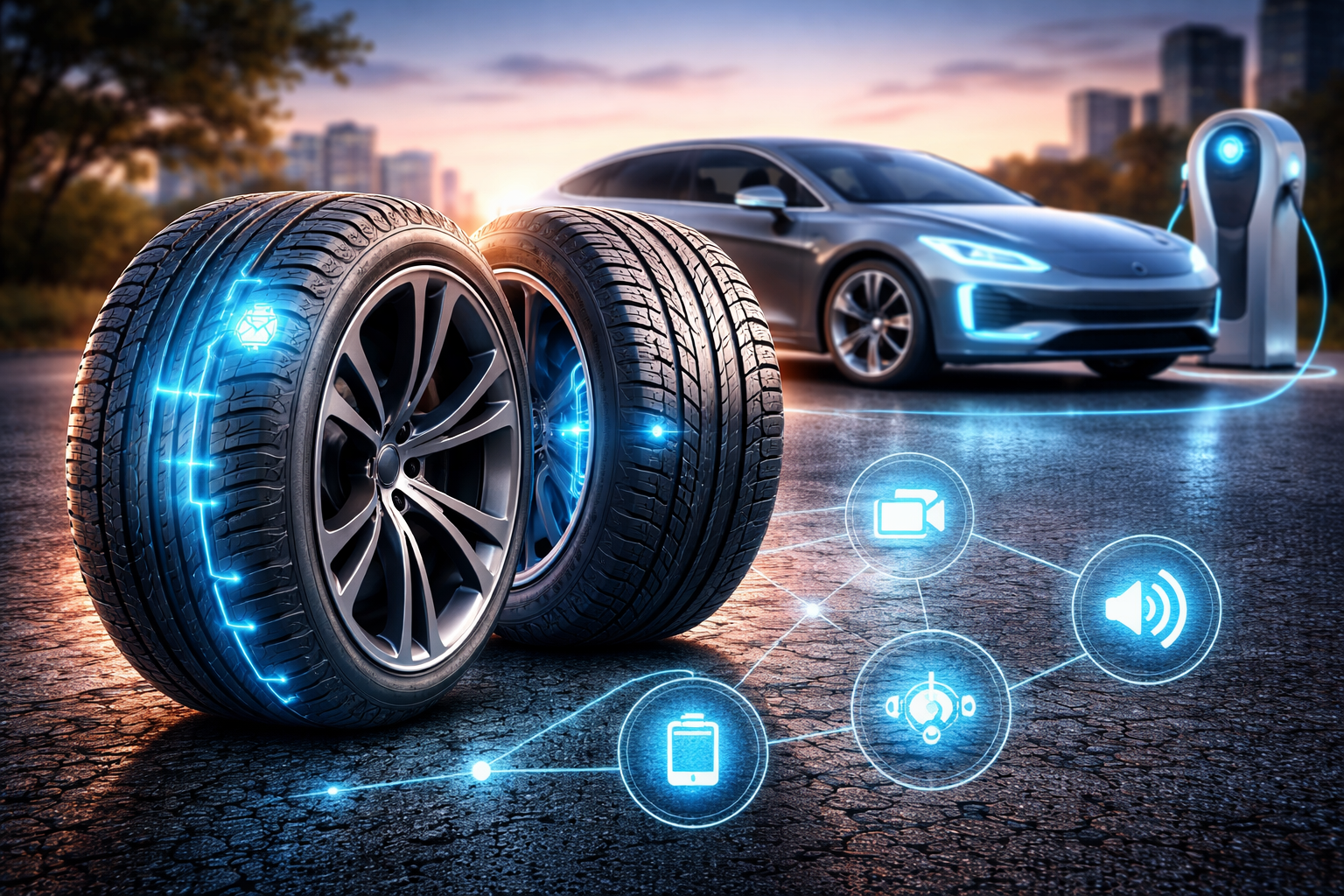
Why tires have become essential on electric vehicles
An electric vehicle not only requires a powerful battery and an efficient motor; it also depends heavily on the quality of its tires. The tire directly affects energy consumption, acoustic comfort, stability, and the lifespan of the vehicle.
Three concepts perfectly summarize the main expectations regarding EV tires: autonomy, silence and resistance to torque. These three criteria are now shaping the development of ranges dedicated to electric cars, whether they be city cars, sedans or SUVs.
What is an EV tyre?
An EV tire is a tire designed for the specific constraints of electric vehicles. It is not just a marketing argument. Its design aims to address several technical realities: a weight often higher due to the battery, immediate torque immediately upon acceleration, and a need for enhanced acoustic comfort.
To be effective, an EV tire must therefore offer a good balance between low rolling resistance, stability, grip, durability and noise reduction. It must also maintain good performance on dry roads as well as on wet roads.
Why EV tires affect range
The autonomy of an electric car depends partly on the rolling resistance of its tires. The more energy a tire requires to move forward, the faster the battery runs out. Conversely, an optimized setup helps the vehicle drive more efficiently.
It is for this reason that EV tires are generally designed with specific compound and structural combinations that can limit energy losses. The goal is not just to perform better on paper, but to improve efficiency on a daily basis.
A suitable tire can help to:
- reduce energy consumption in urban and highway travel;
- to preserve more kilometers of autonomy;
- improve the regularity of performance over time;
- limit the impact of an inappropriate load on the vehicle’s performance.
This explains why tire choice has become an important criterion for electric car drivers, especially among heavy commuters.
Why silence is a key criterion
On a thermal car, the noise from the engine partially masks the sounds coming from the road. On an electric car, this is no longer the case. The silent operation of the engine makes the noise of the tires rolling much more noticeable.
The manufacturers are therefore working on better-optimized tread patterns, a finer distribution of the tread blocks, and, on certain ranges, technologies capable of reducing internal vibrations. The goal is to make driving more enjoyable, especially on long journeys.
The acoustic comfort provided by a quality EV tire can make a real difference in several situations:
- on the highway at a stabilized speed;
- on a degraded roadway;
- in very well-insulated cabins;
- on high-end models where the level of expected comfort is high.
In practice, a silent tire fully contributes to the electric driving experience.
How EV tires withstand instantaneous torque
One of the major challenges of electric vehicles is the immediate torque available. As soon as the accelerator is pressed, the wheels receive a significant force. This characteristic makes driving dynamic, but it also imposes more strain on the tire.
An EV tire must therefore withstand repeated stresses without prematurely wearing out. To achieve this, manufacturers strengthen the internal structure, optimize the sidewall stiffness, and develop tires capable of better supporting traction forces.
This resistance to torque allows for:
- limit the excessive wear of the tread;
- improve motor skills during acceleration;
- maintain more stable driving behavior;
- better distribute the stresses over the entire contact surface.
This is a key point, especially for powerful models and electric SUVs, which are often heavier and more demanding on tires.
How an EV tire differs from a conventional tire
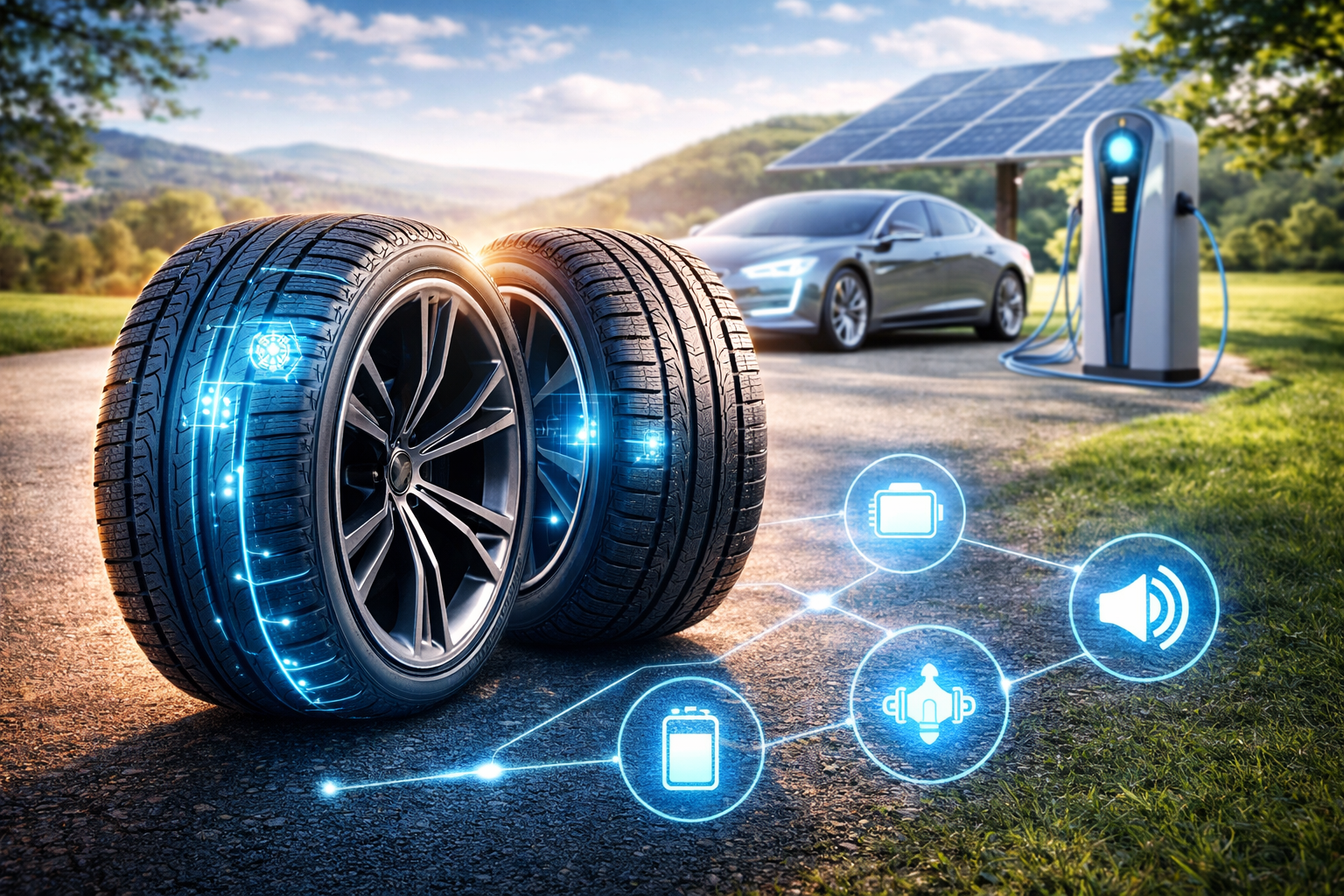
An EV tire is not necessarily radically different visually, but its design meets more demanding requirements. Where a conventional tire primarily seeks a good overall balance, an electric vehicle tire must be efficient across several axes simultaneously.
The most frequent differences concern:
- a weaker rolling resistance;
- a structure better adapted to the weight of the vehicle;
- better resistance to wear related to torque;
- a more pronounced reduction in noise;
- an optimized compromise between autonomy, roadholding and comfort.
In short, the EV tire becomes a fully-fledged technical component within the electric vehicle ecosystem.
How to choose your EV tires properly
To choose the right EV tires, you first need to respect the dimensions, load indices, and speed indices specified by the manufacturer. Then, it is useful to reason based on your actual usage rather than relying solely on the commercial label.
Here are the main criteria to compare:
- Efficiency to preserve autonomy.
- The sound level to improve comfort on board.
- Resistance to wear and tear to better support the couple and the weight.
- Adhesion on wet roads for everyday safety.
- The type of usage City, road, highway or versatility.
- The season : summer tires, winter tires or 4-season tires.
An electric city car used primarily in urban areas won’t exactly have the same needs as a large sedan or an SUV that regularly drives on the highway. The best choice, therefore, remains the one that suits your vehicle and your driving style.
Maintenance tips to extend the lifespan of EV tires
Even the best EV tires need rigorous maintenance. Incorrect pressure or overly aggressive driving can accelerate wear and degrade performance.
To preserve autonomy, silence and longevity, it is advisable to:
- regularly check the tire pressure;
- have the geometry checked if abnormal wear is detected;
- adapt the accelerations to limit unnecessary constraints;
- monitor the general condition of the tread;
- replace the tires as soon as their wear level compromises safety.
Good maintenance not only increases their lifespan but also ensures consistent performance over the miles.
- Autonomy: Thanks to low rolling resistance, the tire consumes less energy.
- Silence: Its design limits noise levels in a cabin where the engine is discreet.
- Resistance to torque: Its structure and rubber are designed to better withstand immediate accelerations.
A high-performance EV tire must also withstand the weight of the vehicle, offer good traction, and wear down regularly. To choose the right one, you need to consider its use, noise level, durability, and performance on wet roads.
FAQ: EV tires, range, silence, and resistance to torque
What is an EV tyre?
An EV tyre is a tyre designed for electric vehicles. It aims to optimise range, acoustic comfort, wear resistance, and stability in the face of the vehicle's weight and torque.
Do EV tyres really improve range?
Yes, tyres with low rolling resistance can help reduce energy consumption and therefore preserve more range on a daily basis.
Les pneus sont-ils plus bruyants sur une voiture électrique ?
In reality, they aren't necessarily louder, but their noise is more noticeable because the electric motor is very quiet. Acoustic comfort from the tyre therefore becomes more important.
Le couple **élevé** des véhicules électriques (VE) est la principale raison pour laquelle ils usent davantage les pneus. Le couple est la force de rotation du moteur, et les moteurs électriques délivrent leur couple maximal presque instantanément, dès que vous appuyez sur l'accélérateur. Voici pourquoi cela pose problème pour les pneus : * **Accélération plus vive:** Les VE peuvent accélérer beaucoup plus rapidement que les voitures à combustion interne comparables. Cette accélération soudaine exerce une pression plus importante sur les pneus, les obligeant à adhérer à la route et à générer la force nécessaire pour propulser le véhicule. Cette friction accrue entraîne une usure plus rapide. * **Poids du véhicule:** Les batteries des VE sont lourdes, ce qui augmente le poids total du véhicule. Un véhicule plus lourd exerce une pression plus importante sur les pneus, augmentant le frottement et donc l'usure. * **Conception des pneus:** Pour gérer le couple élevé et le poids des VE, les fabricants de pneus ont dû renforcer leurs flancs et leurs composés. Cependant, même ces pneus renforcés peuvent s'user plus rapidement en raison des contraintes mécaniques inhérentes à la technologie des VE. * **Style de conduite:** Un style de conduite agressif, avec des accélérations et des freinages brusques fréquents, accentuera l'usure des pneus sur n'importe quel véhicule, mais c'est particulièrement vrai pour les VE en raison de leur couple instantané. En résumé, le couple élevé et le poids plus important des véhicules électriques, combinés à une accélération plus vive, exercent une pression accrue sur les pneus, entraînant une usure plus rapide que sur les voitures à combustion interne traditionnelles.
The instantaneous torque transmitted to the wheels can cause stronger stresses during acceleration. Without appropriate tyres, this can accelerate tread wear.
Can you fit regular tyres on an electric car?
This depends on the model and manufacturer homologations. In all cases, the dimensions and ratings specified must be adhered to. A tyre specifically adapted for EVs can offer a better balance between range, noise and longevity.
What criteria should be looked at as a priority?
You need to compare the efficiency, the rolling noise, the wear resistance, the grip on wet surfaces, and the suitability of the tire for your actual use.