2025 Sports Tyres: Comparison of the best tyres for sporty driving
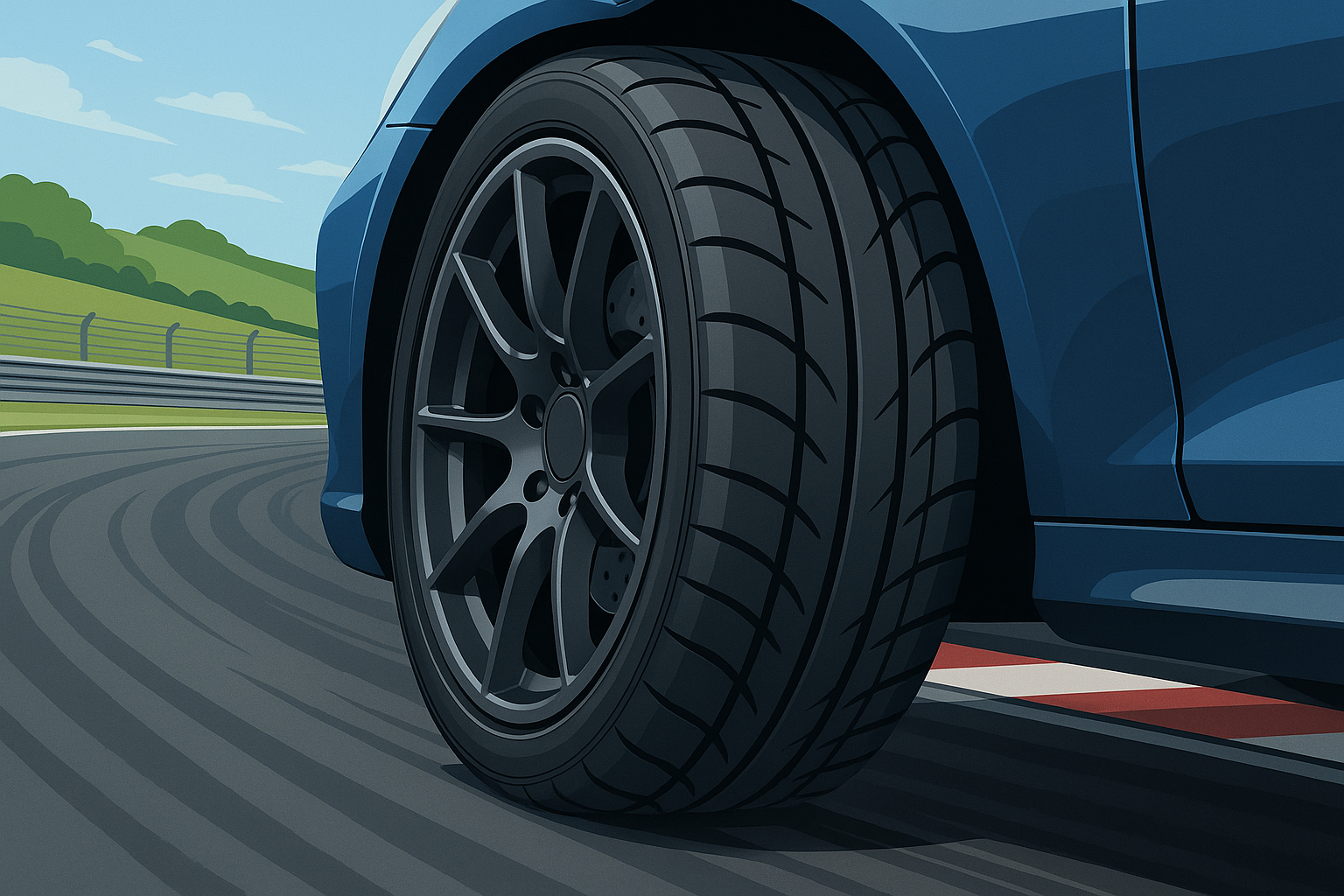
Choosing good sports tyres is not just about seeking maximum grip. It is also necessary to take into account wet-weather behaviour, steering precision, comfort and lifespan.
Indeed, a high-performance tyre on a circuit will not always be pleasant for everyday use. Conversely, a versatile model will offer greater peace of mind on the road, but less effectiveness during intensive track use.
In this guide, discover five essential products for 2025. You will also find a comparison table, practical advice and a FAQ to help you choose the right tyre for your vehicle.
Summary
- What is a performance tyre?
- What criteria should be compared?
- Top 5 Sport Tyres in 2025
- Comparison table
- Which tyre to choose according to your usage?
- How to use and maintain sports tyres
- What are their limits on public roads?
- Sports tyre FAQ
- Conclusion
1. What is a sports tyre?
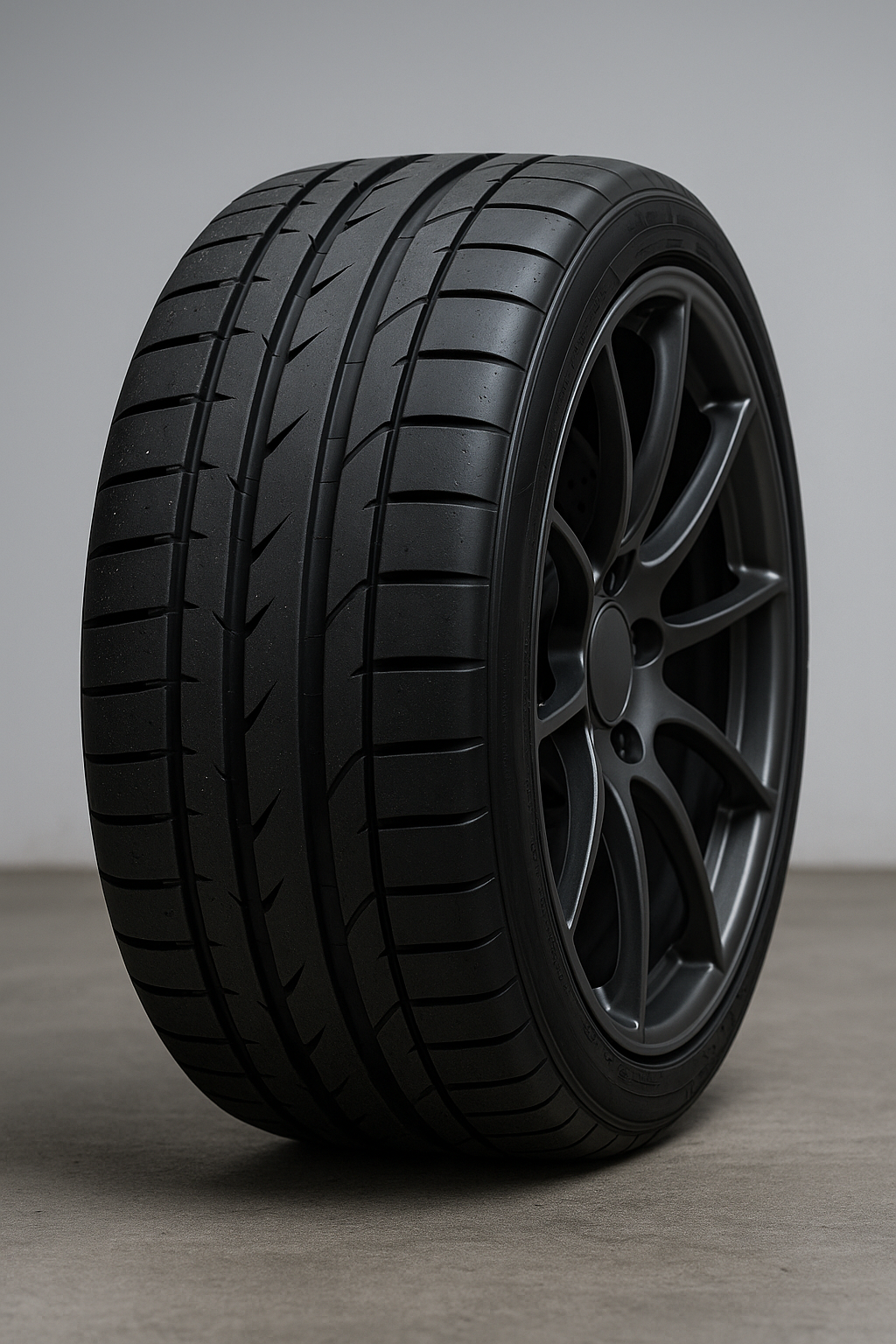
A sports tyre is designed to offer a quick and precise response when the pace increases. It generally features a stiffer casing, a high-performance rubber compound and large shoulder blocks.
Thanks to this design, it limits deformation in corners. The steering therefore feels more direct. In addition, the vehicle maintains better stability during heavy acceleration and braking.
However, not all sports tyres meet the same need. There are several categories:
- high-performance road tyres, suitable for dynamic daily driving; ;
- ultra-high-performance tyres, intended for powerful vehicles; ;
- semi-slicks, more track-oriented; ;
- tyres designed for electric sports cars.
Therefore, the most radical model is not necessarily the best choice. For road use, it is often better to look for a balance between grip, wet-weather safety and longevity.
Before ordering, you can also consult the summer tyre tests available on Pneus Online.
2. Which criteria need to be compared?
Grip on dry roads
Dry grip remains a key criterion. A good sports tyre must effectively transmit acceleration, braking and changes of direction.
However, maximum grip is not enough. The handling must also remain progressive when the tyre reaches its limits.
Behaviour in the rain
A high-performance tyre must rapidly disperse water. Consequently, it reduces the risk of aquaplaning and maintains good stability.
On the other hand, a semi-slick has fewer grooves. It can therefore feel less reassuring in heavy rain.
Driving precision
Sidewall stiffness directly influences the precision of the front axle. The more quickly the tyre reacts, the sharper and more sporty the handling feels.
Comfort and noise
The stiffest tyres transmit more road irregularities. Furthermore, their tread pattern can generate higher rolling noise.
The lifespan
A softer rubber compound often improves grip. However, it can also wear out faster. Vehicle geometry, tyre pressure and driving style also play an important role.
Load and speed ratings
Finally, always respect the specifications approved by the manufacturer. The Y rating corresponds, for example, to a theoretical maximum speed of 300 km/h under the conditions specified by the manufacturer. A higher rating may be fitted, but not a lower rating than the original recommendation, barring regulatory exceptions for certain winter tyres.
Check our guide on load and speed indices to better understand these markings.
3. Top 5 sports tyres in 2025
3.1 Michelin Pilot Sport 5: the best balance for the road
The Michelin Pilot Sport 5 suits drivers perfectly who are looking for dynamic driving without sacrificing everyday use.
Its Dynamic Response technology improves the transmission of steering wheel movements. Furthermore, its design promotes even wear and a good level of control on both dry and wet roads.
Therefore, it represents an excellent compromise for a sports saloon, a coupe or a powerful hatchback. On the other hand, it remains more oriented towards road use than intensive track use.
Ideal for: sporty everyday driving and long journeys.
Key strength: versatility.
Limit: less radical than a semi-slick.
3.2 Pirelli P Zero Trofeo R: the track day enthusiast's choice
The Pirelli P Zero Trofeo R is a semi-slick designed for sports cars and high-performance vehicles.
Its tread features fewer grooves than a standard road tyre. Consequently, a larger area of rubber remains in contact with the road surface. Grip in the dry and cornering precision are thus particularly high.
However, this tyre requires greater care in the rain. Its comfort and longevity may also be less suited to daily use.
Ideal for: track days and high-performance driving.
Key strength: dry grip.
Limit: poor versatility in the rain.
3.3 Bridgestone Potenza Sport: precise and reassuring
The Bridgestone Potenza Sport prioritise stability, steering precision and braking.
It maintains rigorous handling both in a straight line and through corners. Furthermore, numerous sizes benefit from a good European rating for wet grip.
Thus, this model is aimed at drivers who want to enjoy a powerful car on the road, while maintaining a consistent level of safety in varied conditions.
Ideal for: dynamic driving.
Key strength: stability at sustained speed.
Limit: comfort firmer than a standard car tyre.
3.4 Continental SportContact 7: high-performing in dry and wet conditions
The Continental SportContact 7 stands out for its excellent balance.
Its BlackChili compound and rigid structure promote grip, precision and stability. In addition, its design adapts to different vehicle categories and weights.
It is therefore just as well suited to a hot hatch as to a high-performance saloon. Above all, it remains reassuring when conditions change rapidly.
Ideal for: demanding driver who drives all year round outside of winter conditions.
Key strength: wet and dry versatility.
Limit: generally premium pricing.
3.5 Goodyear Eagle F1 SuperSport R: performance above all else
The Goodyear Eagle F1 Supersport R aims for a very sporty driving style.
Its structure promotes quick steering response and good high-speed stability. Moreover, its tread pattern helps to evacuate water, even though its character remains clearly performance-oriented.
It will be particularly well suited to powerful cars and drivers looking for a high degree of precision. On the other hand, its firmer ride can be tiring on long journeys.
Ideal for: Sporting road use and occasional track days.
Key strength: driving precision.
Limit: comfort and wear.
4. 2025 sports tyre comparison table
| Model | Dry route | Wet road | Comfort | Longevity | Circuit | Budget |
|---|---|---|---|---|---|---|
| Michelin Pilot Sport 5 | ★★★★☆ | ★★★★☆ | ★★★★☆ | ★★★★☆ | ★★☆☆☆ | €€€ |
| Pirelli P Zero Trofeo R | ★★★★★ | ★★☆☆☆ | ★☆☆☆☆ | ★★☆☆☆ | ★★★★★ | €€€€ |
| Bridgestone Potenza Sport | ★★★★☆ | ★★★★☆ | ★★★☆☆ | ★★★☆☆ | ★★★☆☆ | €€€ |
| Continental SportContact 7 | ★★★★★ | ★★★★☆ | ★★★☆☆ | ★★★★☆ | ★★★☆☆ | €€€ |
| Goodyear Eagle F1 Supersport R | ★★★★★ | ★★★☆☆ | ★★☆☆☆ | ★★☆☆☆ | ★★★★☆ | €€€€ |
This table provides a general assessment. Performance may vary depending on size, vehicle, temperature and road conditions.
5. Which tyre should you choose according to your usage?
For sporty everyday driving
Opt for a versatile tyre like the Michelin Pilot Sport 5 or the Continental SportContact 7.
Both of these models offer good accuracy. However, they are also well suited to regular journeys, motorway driving and changing weather conditions.
For a high-performance car used on the road
The Bridgestone Potenza Sport represents a coherent solution. It provides stability and precise steering without becoming as demanding as a semi-slick.
To switch between road and track
The Goodyear Eagle F1 Supersport R is an interesting choice. It proves to be more extreme than a classic road tyre, while retaining a certain versatility.
For track use mainly
The Pirelli P Zero Trofeo R will be more suitable. However, ideally plan for a second set of wheels for daily journeys and rainy days.
For a sporty electric car
The weight and immediate torque of an electric vehicle put a heavy strain on the tyres. Therefore, it is necessary to check the load index, noise level and compatibility with the vehicle.
Find more information in our guide dedicated to tyres for electric vehicles.
6. How to use and maintain sports tyres?
Check the pressure regularly
Incorrect pressure alters tyre behaviour. It can also accelerate wear and cause overheating.
Check it then tyre pressure when cold, approximately once a month. Always use the values recommended by the vehicle manufacturer.
Let the tyres warm up
For the first few kilometres, drive progressively. Indeed, a cold tyre does not immediately offer its best level of grip.
Therefore, avoid sudden acceleration and harsh braking at the start of the journey.
Monitor the geometry
Poor wheel alignment can quickly wear down the inside or outside of the tread. Furthermore, it impairs steering precision.
Check for wear after a track day
After each session, inspect the shoulders, sidewalls and tread. Look in particular for cuts, rubber tearing or uneven wear.
Have the tyres fitted by a professional
Precise balancing remains essential on a sports car. You can have your tyres delivered to one of the Partner fitting centres offered by Pneus Online.
7. What are the limits of sports tyres on public roads?
A sometimes firmer comfort
Tyre stiffness improves precision. However, it also transmits more road surface imperfections.
On a poor road surface, the vehicle may therefore seem firmer and noisier.
Faster wear
Hard acceleration, heavy braking and fast cornering place a heavy demand on the rubber.
Therefore, the lifespan depends as much on the tyre as on the driver.
Variable performance depending on the temperature
Certain very sporty tyres work better once they have reached a sufficient temperature. On a short journey or in cold weather, they may therefore offer less grip than an all-round road tyre.
Enhanced vigilance in the rain
Semi-slicks generally clear less water. You must therefore reduce your speed significantly when the road is wet.
To better understand these differences, see the Tyre grip guide.
8. Sports tyre FAQ
Can you use a semi-slick tyre on the road?
Yes, only when the model and size have the necessary type approvals. Also check their compatibility with your vehicle.
Even when road-legal, a semi-slick remains less versatile in the rain. It therefore requires particularly careful driving.
How many kilometres does a sports tyre last?
There is no universal mileage. The service life depends on the vehicle, tyre pressure, wheel alignment, road surface and driving style.
Regular track use can, however, significantly accelerate wear.
Which tyre should I choose for a hot hatchback?
The Michelin Pilot Sport 5 and the Continental SportContact 7 offer an excellent balance. The Bridgestone Potenza Sport also represents a good solution for firmer and more precise driving.
Should you fit four identical tyres?
Where possible, yes. Identical tyres promote more consistent handling.
At the very least, always fit two tyres with identical characteristics on the same axle. Find the main rules in our guide to changing your tyres.
Is a sports tyre dangerous in the rain?
Not necessarily. Many road sport tyres offer very good performance in the wet.
On the other hand, semi-slicks have fewer grooves. They are therefore generally less suited to heavy rain and low temperatures.
Are sports tyres noisier?
Often, yes. Their stiff casing and tread pattern can generate more noise.
However, the noise level varies greatly depending on the model and size.
Does a performance tyre consume more fuel?
It may exhibit higher rolling resistance than a tyre designed for fuel efficiency.
However, the difference depends on the rubber, the pressure and the vehicle.
Are there all-season sport tyres?
Yes, certain ranges combine a sporty character with all-season use.
Nevertheless, they remain a compromise. They do not replace a high-performance summer tyre for very sporty driving or a specialised track tyre.
Do you need special wheels?
Not necessarily. The dimensions, pitch circle diameter, offset and load capacity must above all comply with the manufacturer's recommendations.
Discover the alloys and complete wheels available on Pneus Online.
Are run-flat tyres suitable for sporty driving?
Certain Run Flat models are fitted to sports cars. However, their reinforced sidewalls can make the ride firmer.
Therefore, it is necessary to choose an approved part number suited to the vehicle.
How to prolong the life of your sports tyres?
Check the pressure, geometry and balancing. Furthermore, avoid harsh acceleration when the tyres are cold.
Finally, regularly inspect the tread and rotate the tyres only when authorised by the manufacturer.
Can a new tyre be too old?
A tyre ages even when it is not being driven on. However, its condition also depends on its storage conditions.
Check its manufacturing date, appearance and the manufacturer's recommendations. Regular inspection becomes particularly important after several years.
9. Conclusion
The best sport tyres of 2025 do not all cater to the same need.
The Michelin Pilot Sport 5 is perfectly suited for dynamic daily driving. The Continental SportContact 7, meanwhile, offers an excellent balance between precision and versatility. For its part, the Bridgestone Potenza Sport prioritises stability and driving feel.
For more radical use, the Goodyear Eagle F1 Supersport R brings the road even closer to the track. Finally, the Pirelli P Zero Trofeo R is primarily aimed at enthusiasts looking for maximum dry grip.
Before ordering your car tyres, always check the tyre size, load and speed ratings, and the vehicle manufacturer approvals. This will allow you to fully enjoy its performance without compromising your safety.