Load and speed indices of tires: complete guide
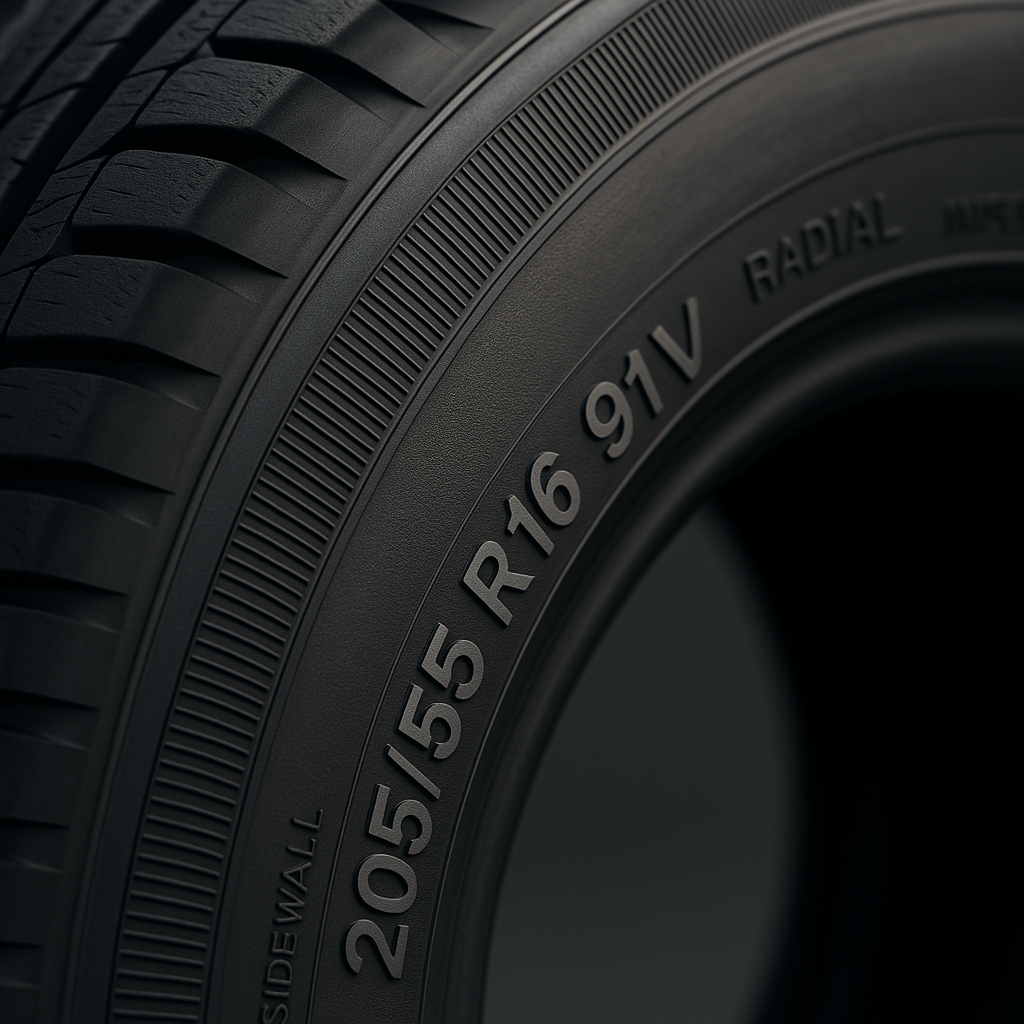
The load and speed indices are essential information inscribed on the sidewall of a tire. They indicate, on the one hand, the maximum weight that the tire can support and, on the other hand, the maximum speed for which it was designed.
Let’s take the example of a tire 205/55 R16 91V. The number 91 corresponds to a maximum load of 615 kg per tire. The letter V, For its part, it corresponds to a theoretical maximum speed of 240 km/h. However, this indication never replaces speed limits or the manufacturer's recommendations.
Choose some Tires adapted to his vehicle This therefore allows the safety, stability and longevity of the structure to be preserved. Here is how to understand these indicators and avoid mistakes.
Summary
- What do the load and speed indicators mean?
- Summer, winter and 4-season tires: what impact on the ratings?
- Which standards and recommendations should be followed?
- What influence does it have on road behavior?
- The most common mistakes to avoid
- Table of load indices
- Table of speed indices
- FAQ on load and speed indicators
- Conclusion
1. What do the load and speed indicators mean?
The load index
The load index takes the form of a number. It indicates the maximum load that each tire can withstand under normal conditions of use.
For example, a load index 91 corresponds to 615 kg per tire. Thus, four tires bearing this index can theoretically support a total load of 2,460 kg. However, this simple multiplication is not enough to choose a tire.
Indeed, the distribution of weight between the axles, the recommended pressure, and the characteristics of the vehicle must also be taken into account. Therefore, always consult the manufacturer’s manual or the label placed on the door jamb.
The speed index
The speed index appears in the form of a letter. It indicates the maximum speed at which the tire can withstand its reference load under the conditions specified by the manufacturer.
For example, the index H corresponds to 210 km/h. Similarly, the index V corresponds to 240 km/h.
However, this index does not constitute an authorization to drive at that speed. It represents only a technical characteristic of the tire.
To better understand all the numbers, letters, and symbols, please consult our guide for Read the tyre markings.
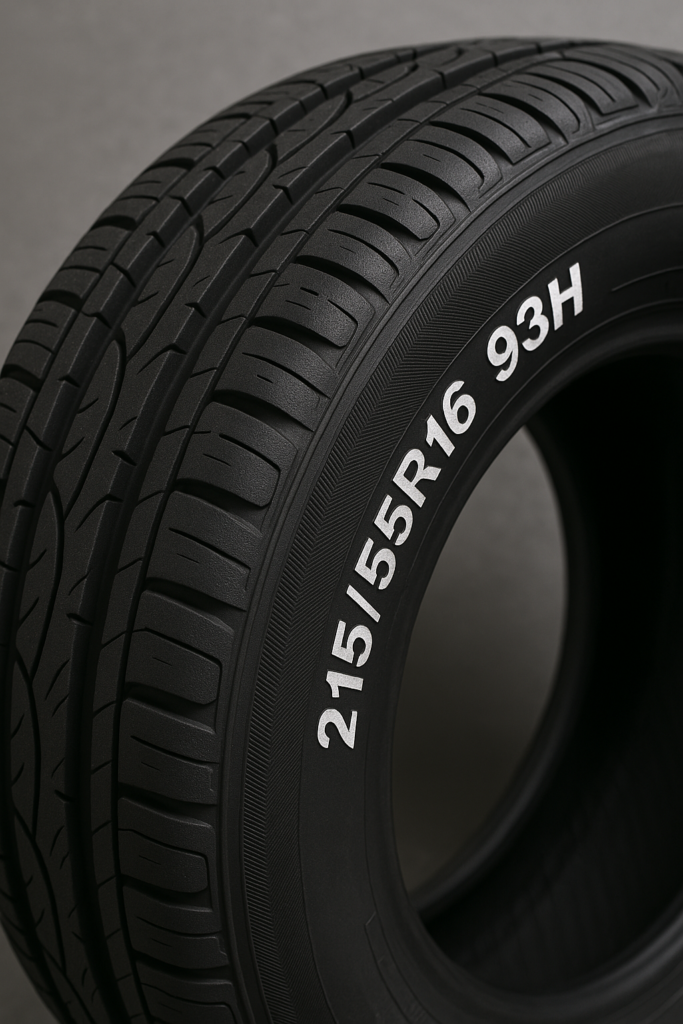
Where can I find the recommended clues?
Before ordering your tires, please check the following information:
- the side of the tires currently mounted; ;
- the vehicle’s user manual; ;
- the label located in the door frame; ;
- the fuel tank, depending on the vehicle; ;
- the vehicle's certificate of conformity.
Then, compare these data with the characteristics of the model you want to buy. If in doubt, ask for advice from a professional.
2. Summer, winter and 4-season tires: what impact do they have on the indexes?
The summer tyres, les winter tyres and the all-season tyres they meet different usage conditions. However, they all must comply with the vehicle’s load requirements.
The summer tyres
Summer tires prioritize driving precision, stability, and grip when temperatures remain mild or high. Their rubber compounds and tread patterns provide, among other things, a performance suited to dry or wet roads.
As a general rule, their speed rating must be at least equal to that recommended by the manufacturer. You can choose a higher rating, provided that the dimensions and homologation remain compatible.
Winter tyres
Winter tires use a rubber compound that retains more elasticity as the temperature drops. Additionally, their tread patterns promote grip on cold, wet, or snowy roads.
Under certain conditions, regulations allow the use of a speed index lower than that of the summer season. However, you must comply with the rules applicable to the vehicle and clearly display the maximum permitted speed when required by regulations.
On the other hand, you should not reduce the load index. The tire must always support the weight specified by the manufacturer.
To prepare your vehicle, discover our tips for choosing your winter equipment.
All-season tyres
The 4-season tires represent a compromise between summer and winter performance. Nevertheless, their load and speed ratings must remain compatible with the vehicle.
Before purchasing, please check the dimensions, markings, winter markings and any manufacturer homologations.
3. Which standards and recommendations should be respected?
Tyres sold in Europe must meet specific technical requirements. For passenger cars, UN Regulation No 30 sets out, among other things, the marking, dimensions and performance requirements for tyres.
A homologated tire usually bears a marking. E followed by a number. This number indicates the country that issued the homologation. However, this is not a quality rating.
When replacing tires, the manufacturer's recommendations remain the primary reference. They guarantee compatibility between the tires, the vehicle's weight, its power, and its electronic systems.
Can an index be increased?
You can usually choose a higher load or speed index. However, the new tire must retain compatible dimensions, structure, and homologation.
Furthermore, a higher index does not automatically improve grip or braking. It can also make the side more rigid. Therefore, comfort may change slightly.
Can an index be reduced?
You should not choose a load index lower than the manufacturer's recommendation. In fact, the tire would risk working beyond its capacity.
Similarly, you should not normally reduce the speed index. Only certain winter tires can benefit from an exception, according to the regulations and recommendations of the vehicle.
4. What influence does it have on road behavior?
The load and speed indices directly influence how the tire reacts to the stresses.
Insufficient load indicator
A tire that supports excessive load deforms more. Consequently, its temperature increases and its structure undergoes more stress.
In the long run, this situation can lead to:
- rapid wear; ;
- a loss of stability; ;
- a deterioration of the carcass; ;
- an increased risk of deterioration; ;
- an increase in consumption.
Furthermore, the risk increases when the pressure remains too low. So remember to: check tyre pressures regularly.
Insufficient speed indicator
A too low speed index can also favor tire overheating and deformation. The steering then risks losing precision, especially during long journeys or at sustained speeds.
However, the speed rating alone does not determine performance. The tire compound, structure, tire condition, pressure, and temperature also play an important role.
The case of heavy vehicles
SUVs, vans and electric cars put a heavy strain on their tires. They therefore often require higher load indices.
Thus, carefully check the specifications when you choose:
The weight of the vehicle is not the only criterion. In fact, engine torque, driving style and frequency of journeys also influence wear and tear.
5. The most common mistakes to avoid
Choosing an index at random
First of all, do not rely solely on the tire’s dimensions. Two models of the same size can have different indices.
Therefore, always check the vehicle manual and the information provided by the original manufacturer.
Installing a lower load index
A tire with too low a load index is not suitable for the weight specified by the manufacturer. Therefore, the tire is at risk of being overloaded.
Choose at least the index indicated for your vehicle.
Thinking that a higher index is always better
A higher index offers higher technical capability. However, it does not automatically guarantee better braking or greater longevity.
Furthermore, a more rigid chassis can alter comfort. Therefore, it is necessary to look for a suitable fit rather than the highest index.
Mixing different characteristics on the same axle
To maintain uniform behavior, it is preferable to mount two identical tires on the same axle. They must have the same dimensions, markings, structure, and usage category.
Thus, you reduce the differences in reaction between the left wheel and the right wheel.
Forget the inflation pressure
Even with correct indicators, poor pressure impairs performance. Too low a pressure, in particular, increases heat build-up and wear on the shoulders.
Conversely, too high a pressure can reduce comfort and favor central wear.
Confusing the speed index and the speed limit
Finally, a tire with a Y rating does not allow you to drive at 300 km/h. You must always respect the Highway Code and the traffic conditions.
The index only indicates the tire's technical capability under specific test conditions.
6. Table of load indices
The indicated charge corresponds to the maximum capacity supported by the one single tire under the conditions specified by the manufacturer.
| Index | Maximum charge | Index | Maximum charge |
|---|---|---|---|
| 70 | 335 kg | 91 | 615 kg |
| 71 | 345 kg | 92 | 630 kg |
| 72 | 355 kg | 93 | 650 kg |
| 73 | 365 kg | 94 | 670 kg |
| 74 | 375 kg | 95 | 690 kg |
| 75 | 387 kg | 96 | 710 kg |
| 76 | 400 kg | 97 | 730 kg |
| 77 | 412 kg | 98 | 750 kg |
| 78 | 425 kg | 99 | 775 kg |
| 79 | 437 kg | 100 | 800 kg |
| 80 | 450 kg | 101 | 825 kg |
| 81 | 462 kg | 102 | 850 kg |
| 82 | 475 kg | 103 | 875 kg |
| 83 | 487 kg | 104 | 900 kg |
| 84 | 500 kg | 105 | 925 kg |
| 85 | 515 kg | 106 | 950 kg |
| 86 | 530 kg | 107 | 975 kg |
| 87 | 545 kg | 108 | 1 000 kg |
| 88 | 560 kg | 109 | 1,030 kg |
| 89 | 580 kg | 110 | 1,060 kg |
| 90 | 600 kg | 111 | 1,090 kg |
7. Table of speed indices
The following values indicate the theoretical maximum speed associated with the symbol. They do not replace either the speed limits or the manufacturer's recommendations.
| Index | Maximum speed |
|---|---|
| L | 120 km/h |
| M | 130 km/h |
| N | 140 km/h |
| P | 150 km/h |
| Q | 160 km/h |
| R | 170 km/h |
| S | 180 km/h |
| T | 190 km/h |
| U | 200 km/h |
| H | 210 km/h |
| V | 240 km/h |
| W | 270 km/h |
| Y | 300 km/h |
| ZR | More than 240 km/h |
The mention ZR applies to tires designed for very high speeds. It usually appears with an additional index W or Y in the service description.
8. FAQ about load and speed indicators
Can a higher load index be installed?
Yes, this is generally still possible if the dimensions, structure and other characteristics correspond to the vehicle.
However, a higher index does not automatically provide better performance. Therefore, please check the compatibility before purchasing.
Is it risky to use a lower speed index?
Yes, because the tire may not withstand the stresses intended by the manufacturer.
However, some winter tires may use a lower index. In this case, respect the regulatory conditions and the maximum speed indicated.
What risks do we run with a bad index?
An unsuitable tire can cause rapid wear, excessive heating, or a deterioration in road handling characteristics.
Furthermore, a non-compliant modification may lead to difficulties during the vehicle’s roadworthiness test or expert assessment.
Do the indicators influence comfort?
Yes, in some cases. A tire with a reinforced carcass can offer more precise steering, but transmit more irregularities of the road.
However, comfort also depends on the profile, pressure and technology of the tire.
What does the mention XL or Reinforced mean?
The mention Extra Large, For «Extra Load», it refers to a reinforced tire. It can withstand a load greater than that of a standard tire of comparable size, provided that the intended pressure is respected.
However, always check the numerical index. Indeed, it is this that indicates the maximum load capacity of the tire.
Do we need to replace the four tires if we change the tire size?
Not necessarily. However, the two tires mounted on the same axle must have compatible characteristics.
If you change the dimension or the service description, have the entire installation checked by a professional.
Can a bad index have an impact on insurance?
A non-compliant claim does not automatically lead to a denial of compensation. However, it can complicate the expert assessment if it played a role in the accident.
Therefore, follow the manufacturer's recommendations and keep the assembly documentation.
Where to have your tires checked or mounted?
You can entrust this task to a professional. He or she will be able to monitor the dimensions, the supports, the pressure and the general condition of the scaffolding.
Pneus Online also allows you to search for a tyre fitting centre near you.
9. Conclusion
Observing the load and speed indicators is not just a formality. On the contrary, this information ensures consistency between the tires, the weight of the vehicle, and its performance.
Before making any purchase, please check the full dimensions, load index, speed index and any homologations. Then, compare the models according to your usage, type of journey and season.
Finally, discover a wide selection of car tyres on Pneus Online France. With the search filters, you can choose a set-up suited to your vehicle and drive more confidently.