Technical inspection: everything you need to know about tyre condition
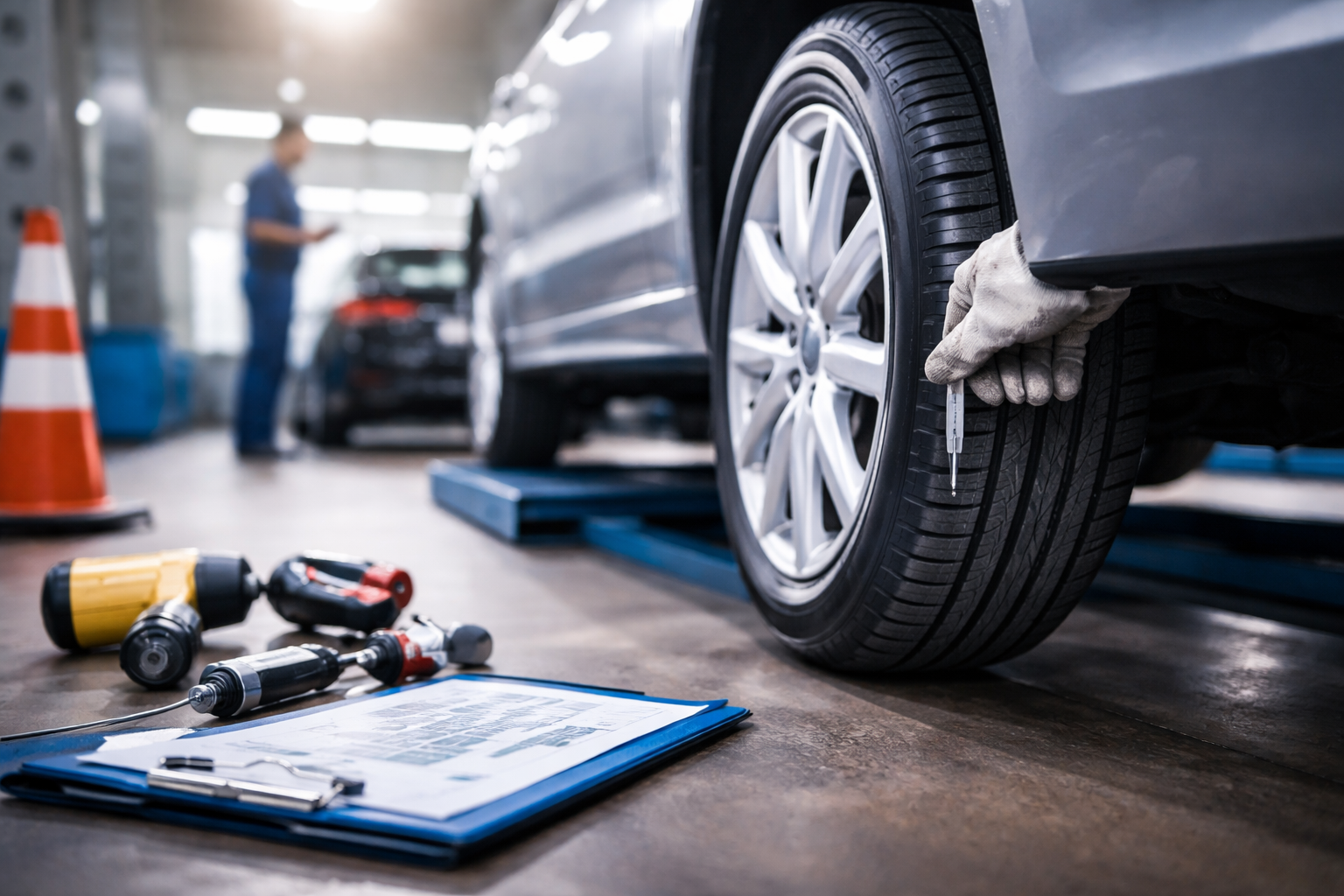
Tyre condition plays a crucial role during the technical inspection. In fact, tyres that are too worn, damaged, or non-compliant can compromise vehicle safety. They can also lead to a re-test.
Fortunately, a few simple checks can help you avoid many unpleasant surprises. Before your appointment, take the time to check the wear, pressure, and general condition of your tyres.
In this guide, discover the points inspected by the examiner and the good reflexes to adopt to prepare your vehicle.
Summary
- Why are tyres important during the MOT test?
- Which elements does the controller check?
- What faults can lead to a re-examination?
- How to recognise a worn or dangerous tyre?
- How to prepare your tyres for the MOT test?
- What to do when tyres need replacing?
- FAQ on Tyres at the MOT Test
1. Why are tyres important during the MOT test?
Tyres are the only point of contact between the vehicle and the road. Therefore, their condition directly influences braking, stability and handling.
Worn-out treads evacuate water less efficiently. Consequently, the risk of aquaplaning increases on wet roads. Furthermore, under-inflated or damaged tyres can reduce grip and increase braking distances.
The controller therefore pays particular attention to each tyre. He also examines the wheels, rims, and several elements related to the axles and suspension.
To better understand the role of your tyres, consult the Technical advice Pneus Online.
2. What elements does the controller check?
During the technical inspection, the professional examines each tyre on the vehicle. They check, in particular, its level of wear, its general condition, its dimensions, and its fitting.
The depth of the carvings
First, the controller observes the depth of the main tread grooves. The minimum legal depth is 1.6 mm.
Tyres also have wear indicators. These small rubber bumps are found at the bottom of the tread grooves. When the rubber reaches their level, the tyre has reached its legal limit.
However, it is best not to wait until this point. This is because a tyre gradually loses its effectiveness as its tread wears down, especially on wet roads.
The regularity of wear
Next, the controller checks if the tread shows even wear.
More pronounced wear in the centre can indicate pressure that is too high. Conversely, significant wear on both sides can signal under-inflation.
Furthermore, wear located on only one edge can indicate a problem with alignment, geometry, or suspension. In this case, have the vehicle checked quickly to avoid premature wear of new tyres.
The overall condition of the tyre
The controller also inspects the tread and sidewalls. They look for, among other things:
- a deep cut or gash ;
- a lump or hernia ;
- significant cracking; ;
- a distortion ;
- visible cables; ;
- a tread separation ;
- a foreign object embedded in the tyre ;
- a trace of friction against the vehicle.
A small superficial mark doesn't always present an immediate danger. However, a deep cut or a bulge can weaken the tyre's structure. The tyre must then be replaced without delay.
The dimensions and indices
tyres must correspond to the specifications intended for the vehicle. The inspector therefore looks at the dimensions, but also the load and speed ratings.
An inscription such as 205/55 R16 91V Indicate several pieces of information: the tyre width, the sidewall height, the rim diameter, the load index, and the speed rating.
Avant de commander de nouveaux pneumatiques, apprenez à choisir les bons. read the tyre marking.
Furthermore, if you wish to change the size of your tyres, always check their compatibility with your vehicle. For this, consult our guide on tyre size equivalence.
Tyre consistency on the same axle
The two tyres fitted on the same axle must have compatible characteristics. In particular, they must have the same size and the same structure.
The brand does not necessarily have to be identical in all situations. Nevertheless, Pneus Online recommends fitting the same model on the same axle. This will ensure a more consistent behaviour during braking and cornering.
Furthermore, both tyres must show similar levels of wear. A significant difference can unbalance the vehicle, particularly on a wet road.
The mounting on the rims
The controller also checks the fitting of each tyre.
When the manufacturer specifies a direction of rotation, the arrow marked on the sidewall must point in the correct direction. Likewise, the «Outside» marking must face outwards on an asymmetric tyre.
Finally, the tyre must not rub against a vehicle component. The rim must also not be significantly deformed.
The pressure and the TPMS light
Incorrect pressure accelerates tyre wear. It also alters road-holding and can increase fuel consumption.
The controller doesn't necessarily measure every pressure with a pressure gauge. However, it can signal a visibly underinflated tyre.
Furthermore, on vehicles equipped with a pressure monitoring system, the TPMS warning light must function correctly. If this light remains illuminated, check the pressure before your appointment.
You'll also find our advice for correctly adjusting the your tyre pressure.
3. What defects can lead to a re-test?
Not all faults are equally serious. However, several defects can lead to a failed technical inspection.
The controller may in particular note:
- a wear indicator has reached; ;
- sculptures that are too shallow; ;
- a major power cut ;
- a hernia or a deformity; ;
- visible cables; ;
- non-compliant dimensions ;
- incompatible tyres on the same axle ;
- incorrect assembly; ;
- contact with a part of the vehicle; ;
- a faulty pressure monitoring system.
Consequently, a tyre may still appear to be roadworthy whilst having a fault serious enough to warrant a re-inspection.
That is why it is best to check your tyres several days before your appointment. This will give you enough time to have them checked or replaced.
4. How can you tell if a tyre is worn or unsafe?
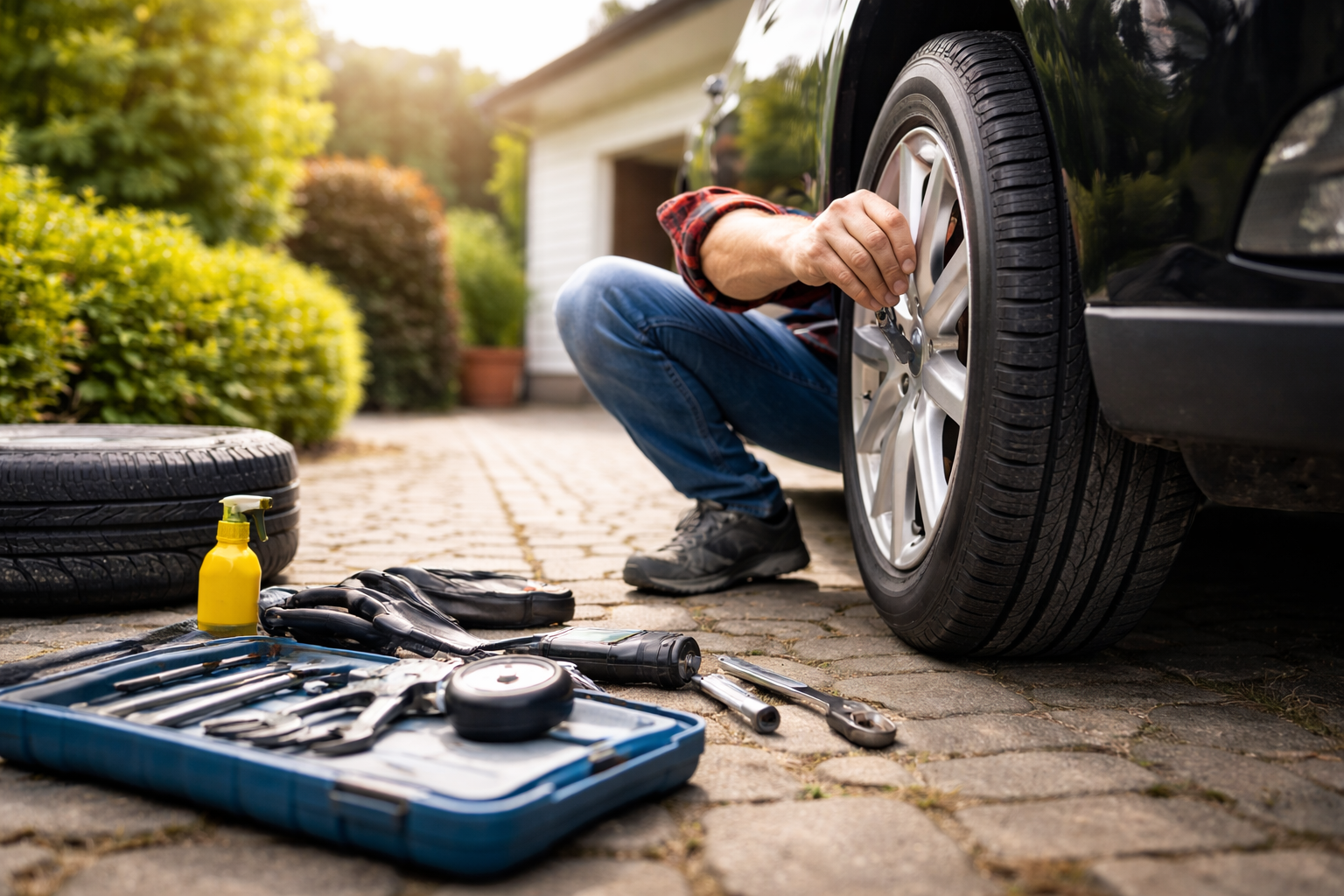
You can spot many defects without special equipment. To start, park the vehicle on a flat surface and turn the front wheels slightly. This will allow you to observe the full width of the tyres more easily.
Check the wear indicators
Look for the letters TWI, a triangle or the manufacturer’s logo on the sidewall. These markings indicate the position of the indicators in the grooves.
When the tread reaches the wear indicator mark, replace the tyre. In other words, do not plan on driving several thousand more kilometres.
Examine the entire tread
Don’t just look at the centre of the tyre. Check the inner and outer sides as well.
In fact, asymmetrical wear may go unnoticed when the wheels are aligned. Gently run your hand over the tread as well. You should then be able to feel any differences in height or an uneven surface.
Inspect the flanks
The flanks must not have any deep cuts, lumps or hernias.
A bulge often appears after hitting a kerb or a pothole. It usually indicates damage to the internal structure. In this case, do not continue your journey and seek professional advice as soon as possible.
Check the pressure regularly
Check the tyre pressure when the tyres are cold, ideally once a month and before a long journey.
You will find the recommended figures inside the fuel filler flap, on the driver’s door pillar or in the vehicle handbook.
Furthermore, repeated loss of pressure may indicate a slow puncture, a faulty valve or a damaged rim. So don’t just keep re-inflating the tyre over and over again.
Keep an eye out for vibrations
Vibrations in the steering wheel may indicate that the tyre is out of balance or has become deformed.
Similarly, if the vehicle pulls to one side, the tracking may need adjustment. Finally, any unusual rolling noise should also make you pay attention.
In all these situations, have your tyres and vehicle checked before the MOT test.
5. How to prepare your tyres for the MOT test?
A few days before the appointment, carry out a thorough check.
Start by measuring the tread depth. Next, inspect the tread and the sidewalls. Also check the tyre pressure when the tyres are cold.
Next, compare the markings on the two tyres on the same axle. The dimensions and key specifications must match.
Finally, check that the pressure indicator light goes out normally after starting.
Here are the main points to check:
- the depth of the sculptures ;
- wear indicators ;
- the condition of the tread ;
- the inner and outer sides; ;
- tyre pressure; ;
- dimensions and indices; ;
- the direction of assembly; ;
- the absence of vibrations; ;
- the absence of a TPMS indicator light.
This inspection only takes a few minutes. Yet, it can save you from a re-test. Above all, it makes it possible to detect a problem before it puts your safety at risk.
6. What to do when tyres need to be replaced?
If a tyre shows significant wear or irreparable damage, replace it before the MOT test.
In most cases, it is better to change both tyres on the same axle. This ensures the vehicle maintains balanced grip between the left and right sides.
Before placing your order, note down the information written on the side:
- width ;
- height ;
- the diameter ;
- the load index ;
- the speed index ;
- any manufacturer approvals.
You can then search for your new Car tyres on Pneus Online.
Still hesitating between several categories? Check out our guide dedicated to Summer, winter and all-season tyres.
Finally, you can have your order delivered to one of our Partner fitting centres. The professional will then be able to fit the tyres, balance them and check their compliance prior to your MOT test.
7. Tyre FAQ for the MOT test
Quelle est la profondeur minimale légale d’un pneu ?
The minimum depth reaches 1.6 mm in the main grooves.
However, it remains preferable to replace the tyres before reaching this limit. Indeed, their ability to clear water gradually decreases with wear.
Can a cracked tyre lead to an MOT failure?
Yes, when the cracking weakens the tyre or presents a safety hazard.
On the other hand, a few minor surface marks do not automatically result in a retest. If in doubt, ask for the opinion of a professional.
Is a tyre bulge dangerous?
Yes. A bulge generally indicates a failure of the tyre's internal structure.
Therefore, do not attempt to repair it. Replace the tyre promptly.
Should you fit the same tyres on an axle?
Tyres on the same axle must have compatible dimensions and characteristics.
Furthermore, fitting the same model improves the vehicle's balance. This solution therefore remains strongly recommended.
Is the tyre pressure checked?
The tester can report a visibly under-inflated tyre. They also check the operation of the TPMS warning light if the vehicle is fitted with this system.
Before the appointment, make sure to check the cold tyre pressure.
Can you pass the MOT with winter tyres?
Yes, provided that the winter tyres comply with the dimensions specified for the vehicle. They must also show a correct level of wear and be fitted properly.
Can you pass the MOT with all-season tyres?
Yes. All-season tyres remain permitted if they match the vehicle's specifications and do not present any dangerous defects.
Does a nail automatically result in a retest?
No, not always. However, a nail can cause a slow puncture or damage the tyre structure.
Have the front tyre checked before the appointment, even if the pressure seems stable.
Conclusion
The condition of the tyres can determine the outcome of the MOT test. Excessively worn tread, a deep cut, a bulge or non-compliant dimensions may in particular lead to a retest.
Before your appointment, be sure to check the wear, pressure and general condition of each tyre. Also check the size and fitting of the tyres on each axle.
Thanks to this inspection, you reduce the risk of a re-test. Above all, you improve your own safety and that of your passengers.
Finally, do not wait for the MOT test to replace a dangerous tyre. As soon as a defect appears, ask for a professional opinion or look for tyres suited to your vehicle on Pneus Online.